English
 Español
 Français
 Deutsch
 Italiano
 Português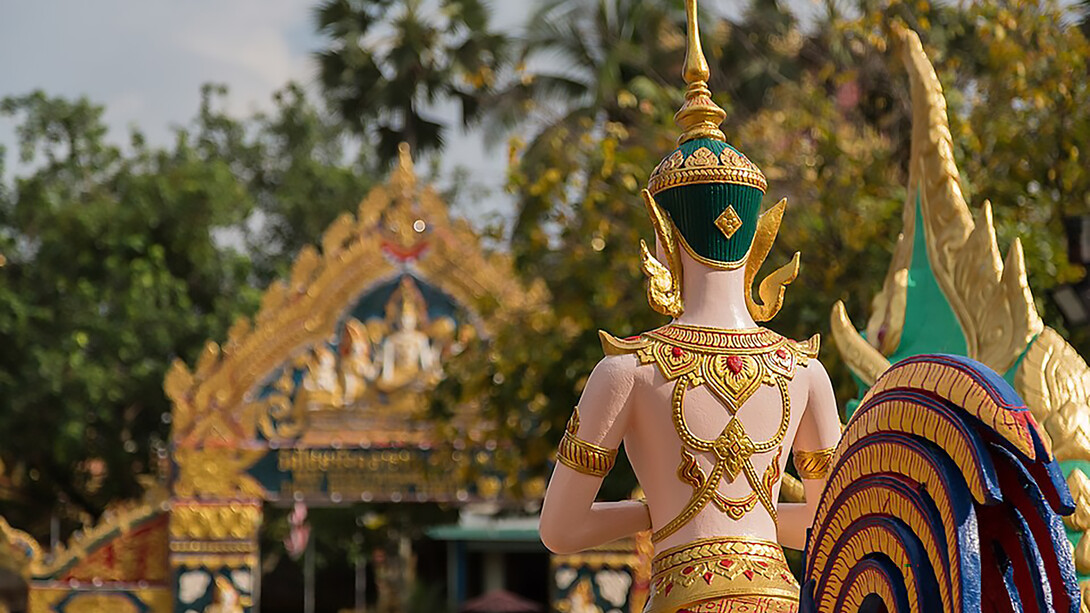
Among the many wondrous beings inhabiting the sacred cosmography of ancient India, few capture the imagination as deeply as the Kinnaras and Kimpuruṣas. Positioned between divine and human realms, these beings embody both celestial grace and earthly sensibility. They appear across the Mahābhārata, Rāmāyaṇa, and numerous Purāṇas, not as deities but as semi-divine entities symbolizing liminality—beings “in-between” states of existence. They occupy the subtle threshold between material and spiritual planes, functioning as reminders of humanity’s dual nature—both aspirationally divine and sensually terrestrial.
The ancient Indian mind envisioned a cosmos populated with diverse intelligences—gods (devas), demons (asuras), nature spirits (yakṣas and nāgas), and celestial musicians (gandharvas). Within this metaphysical ecology, Kinnaras and Kimpuruṣas represent hybridized consciousness—part human, part celestial—existing not merely as mythic curiosities but as archetypes of devotion, beauty, and self-realization.
Etymology and meaning
The word “Kinnara” is derived from the Sanskrit interrogative “kim naraḥ,” meaning “Is this a man?”—a question that captures their ambiguous nature (Monier-Williams, Sanskrit-English Dictionary, 1899). Their form, often depicted as part-human and part-horse, or sometimes with a bird’s body and human torso, gives rise to wonder and uncertainty. Similarly, Kimpuruṣa comes from “kim puruṣaḥ,” meaning “Is this a human being?” Both names highlight their hybrid morphology and metaphysical ambivalence—beings that defy rigid categorization, embodying both human and divine qualities.
This linguistic inquiry is not trivial; it encodes a philosophical statement. The ancients viewed such beings as symbolic commentaries on human evolution—neither fully bound by the senses nor completely liberated from them. Their very names express the perennial question of identity that underlies Indian philosophy: Who am I?
Origins and genealogies
In mythological genealogies, Kinnaras and Kimpuruṣas belong to the broader family of semi-divine beings that include Gandharvas and Yakṣas. According to the Viṣṇu Purāṇa (Book I, Chapter 5), the Kinnaras and Kimpuruṣas were born from Kasyapa and his wife Muni, making them cousins to many other celestial races. The Harivaṃśa Purāṇa (2.4.10) situates them among the attendants of Kubera, the lord of wealth, dwelling in the northern quarters of Mount Kailāsa and Gandhamādana.
The Bhāgavata Purāṇa (Skanda V, Chapter 19) describes the Kimpuruṣa-varṣa as one of the nine regions surrounding Mount Meru, where Hanuman himself is said to worship Rāma in his divine form. This establishes a theological link between the Kimpuruṣas and the cult of devotion (bhakti). The Mahābhārata (Sabhā Parva 10.5) mentions them as residents of Kubera’s city of Alaka, often appearing in the retinue of Gandharvas during celestial festivities.
Thus, while their precise origins differ across texts, their cosmological placement is consistent—they are mountain dwellers, celestial musicians, and devotees inhabiting the liminal terrains between heaven and earth.
Their world and habitat
Ancient cosmography situates the Kinnaras and Kimpuruṣas in the northern mountainous regions—Gandhamādana, Hemakūṭa, and the Himalayas. The Rāmāyaṇa (Kishkindhā Kāṇḍa 43.20) describes the peaks of Gandhamādana as resounding with the songs of Kinnaras, who dwell amidst fragrant groves and sacred rivers. This geography is not only physical but symbolic—the mountains represent elevated states of consciousness, where the air thins between mortal and divine realms.
Their world is described as one of perpetual harmony, beauty, and music. The Mahābhārata (Vana Parva 88.25–28) narrates Arjuna’s encounter with Kimpuruṣas during his pilgrimage, where he witnesses their celestial dance and song dedicated to the gods. The text implies that these beings act as intermediaries between the divine sound (nāda) and human perception—custodians of sacred music that bridges mortal and cosmic order.
Physical descriptions and attributes
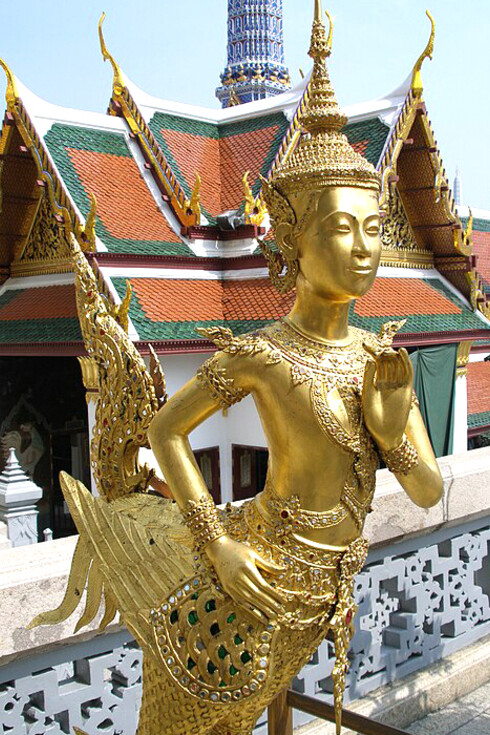
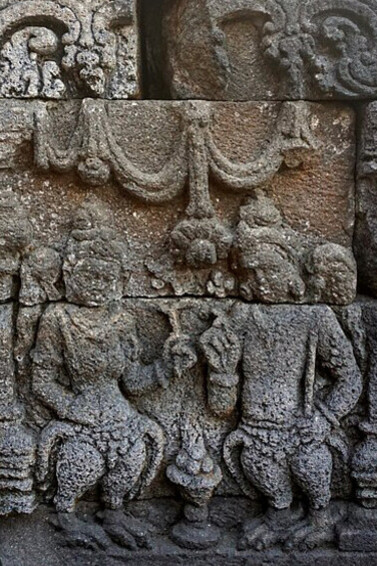
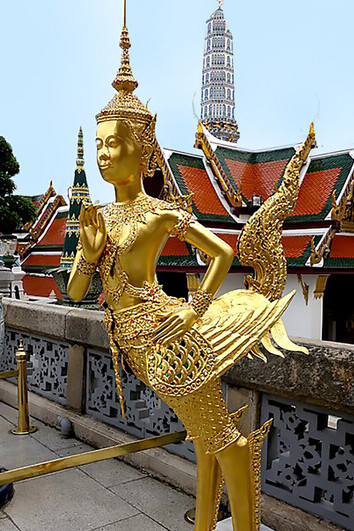
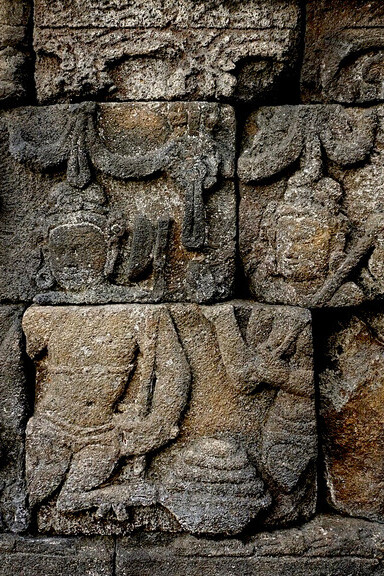
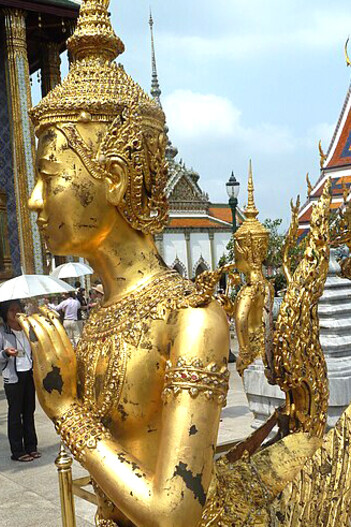
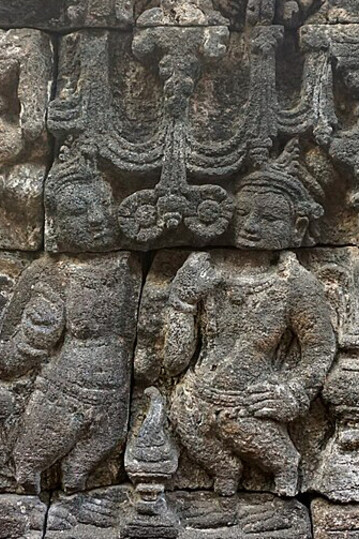
The iconography of Kinnaras varies across artistic traditions. Early Indian sculptures, such as those found in Sanchi and Amaravati, depict them as graceful beings with human torsos and avian or equine lower bodies. In some regions, especially in Himalayan and Southeast Asian iconography, Kinnaras appear as bird-human hybrids, emphasizing their celestial grace and association with music. The Kimpuruṣas, on the other hand, are often described as lion-headed or tiger-faced beings with human bodies—reflecting strength, courage, and servitude to divine will (see Mahābhārata, Vana Parva 84.18).
In Buddhist art, particularly in Gandhāra and later Thai and Burmese traditions, the Kinnara motif transforms into a symbol of ideal love and devotion. Their representations on temple walls, often in pairs, emphasize fidelity and the union of body and soul. This diffusion across cultures shows their remarkable adaptability and the universality of their symbolism.
Philosophical and symbolic interpretations
Beyond their mythic forms, Kinnaras and Kimpuruṣas function as metaphors for the human condition—beings caught between instinct and intellect, earth and sky, flesh and spirit. Their hybrid morphology externalizes the philosophical tension central to Indian metaphysics: the duality between prakṛti (nature) and puruṣa (consciousness).
The Kinnaras, with their musical devotion, represent the harmonizing of these dualities through bhakti and rasa. Their celestial music symbolizes the refinement of desire into devotion, echoing the Upaniṣadic vision where sound (nāda) becomes the pathway to realization. The Kimpuruṣas, by contrast, embody the strength of service and humility—fierce yet devoted beings who channel their vitality toward divine purpose.
Both, therefore, serve as archetypes of spiritual evolution. In the tantric reading, they represent the awakening of kundalinī energy—the movement from the primal to the refined, from the lower self to the divine self. Their mountain abode parallels the ascent through the chakras, with Gandhamādana symbolizing the higher spiritual centers.
Relation to Gandharvas, Yakṣas, and other celestial beings
The Kinnaras often appear alongside Gandharvas in epic and purāṇic literature, both groups being skilled in music and attendants of Kubera. However, while Gandharvas are primarily associated with sensuality, art, and the transmission of sacred sound, Kinnaras embody emotional refinement—the transformation of passion into aesthetic devotion.
The Yakṣas represent material abundance and guardianship, while Kimpuruṣas bridge the moral and martial aspects of divine service. In several Purāṇas, the Kimpuruṣas are portrayed as warrior devotees who serve under Hanuman, suggesting a link between strength and surrender. Collectively, these beings illustrate the multi-layered conception of divinity in Indian thought, where even semi-divine species contribute to cosmic order through their unique dharmic roles.
Mentions in ancient texts
Mahābhārata: in Sabhā Parva (10.5–10), Kinnaras and Kimpuruṣas are described among Kubera’s retinue in Alaka, the golden city of the north. In Vana Parva (84–88), they appear during the Pāṇḍavas’ exile, offering songs of praise and insight into the divine order.
Rāmāyaṇa: in Kishkindhā Kāṇḍa (43.20–26), Sugrīva instructs his vanaras to search for Sītā in the regions where Kinnaras dwell, associating them with the sacred geography of the Himalayas.
Viṣṇu Purāṇa: (Book I, Chapter 5) includes Kinnaras and Kimpuruṣas as offspring of Kasyapa, listing them among semi-divine classes serving the divine order.
Bhāgavata Purāṇa: (Skanda V, Chapter 19) refers to Kimpuruṣa-varṣa, where the inhabitants worship Rāma as the Supreme Being, demonstrating their devotional elevation.
Harivaṃśa Purāṇa: (2.4.10–11) situates them in the entourage of Kubera, echoing their association with beauty, music, and devotion.
Padma Purāṇa and Skanda Purāṇa* also mention them as attendants of celestial rituals and guardians of sacred groves, reinforcing their ecological and musical symbolism.
Anthropological reflections
From an anthropological perspective, Kinnaras and Kimpuruṣas exemplify how Indian mythmaking integrates psychological and metaphysical realities. The hybridity in their form mirrors cultural acknowledgment of the spectrum of existence, not as binary but fluid. They are intermediaries, liminal beings existing in the interstices of worlds—a concept anthropologist Victor Turner would later describe as “betwixt and between.”
In Indian aesthetics, their perpetual music signifies the human endeavor to maintain harmony between the physical and the spiritual. In Himalayan folklore, particularly among Tibetan and Nepali traditions, Kinnaras are revered as guardians of sacred sound, believed to inspire bards and healers. The continued reverence of such beings in local myths underlines the endurance of India’s inclusive cosmology—where the divine manifests in myriad forms, blurring distinctions between human, animal, and celestial.
The Kimpuruṣas, with their leonine or bestial features, reflect another layer of this anthropology—the acknowledgment of primal instinct as divine potential. Their transformation from animalistic vigor to devotional surrender mirrors the spiritual journey from ego to enlightenment, a theme deeply resonant in tantric and yogic philosophy.
Conclusion
The Kinnaras and Kimpuruṣas occupy a unique space in the vast pantheon of Indian cosmology—not as gods to be worshipped, nor as demons to be feared, but as mirrors reflecting the complexity of human consciousness. Their hybrid nature questions the boundaries between species, realms, and states of being. They remind us that divinity in Indian thought is not separate from creation but interwoven through it.
Through their music, devotion, and liminality, they symbolize the eternal human quest for transcendence—the yearning to rise above limitation while remaining rooted in the beauty of existence. Whether seen through the lens of mythology, art, or anthropology, Kinnaras and Kimpuruṣas endure as timeless allegories of transformation, reminding seekers of the harmony that lies beyond form and the divine melody that binds all worlds together.
References
Mahābhārata, Sabhā Parva 10.5–10; Vana Parva 84–88.
Rāmāyaṇa, Kishkindhā Kāṇḍa 43.20–26.
Viṣṇu Purāṇa, Book I, Chapter 5.
Bhāgavata Purāṇa, Skanda V, Chapter 19.
Harivaṃśa Purāṇa, 2.4.10–11.
Padma Purāṇa and Skanda Purāṇa (various sections).
Monier-Williams, Sanskrit-English Dictionary, 1899.