English
 Español
 Français
 Deutsch
 Italiano
 Português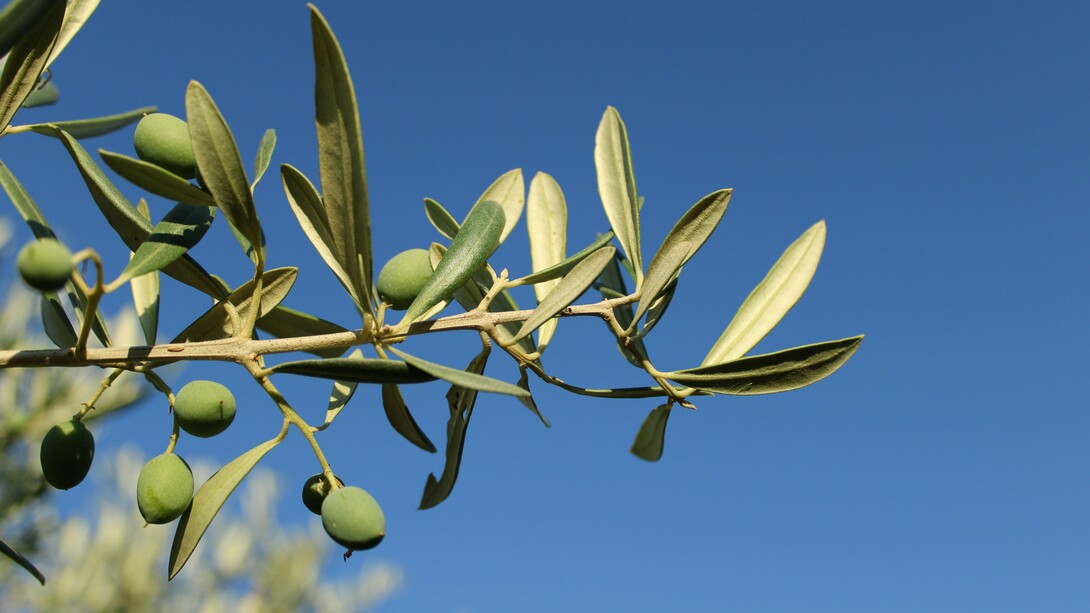
This is the third in the series If I Were President, a game I’ve been playing here at Meer. It’s really an exercise in imagining what it might look like to bring ethics, intelligence, and common sense back into governance—a fine art that has devolved into a corrupted mud bath known as “the body politic” in the U.S. and, sadly, elsewhere.
Corruption is a big word, often thrown around casually. Here, it’s largely defined as this: activities of government designed to serve the people are pushed aside and instead serve the politician.
In part 3, the focus is on foreign policy and relations, but first, a touch of context.
History tells a story about us humans
History shows that the devolution of the body politic has occurred across the planet—perhaps most in what we call the “civilized nations,” where material wealth has been heavily amassed. Even so, there have always been leaders and communities striving to weed out corruption and establish an ethical foundation for governance, only to be repeatedly overpowered.
Cycles in history reveal a very human story
This cycle appears throughout history, except—so far as I know—in smaller towns, communities, and villages where people often live like one large family. Everyone knows and cares for one another and holds each other accountable. It’s a different ethos, closer to Nature and often to the sacredness of life itself.
Material wealth tends to derail serving the common good
Material wealth and the quest for power don’t even exist as concepts in many indigenous languages and tribes. From these communities, we have templates of peacemaking and of living in alignment with Nature and community, such as the Iroquois Nation1 and its influence on American Democracy, on which we can model ourselves.
By contrast, in materially wealthy nations, individuals and corporations often become what Buddhists call “hungry ghosts”—feeling empty while endlessly seeking more wealth or power, much like an addict pursuing a substance to fill a void.
The premise on which the Rabin administration operates
I believe that despite the lower aspects of human nature, our higher aspects can prevail, as it happens all the time. Our heart, prefrontal cortex, and gut brain give us the biological apparatus and the potential psychological maturity to create global health, prosperity, and peace.
Many don’t believe this is possible. They are hardened in their stance. Yet Nature and physics teach us that “the soft overcomes the hard.” Lao-Tse made that clear in the Tao Te Ching in the 6th century BCE: moving water gradually wears away stone.
It’s worth remembering that yay-sayers eventually overcome nay-sayers. It may take longer than we’d like, but the light does ultimately overcome the dark.
As the old Sufi saying goes: “I’ll see it when I believe it.”
A prelude to the present
In the spring of 1993, I sent a letter to the newly elected President Clinton, urging him to publicly apologize—first to the Native Peoples from whom our ancestors took this land, and then to every immigrant ethnicity harmed by the government: African-Americans, Hispanics, Chinese, Japanese, Jews, Italians, Irish, and others. The abuse has been tragic.
I urged him to acknowledge the harm committed in order to “create harmony and peace in the land.” He did apologize to Native Americans, though scaled down and buried inside a defense spending bill2.
It wasn’t what I’d envisioned, but better than nothing. I received a form letter thanking me for my suggestions.
In 1993, he did, however, apologize to the Native Hawaiians for the U.S. government’s overthrow of the Hawaiian monarchy in 18933.
Moving forward in 2026
Much has transpired since the Clinton days: from wars in the Balkans, Rwanda, Afghanistan, Iraq, Yemen, Ukraine, Gaza, Sudan, and beyond. Economic power has shifted eastward. The world is more polluted, the climate crisis is worse, and climate migrations are more widespread. Economic and military crises continue to mount.
At the same time, most human beings have always and still do simply want peace, friendship, freedom, and economic stability. People are waking up to the horrors and waste of war, while children across the world go to bed hungry. People want to live in their homes with their families, free from the ravages of war, injustice, and government-caused hardship.
My proposal remains what it was in 1993. Back then, the U.S. was uniquely positioned to act. In 2025, it is not. Its voice is not as respected or strong, despite political rhetoric.
Nonetheless, I believe the transformation is still possible. Billions want it: peace, not war; prosperity, not poverty; health, not illness.
The pièce de résistance: the global peace paradigm shift
I also suggested that Clinton convene a meeting of the heads of state of all developed nations. As the single superpower at the time, the U.S. was in a position to help shift the geopolitical paradigm from war and competition to disarmament and partnership. We could help each other reduce hunger, poverty, oppression, and debt by laying down our weapons.
Harder now, but I do believe we can make this happen. This is the shift, from adversary to ally, from foe to friend. One’s success is also the others, a natural mental shift in purview.
This meeting never occurred then. In my Administration, it will.
The weak link: trust
The U.S. has proven to be an unreliable ally and an inconsistent friend of peace. It has broken treaties with Native tribes, manipulated legislation to suppress voting by people of color, and harmed its own people through secret experiments such as the Tuskegee Experiment and the CIA’s use of LSD4, among many others over the course of time.
Internationally, it has supported coups around the world5. More recently, after signing the JCPOA nuclear agreement with Iran in 2015, the deal was dismantled just three years later, deepening global distrust.
Today, Constitutional and international norms are violated regularly, leaving no one sure what comes next—politically, economically, socially, or militarily. When the rule of law is violated by those who took an oath to uphold it, you can imagine the chaos that ensues.
Food, medical supplies, and education and agriculture funding long provided by the U.S. to developing nations have been cut, leaving millions without support. SNAP benefits were postponed domestically, leaving children hungry and families waiting in food lines.
If a head of state disagrees with the current Administration, tariffs are used as weapons, and sometimes Navy ships appear at their doorstep.
A heavy lift—but a necessary one
Rebuilding trust after such a history of distrust is a heavy lift. Hard to build, easy to break. At this moment, the task seems Herculean. Trust in government has always been tenuous, but perhaps never as strained as now.
Rebuilding trust—domestically and internationally—is our only hope of re-establishing relationships based on friendship and cooperation rather than military might. It takes time, but it can and will happen.
The transition is psychological and emotional, requiring patience and finesse. South Africa’s Truth and Reconciliation process provides an example: honest recognition of atrocities, sincere apology, collective grieving, expression of feelings by the oppressed, and humble requests for forgiveness.
To the degree this process is completed, true reconciliation and a new future can emerge.
A new community of nations
The aim is to establish a global community in which war is no longer an option—off the table!
Nations would be ethically and legally bound to resolve issues through sensible, compassionate, mature dialogue—the kind we expect from adults.
There would be no need to capture land because no country’s self-interest would rest on domination. We would operate on “enlightened self-interest”: what benefits one benefits all, while honoring cultural differences.
Enlightened self-interest
Self-interest says, “What’s in it for me?” Not interesting! Enlightened self-interest is another thing altogether. It’s saying, “Treat others as you would have them treat you.” If I take care of your health, safety, and well-being, my family, community, and I benefit—we’re happy! And vice versa. Rinse and repeat this enough times, and we have a world of happier people looking out for one another, which is our true higher nature. People are doing this all the time.
If you’re enjoying peace and well-being, so am I. Aren’t we all connected? As Sarah Palin once said, “You betcha!”
Trading
Of course, nations would still trade—ethically, with win-win agreements and accountability.
As with the Grameen Bank established by Nobel Prize laureate Muhammad Yunus (Grameen means “village” in Bengali), low-cost credit would be extended to countries and villages in need so each can prosper through cooperation.
This will be another subject in an upcoming article in the series.
The cooperation model
The race for domination would end. Everyone wins through a cooperative, partnership model6 such as that described in Riane Eisler’s lifetime work. The basis of this is the inner work of evolving to one’s higher nature, and the outer work of those doing the inner work of consensus. When everyone is of the mindset to cooperate, as when everyone is in the mindset for peace, we reinforce this worldview in each other.
Summary
This is not a simple task—perhaps the hardest of all. Establishing trust after such a history and then offering an olive branch to transform geopolitics from domination to cooperation is a tall order.
But economically, ethically, and spiritually, it aligns with reason and with the higher nature of humanity. It pulls us out of the cesspool of contemporary politics and military madness.
Having an economy that is predicated on a war machine is as primitive as it gets. We need an economy that operates on creating life rather than destroying it.
Someone has to lead the way. My proposal is that my Administration be the one to do it.
So if I were running (which I’m not!), vote for me—and let’s transform this world together for the common good. Dream it enough, envision it enough, be proactive enough, and it will come to pass.
Notes
1 How the Iroquois Great Law of Peace Shaped U.S. Democracy on PBS.
2 U.S. Apology to Native Americans on ThoughtCo.
3 1993: President Clinton apologizes for 1893 overthrow of Hawaiian monarchy on NLM.
4 The Top Secret Testimony of CIA’s MKULTRA Chief, 50 Years Later on National Security Archive.
5 US Military and Clandestine Operations in Foreign Countries - 1798-Present on GPF.
6 Dr Riane Eisler The Chalice and the Blade and others on Mitchell J. Rabin's A Better World.