English
 Español
 Français
 Deutsch
 Italiano
 Português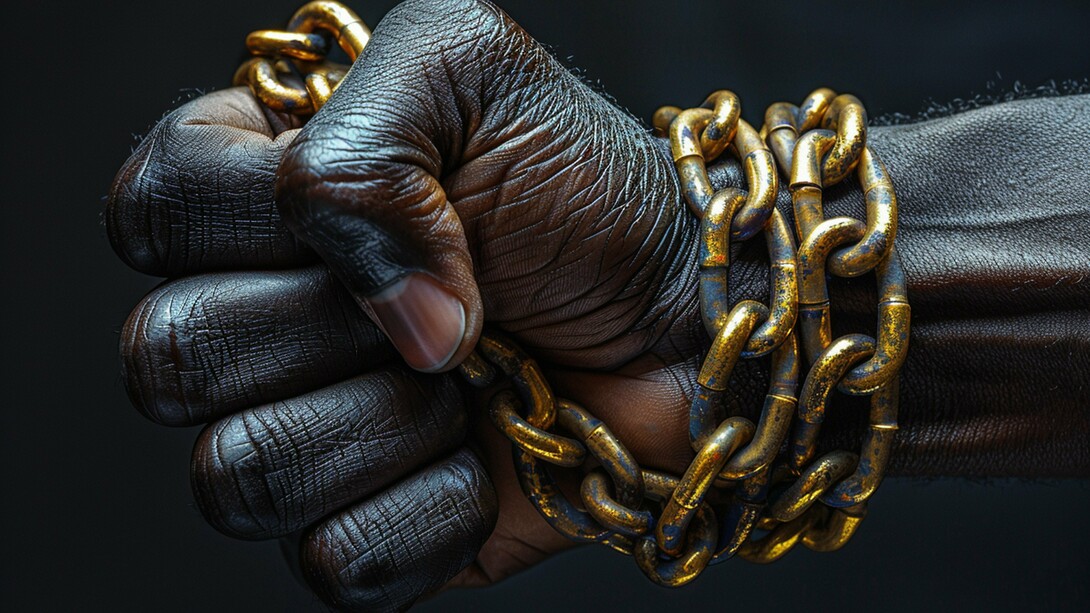
Walter Rodney, in his best-selling and very educative book: How Europe underdeveloped Africa, explained succinct issues, deep and eye-opening. His book explains the subtle and overt acts of colonial masters and how these actions have kept African nations in a disadvantaged position.
No doubt Africa, among other reasons, is what it is today because of its ugly past. It is one of the continents in the world that suffered the worst of colonialism. But just as change is constant, Africans themselves, the enslaved and the freeborn, both joined hands to force the liberation of the African continent.
Nations like the Dahomey kingdom (Benin Republic), the Gold Coast (Ghana), and the Niger area (Nigeria) all gained their independence about the same time, except for South Africa, which gained independence in 1961 but was ushered into an apartheid system that ended in 1994 with Nelson Mandela becoming president.
On August 1st, 1960, the Benin Republic gained its independence; on March 6th, 1957, Ghana gained its independence; and on the 1st of October 1960, Nigeria celebrated its 1st Independence Day. Key inputs came from top African nationalists, like Jomo Kenyatta, Julius Kambarage Nyerere, Hubert Maga, Dr. Kwame Nkrumah, Chief Antony Enahoro, Dr. Nnamdi Azikiwe, Chief Obafemi Awolowo, Herbert Macaulay, etc. These men and women put in the spirit of nationhood and the knowledge they have gained over the years, at home and abroad, to strategically put an end to colonialism.
After the exit of colonial masters, most of these nationalists, or should I say indigenous leaders, took over leadership of their various countries. There was joy and relative peace, and progress seemed closer than ever before. Folks looked towards the future in high spirits... In Nigeria, for instance, nationalistic sentiments were very strong, devoid of all forms of parochial ideology. The Igbo, Yoruba, Edo, Hausa, and others all saw Nigeria as a project that must work. Hands came together, brains strategically aligned, all in a beat to make Nigeria a better place for generations to come.
However, just like in Nigeria so it was in so many other African nations. Borrowing the words of the great poet Chinua Achebe: "Things fell apart and the center could no longer hold." It's commonly said that "the same people who built a house can be the same persons to pull it down," in other words, "the enemy within is more dangerous than the enemy outside."
The hot flames of nationalism that once graced the African continent soon gave way to an unflinching resolve for ethnic superiority. As disagreement and ideological differences set in, instead of having a round table discussion, leaders began to turn towards ethnic coloration. Soon, the various institutions saddled with the responsibility of governance tended towards the same direction. It was no longer the nation first but the ethnic first.
From the foundation years, ethnicism, tribalism, nepotism, and favouritism determined critical decisions in African politics. It was no surprise when the military struck. In Nigeria, it first occurred on the 15th of January 1966. Just about six years after independence, these military coups, which had already taken place in other African nations like Egypt on 23rd July 1952 and Togo on 13th January 1963, became the order of the day till this very moment. These supposedly free nations started calling on the colonial masters to again take over. Some even argued that independence came too early; some others said the inaugural leaders were too selfish to see things go on legitimately.
The colonial masters saw the unreadiness of these new nations and decided to continue their rule, but in a very coordinated manner. It is commonly said that: "A man who will not think will have another man think for him." Also, a man who will not pursue his vision will run another man's vision.
The African leaders, unable to agree on a vision to pursue, decided to settle for the vision of the colonial masters and their cronies. A new system was birthed: neo-colonialism. A modern form of control where a powerful country influences and dominates a weaker, supposedly independent country—not by direct political rule, but through economic pressures, political manipulation, cultural influence, and global institutions.
In this situation, Africans, although in power, relinquished authority to the colonial masters. In other words, these countries are legally independent but economically and politically dependent on external powers. Today, you see African nations being dictated to in terms of economic, social, and even cultural policies, and very recently, some foreign nations and institutions have determined political administration (who goes out and who takes over).
On a more critical evaluation, should European or American nations be blamed? Walter Rodney described their action as one that underdeveloped Africans. If indeed that was true, then what do we say of the incumbent leaders? Have European and American nations forced them into neo-colonialism, or, due to greed and a self-serving mentality, plunged the nations into deep economic, political, social, and existential threats?
Let's take a look at some quotes by African influencers on different occasions regarding the recklessness of some African leaders:
1. Mogoeng Mogoeng (former Chief Justice of South Africa)
Be careful about those who are prepared to do things even outside of the book to ascend to a leadership position. … it is their stomachs and their insatiable appetite for power and money that they seek to satisfy.
We were too concerned about our careers, our money-making opportunities … more than we were … about the plight of the suffering masses of … Africa.
2. Patience Hwenha (Democracy Works Foundation)
The problem of Africa … is not the people but leaders who want to overstay in power. (Quoting Yoweri Museveni from his book.)
3. Ellen Johnson-Sirleaf (First elected female president in Liberia and in Africa)
It is our firm conviction that Africa… is not poor, but rather poorly managed.
4. Chinua Achebe (The Trouble with Nigeria, 1983)
The trouble with Nigeria is simply and squarely a failure of leadership... The Nigerian problem is the unwillingness or inability of its leaders to rise to the responsibility, to the challenge of personal example, which are the hallmarks of true leadership.
5. Ayi Kwei Armah (from The Beautyful Ones Are Not Yet Born, p. 87)
Alone, I am nothing. I have nothing. We have power. But we will never know it; we will never see it work unless we choose to come together to make it work.
6. Thomas Sankara (Burkina Faso, 1985 speech)
You cannot carry out fundamental change without a certain amount of madness. In this case, it comes from the rulers who are mad for power and money, while their people suffer.
These are words from renowned leaders and influencers in Africa, who were bold enough to call a spade a spade. While we as Africans cry out that international organizations like the International Monetary Fund (IMF), World Bank, etc., are in a cunning way destroying African economies, let's ask ourselves, are the African leaders building the economies?
"Wealth flows from Africa, yet poverty remains; leaders who should serve the people instead serve themselves, turning the hopes of nations into despair. " If America could break free from Britain and become one of the most influential nations on earth, it is equally possible for African nations. Germany, against all odds that befell her after the Second World War, could bounce back as one of the strongest European nations; then it is possible anywhere, irrespective of race, geographical location, or skin color.
All we have to do is to have the leaders sit up in honesty, upholding the rule of law, and the followers commit wholeheartedly to nation-building. "It is said that a true leader is not the man who seeks power but the man who seeks to empower others."
Africa arise!