English
 Español
 Français
 Deutsch
 Italiano
 Português
When J. Robert Oppenheimer watched the first atomic blast in 1945, apocrypha states that he whispered the now-famous line from the Bhagavad Gita: “Now I am become Death, the destroyer of worlds.” In truth, he first uttered the phrase during a subsequent 1965 interview with NBC, claiming the (mis-translated) phrase came to mind as he watched the bomb’s destructive capability. Regardless of the actual context, however, it is undeniable that the weapon he helped create instantly redrew the map of power, to the point where, eight decades later, every strategic planner still treats nuclear arms as the ultimate trump card.
A true testament to the durability of his work.
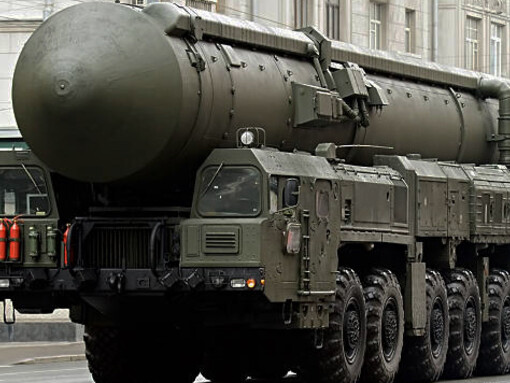
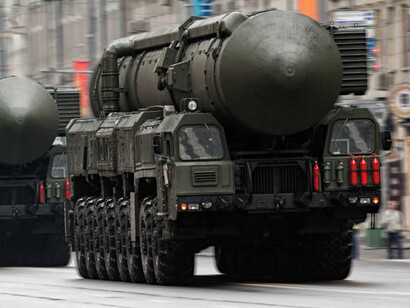
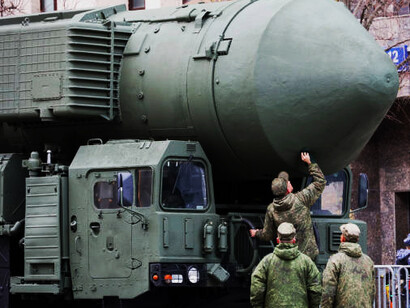
Yet, technology never stops. Even following the development of the nuclear bomb, humanity found ways to build upon its terrible legacy. We learned how to create the hydrogen bomb, how to make them more compact, how to fire missiles further, and how to develop more complex machinery to fine-tune their destructive potential.
We had reached what, for all intents and purposes, had been the pinnacle of destruction, yet we found more ways to make it even more destructive and to extend its reach.
And yet, the real puzzle is not “How do we build a bigger bomb?” —the Tsar Bomba already proved diminishing returns on raw yield (i.e., meaning there will always come a point where nuking a larger area becomes tactically and strategically pointless, regardless of how much more destruction is caused)—but “What breakthrough could displace the bomb as the backbone of deterrence?”
Below, I explore one candidate: the anti-nuclear weapon.
Deterrence ≠ and the security dilemma
First, terms matter. Deterrence is the threat of unacceptable retaliation; the security dilemma is the spiral in which each state’s defensive build-up makes others feel less secure. Nuclear weapons feed both dynamics, but after the superpowers achieved mutual second-strike capability, the arms race tended to plateau as arsenal increases generally became simple acts of posturing rather than actionable, existential security threats. In other words, nukes froze the dilemma more than they fueled it. After all, once a country achieves second-strike capabilities, it doesn’t really matter what kind of build-up anyone else does: the risks of causing a nuclear strike, either as a first or second strike, make the pursuit of such a conflict unacceptable.
An anti-nuclear technology or mechanism, however, would unfreeze that spiral, shifting it to whatever crazy new idea comes next—whether it is a digital or physical weapon is immaterial.
Nonetheless, the removal of the security dilemma’s freeze, as well as the absence of the nuclear deterrent, would inevitably—at least during the transition period between the Nuclear Age and whatever comes next—lead to heightened tensions, as the hypothetical removal of the dreaded second-strike capabilities from consideration means conventional force becomes king once more. Whether that makes the world safer or riskier depends on how states adapt, of course, not on the disappearance of the threat of radioactive fallout alone.
Have other technologies already replaced nukes?
While an argument could be made that cyber weapons, autonomous drones, and other technologies have had a transformative effect on the nature of warfare and the balance of power, and while it is true each of these (and more) certainly forces militaries to rewrite doctrine, none, however, yet delivers the one-shot, civilization-ending certainty that makes even small nuclear arsenals politically potent. And this is a point that needs to be emphasized.
There is, at present, still not a single weapon on Earth that can match the destructive and deterrent potential of a nuclear weapon.
Could an engineered pathogen or AI-controlled digital super-virus one day match that effect? Sure, possibly. But, unlike a 100‑kiloton warhead—whose consequences are immediate, obvious, and traceable—those threats still struggle to create clear, attributable deterrence. For now, nuclear weapons remain the only tool that can silence or reduce a rival’s conventional options in a single sentence: They have the bomb.
This is not an altogether unreasonable proposition, either—we have only to look at the Ukraine conflict to see how many times Russia has used the threat of nuclear war to reduce war fervor among the European populace in the hopes of convincing the European Union to stay out of the conflict—even though, realistically speaking, Russia nuking Europe would spell its own doom thanks to the aforementioned second-strike capabilities held by France and the United Kingdom.
The anti-nuke concept: many paths, one goal
When we contemplate the notion of an anti-nuclear weapon, we must take into consideration that there are no set, fated paths that such a mechanism or physical weapon could take. Like the truly mind-boggling amount of variations in conventional weaponry that exist today, an anti-nuclear weapon or platform could come in many different shapes or sizes, of which the following are just three broad possibilities:
Near-perfect missile defense: a system designed to intercept every incoming warhead despite decoys, multiple independently targetable re-entry vehicles (MIRVs), and hypersonic maneuvering.
Command-and-control sabotage: cyber or electronic attacks that reliably prevent launch.
Rapid post-detonation neutralization: technologies that “turn off” radiation or instantly clean fallout.
Naturally, all three face towering hurdles. Even with the power of predictive AI, physics and probability still favor offense over defense; nuclear command networks are air-gapped and redundant for this exact reason; and isotopes do not simply switch off, as much as we wish they would. Thus, at present, the counterargument is airtight: the shield must be impossibly flawless, because even just one surviving warhead is one too many.
That said, history warns against declaring anything impossible. Laser technology, once science fiction, now tracks artillery shells in flight. A century ago, splitting the atom sounded harder than neutralizing it does today. Prudence demands we plan for breakthroughs even while betting on today’s physics, even as we all dance unknowingly to the tune of chance and probability.
Who gains, who loses?
Another possible critique is that only wealthy powers could field continent-scale defenses, entrenching, not erasing, current hierarchies. That is partly true. If Washington or Beijing built a credible shield first, their leverage would skyrocket while less wealthy nuclear states (North Korea, Pakistan) would lose bargaining power overnight.
Yet hierarchies could still shuffle. Conventional power—where numbers, geography, and coalition-building matter—would regain weight as such technology inevitably spreads one way or another. Regional middle powers with strong conventional forces and advanced tech bases (Japan, France, Turkey) might find new room to maneuver. The exact winners and losers would hinge on who integrates anti-nuclear tech the fastest and most effectively while building up their non-nuclear capabilities.
Do nukes really prop up fragile states?
While nuclear arsenals are not life-support machines, they do complicate outside intervention among collapsing nuclear states. When the Soviet Union collapsed, the world’s first major worry was not civilian unrest or economic collapse—it was loose nuclear warheads. After all, at the time of the USSR’s collapse in 1991, it had roughly 35,000 or more nuclear warheads in its arsenal—and 3,200 of them were located beyond Russia’s borders (in Ukraine, Kazakhstan, and Belarus), and 22,000 of them were tactical nuclear weapons that could fit something as small as a duffel bag (Allison 2012). To everyone’s relief, none of them remained unaccounted for or lost and were duly delivered back to the new Russian Federation with almost unreal haste.
The reason for this ought to be obvious, but it does, in turn, reinforce the point that the first point of panic in geopolitics upon the collapse of a nuclear state is its nuclear arsenal. Nothing else. And if the United States or Russia ever fractured (again, in Russia’s case), nuclear stewardship would again dominate headlines as the world scrambles to contain a potential nuclear disaster.
Remove that variable, however, and the calculus changes. If the threat of missing nuclear weapons weren’t an issue, then the world would not have to deal with nuclear powers on eggshells. Allowing or leading a nuclear state to fail would be a viable strategy. External actors might, of course, still intervene or abstain— but it would be based on refugees, terror threats, or economic fallout instead of radiological fallout. That does not mean every fragile nuclear state would suddenly implode, only that nukes would no longer grant their very existence automatic strategic gravity or necessity.
Would the world fight more conventional wars?
Here’s a counter-argument against an anti-nuclear weapon: without nuclear firebreaks, great-power wars return. But is that true? The historical record is mixed. The U.S. and China traded blows in Korea despite the U.S. having the bomb and China not; India and Pakistan have skirmished repeatedly. Conversely, post-1945 Europe stayed peaceful thanks to a cocktail of factors—economic integration, democratic norms, and U.S. security guarantees, of which nuclear umbrellas were only one.
Thus, if anti-nuclear defenses emerged, deterrence would likely just migrate to other domains: cyber blackouts, anti-satellite strikes, and global supply-chain chokeholds. Arms races might make a staggering comeback, but whether that stabilizes or destabilizes the system is a policy question, not a physics one.
Is the anti-nuke inevitable?
As much as the public enjoys the notion of academics and experts being soothsayers, it is important to note that no technology is preordained. One of the most famous anecdotes of science is that Archimedes came up with the formula for volume entirely by accident as he was taking a bath. By Sikorsky’s own evaluation, “aeronautics was neither an industry nor a science. It was a miracle.”
It has even become a meme that many groundbreaking scientific achievements were the result of an “oops” incident.
All of which is to say that the development of any weapons platform or mechanism capable of neutralizing nuclear weapons is just as likely to be created by accident as it is to be created on purpose. Moreover, even if they were created, just as treaties banned space-based nukes and constrained biological weapons, states may likewise decide that perfect missile shields are destabilizing and negotiate limits, as they once did with the ABM Treaty.
But if even one actor pursues the capability, rivals will follow. In that sense, the anti-nuke is plausible enough to warrant serious attention, even if its imminent development is unlikely.
The offense-defense spiral returns
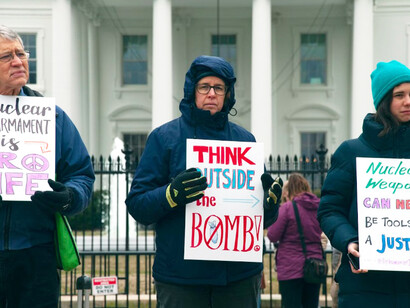
As a final point, it is necessary to address this part to those who believe that a non-nuclear world is a peaceful world.
No.
Eliminating today’s nukes would not end the quest for strategic dominance. Offense will forever chase defense: build a shield, and someone will build the weapon that will pierce it. Build that weapon, and someone will build something even greater. On and on and on in a never-ending spiral until one side either functionally or formally gives up.
Any anti-nuke strategy must therefore include mechanisms—verification regimes, escalation-control hotlines, shared early-warning data, and, most importantly, deterrents—to keep the spiral from spinning out of control, or else the world would be headed towards a brand new era of global conflict.
Preparing for a post-nuclear world—even if it never arrives
Still, because an anti-nuclear breakthrough is neither imminent nor impossible, prudent states ought to hedge their bets:
Invest in multi-domain deterrence cyber resilience, space situational awareness, and precision conventional strike.
Pursue arms-control dialogues focused on emerging defense technologies.
Strengthen alliances whose value will grow if nuclear umbrellas fade.
If the breakthrough never comes, those steps still pay dividends. If it does, they may decide which nations will write the new rules once the dust settles.
Thus, the next great shift in warfare may not be a bigger bang but a better shield. Today’s physics keeps that dream on the drawing board, but tomorrow’s breakthroughs could drag it into the real world. Recognizing both the limits of current science and the restless nature of innovation is the first step toward managing—rather than merely surviving—the post-nuclear future.