English
 Español
 Français
 Deutsch
 Italiano
 Português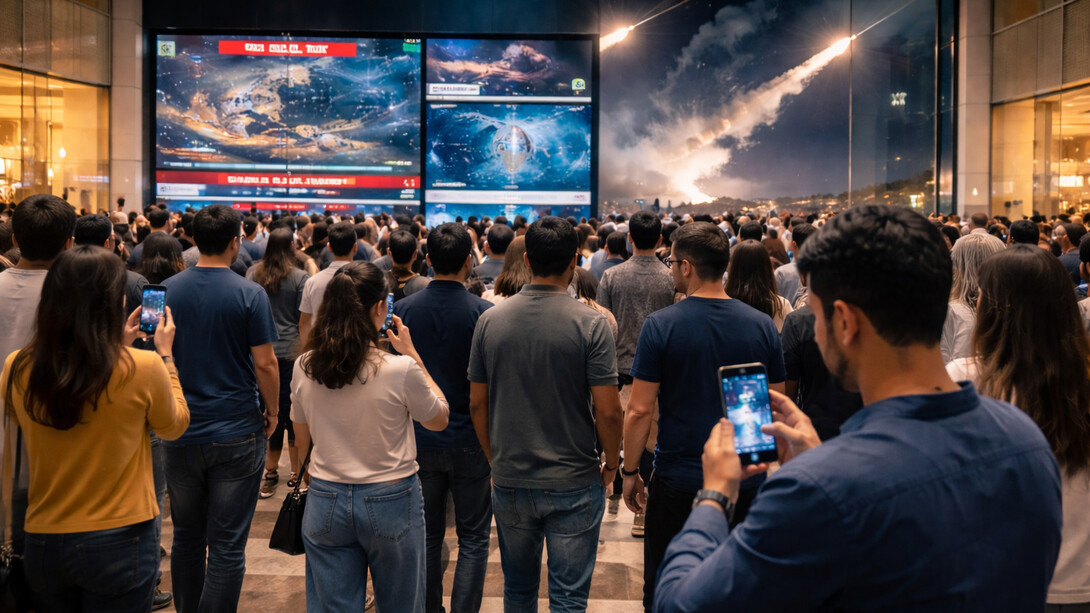
War is often measured in missiles, casualties, and geopolitics. Yet another battlefield exists that is far less visible but just as powerful: communication.
In moments of crisis, how governments speak, or sometimes how they choose not to speak, can shape the psychology of entire societies. The words, gestures, timing, and tone of leaders influence whether people panic or remain calm, whether markets collapse or hold steady, and whether the world perceives stability or chaos.
Strategic communication during war is therefore not simply public relations. It is a critical instrument of national security.
Recent events in the United Arab Emirates offer a striking example of how leadership communication can function as a stabilizing force during uncertainty.
In late February and early March 2026, escalating tensions in the Middle East triggered a wave of Iranian missile and drone strikes across the region following military operations against Iran by the United States and Israel.
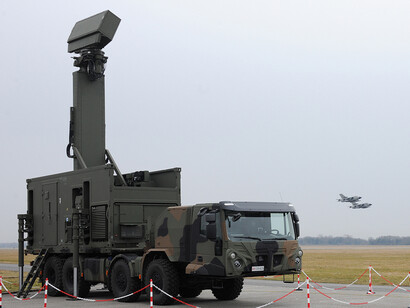
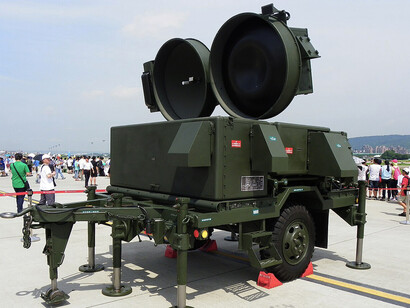
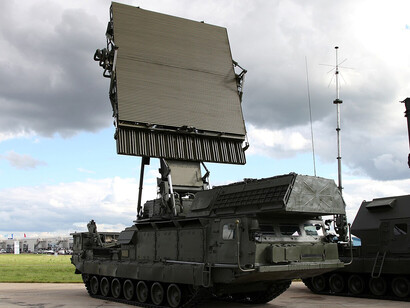
The Gulf states, including the UAE, found themselves directly exposed to the fallout. Hundreds of drones and missiles were launched toward several countries in the region. UAE air-defense systems intercepted the overwhelming majority of them, preventing a much larger catastrophe.
Even so, interception debris and a small number of impacts caused damage to infrastructure in parts of the country and led to casualties. The government immediately condemned the attacks as a violation of sovereignty and emphasized its responsibility to protect civilians and national stability.
In such moments, information becomes as important as defense systems.
Fear spreads faster than missiles.
The first message—control!
The UAE authorities responded rapidly with coordinated official communication.
Government channels urged residents to rely only on official sources of information and avoid spreading misinformation on social media. Public safety advisories were issued, while diplomatic channels were activated, including summoning Iran’s ambassador and delivering a formal protest note.
Behind the scenes, ministries and diplomatic networks worked continuously. UAE Foreign Minister Sheikh Abdullah bin Zayed Al Nahyan held calls with multiple international counterparts to address regional developments and reinforce diplomatic coordination.
These steps represent the first principle of crisis communication: clarity and authority.
When there is an uncertainty, people search for a reliable voice. Governments must become that voice.
But in the UAE’s case, one of the most powerful messages came not from a speech or press conference.
It came from a walk. It came from a leader in the crowd.
At the height of regional tension, UAE President Sheikh Mohamed bin Zayed Al Nahyan appeared publicly in Dubai alongside Sheikh Hamdan bin Mohammed Al Maktoum, Crown Prince of Dubai.
They did not stand behind podiums.
They walked through Dubai Mall, one of the busiest public spaces in the world.
They sat in a café.
They spoke with people.
Images of the leaders calmly strolling through the crowded mall spread quickly across media platforms. Observers widely interpreted the gesture as a deliberate signal of confidence and stability during a volatile moment in the region.
Without delivering a single speech, the leadership communicated a powerful message:
We are not afraid; we protect; we are next to you; life continues.
Sometimes the most effective communication is not verbal.
In crisis management theory, this is known as symbolic leadership communication, actions that convey reassurance more strongly than words.
A leader calmly appearing among citizens during uncertainty tells a society something fundamental: there is no panic at the top.
Psychology plays a decisive role during crises; communication shapes public behavior.
When people lack clear information, they rely on signals. Markets react, rumors spread, and fear multiplies. Governments must therefore manage not only events but also perception.
This is why communication teams, often invisible to the public, become essential actors during war or crisis. Advisors, strategists, diplomats, communications specialists, media officers, and crisis managers work around the clock to ensure that messages are accurate, timely, and coherent.
A poorly timed statement can escalate panic.
A carefully delivered message can stabilize an entire nation.
The UAE’s response demonstrated how modern governance increasingly integrates communication into strategic decision-making.
It is not an afterthought.
It is part of the system.
One reason the UAE’s communication strategy stands out is that it reflects a broader national philosophy.
For years, the country has invested heavily in knowledge, culture, diplomacy, and public messaging as pillars of governance. From international expos and cultural initiatives to diplomatic outreach and media engagement, communication has been treated as a strategic asset.
In other words, the messaging seen during the crisis did not appear spontaneously.
It was the result of a long-term vision.
In the UAE, leadership communication often blends symbolism, culture, and modern media. The country understands that perception shapes reality in an interconnected world.
And nowhere is this more important than during instability.
Government communication, however, is only one side of the equation.
Responsible journalism plays a crucial role in maintaining public trust.
Media organizations must balance speed with accuracy, resisting the temptation to amplify rumors or sensationalism during crises. In today’s digital environment, misinformation can travel globally within minutes.
This is why credible reporting and verification remain essential pillars of stability.
During the recent escalation, authorities repeatedly urged residents to rely on official channels and credible media rather than viral content circulating online.
The lesson is clear: communication during war is a shared responsibility between governments, media, and society.
As someone working in communications and public relations, I have often reflected on how invisible this profession can be.
When communication works well, it is almost unnoticed.
But when it fails, the consequences become obvious very quickly.
Crisis communication professionals operate quietly behind the scenes, advising leaders, crafting messages, analyzing public sentiment, and ensuring that the right words reach the right audience at the right time.
In a sense, they help maintain the emotional infrastructure of a nation.
Because stability is not only physical.
It is psychological.
The recent events in the UAE remind us that leadership today requires more than political authority or military capability.
It requires the ability to communicate. Calmly. Strategically. Humanly.
A walk through a crowded mall may seem like a small gesture. Yet in a moment when missiles were being launched across the region, that simple act spoke louder than many speeches could.
It reassured citizens. It signaled confidence.
And it demonstrated how modern leadership understands the power of communication.
In times of war, words matter.
But sometimes silence and a quiet presence among the people can say even more.