English
 Español
 Français
 Deutsch
 Italiano
 Português
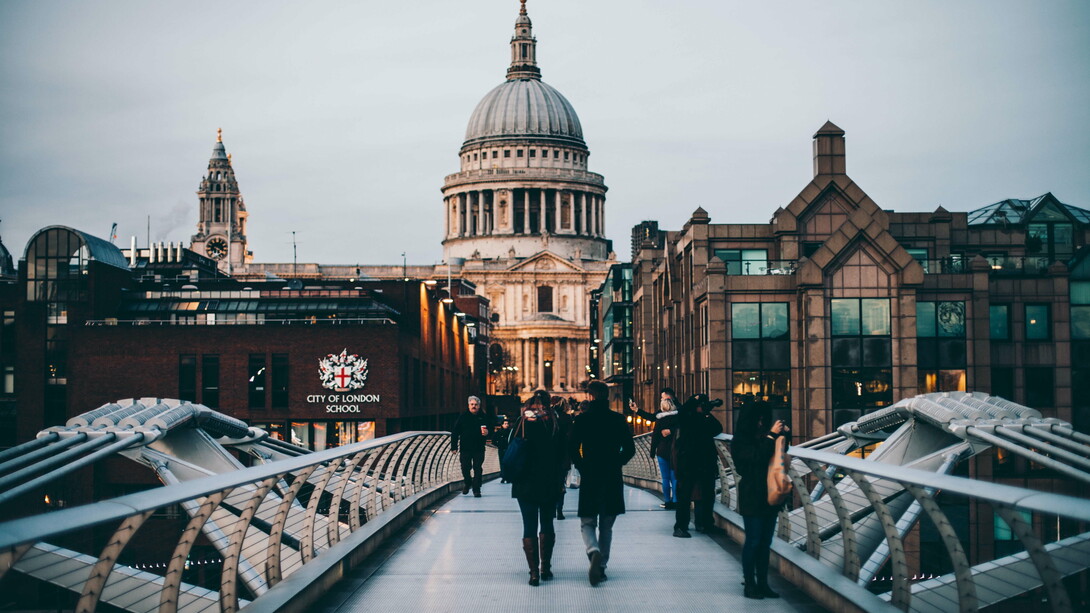
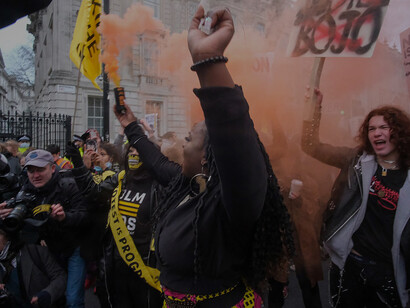
A recent September weekend saw the streets of London filled with tens of thousands of people. This was not, however, a protest for a free Palestine or a climate march – it was a symptom of something more troubling. The day marked a so-called ‘Day of Unity’ in the United Kingdom. Organised by the far-right agitator Tommy Robinson, the demonstration had one agenda: ‘Unite the Kingdom’.
There was, however, nothing unifying about this demonstration. More than 100,000 people – although reports claim the number is closer to 150,000 – filled the streets under banners demanding ‘Britain for the British’. The protests were framed as a response to rising migration, but the chants and placards told a different story: a country still arguing over who truly belongs.
Across Europe, the political mood feels increasingly tense, shaped partly by America’s own rightward turn. You don’t need policy papers to see it – simply open Facebook or X. The internet is full of frustration and resentment, and the anger that once lived mostly online is breaking into the open. What began in digital echo chambers is now spilling into real life, fuelling street movements, shaping elections, and shifting the tone of everyday politics.
The question of what it means to be British is hardly new. In the current political climate, however, it has become unavoidable. Government policies on immigration, rioting, and debates on trans rights have come to dominate headlines more than the cost-of-living crisis or global warming.
Politicians invoke identity as both a promise and a threat: an imagined glue to hold the nation together or a weapon to divide it. In 2025, the contest over who gets to belong is no longer a side issue – it is the terrain on which British politics is being fought.
But why has it come to this? Immigration has become one of the most charged issues in public debate, with migrants – regardless of their legal status – too often cast as convenient scapegoats for far deeper national problems.
What does it mean to be ‘British’?
The story of immigration to Britain is one of shifting motives and constant change. It is a historical fact that there have always been episodes of migration to Britain, but those episodes were relatively small and demographically insignificant until the Second World War.
The British Nationality Act of 1948 was a turning point. With the empire rapidly shrinking and the shattered economy in urgent need of rebuilding, the government created a new nationality status: “Citizen of the United Kingdom and Colonies”.
This development granted Commonwealth citizens the right to live and work in Britain, thus laying the foundation for the arrival of the Windrush generation (post‑World War II Caribbean migrants who arrived in the UK between 1948 and the early 1970s) and subsequently followed by migrants from other former colonies.
Between 1955 and 1962, an estimated 472,000 Commonwealth citizens settled in the UK under these open conditions. In the decades that followed, migration only accelerated. Between 1991 and 2001, the foreign-born population rose by around 1.1 million, with the steepest increases occurring from the late 1990s onwards. The following decade brought an even more dramatic shift: almost three million new arrivals between 2001 and 2011 – a demographic transformation without precedent in British history.
Although the law provided legal recognition, social acceptance was far harder to secure. For many newcomers, belonging was something that had to be negotiated daily, a reminder that citizenship on paper did not always translate into being seen as truly British.
In this increasingly multicultural and multinational environment, the meaning of patriotism and national pride has become more complicated. Who gets to be British – and who doesn’t – remains a question that is central to the political climate today.
2025: the current political climate
In 2025, identity has now become the currency of British politics. For the Conservatives – as well as more hardline political parties such as Reform UK – the language of “British values” remains central. National pride, cultural conservatism, and ever-tighter restrictions on immigration are pushed so forcefully that, at times, Britain risks appearing closer to a far-right state than a ‘liberal democracy’.
Indeed, a growing percentage of the population – largely older men with nativist leanings – see Britain’s modern identity as a story of loss rather than progress. Their politics are conservative, sometimes even authoritarian, shaped by the conviction that other groups have gained at their expense. For them, the past 75 years of cultural change represent not milestones of progress but threats to a Britain they no longer recognise.
Moreover, ministers continue to centralise immigration, framing it as not only an economic challenge but a cultural one, warning of threats to ‘our way of life’. As the Runnymede Trust notes, parliamentary debates are dominated by terms like ‘illegal’ when describing migrants – a rather telling linguistic choice that reinforces exclusion rather than belonging (Guardian, Jan 2025).
However, while Reform UK has been gaining momentum, polling shows that the British public’s relationship with right-wing ideology is far from straightforward. A YouGov survey in December 2024 found that only 2% of adults expressed a positive view of fascism, compared with 32% for conservatism. By contrast, socialism (38%), feminism (56%), and environmentalism (64%) all scored more favourably, suggesting that, despite the noise of the populist right, broader ideological sympathies lean in a more progressive direction.
Labour, the current party of government, has always promoted itself as left-leaning. Since the 1990s, however, the ‘New Labour’ party has repositioned itself toward the political centre, embracing market-friendly policies and a more moderate social agenda in an effort to broaden its electoral appeal.
This balancing act, which continues to emphasise inclusivity and diversity, promises a Britain that reflects the communities within it. Yet, in trying not to alienate more socially conservative voters, they risk something worse – alienating the very supporters who put them in power.
This tension was clear when Labour MPs debated diversity frameworks earlier this year, with some warning that embracing DEI (diversity, equity, and inclusion) language too strongly risked driving voters towards Reform UK (Guardian, June 2025). The result is often a frustrating rhetoric of ‘unity’: inclusive on the surface, but designed more to placate swing voters than to confront the realities of inequality.
Beyond the two main parties, other voices offer different visions of belonging. In Scotland, the SNP casts national identity as civic and open-ended: anyone who chooses Scotland can be Scottish. Plaid Cymru in Wales takes a cultural route, rooting pride in language and heritage but rejecting the narrowness of ethnic nationalism. The Greens pitch identity in global terms, foregrounding environmental solidarity over borders.
Meanwhile, Reform UK pushes a starkly different message, advocating for a narrower, nostalgic vision of Britishness. As a NatCen study observed earlier this year, cultural attitudes to immigration, gender, and national pride are now as powerful in predicting political loyalties as class or income.
Across this spectrum, one thing is clear: the political class sees identity not just as background context but as a wedge issue, a tool for dividing constituencies and sharpening loyalties. Belonging, once assumed, is now something politicians compete to define… and to weaponise.
The future of belonging
Who qualifies as “British” varies depending on where you look. In the legal sense, it’s a matter of passports, visas, and citizenship tests. But in everyday life, the boundaries are murkier. Culture, race, and even generation shape how belonging is policed and performed. A British Asian born in Birmingham may still be asked where they are ‘really’ from; a foreign name is an invitation to question lineage and legal status.
At the very moment Britain is more diverse than ever – in its food, culture, music, and faces – its politics seems increasingly consumed by narrowing definitions of national identity. For older generations, Britishness tends to conjure wartime sacrifice or imperial nostalgia, while younger people embrace a more hybrid sense of identity, one that is global and less tied to tradition.
Beyond the politics of borders and bureaucracy, belonging is also lived through the mundane: NHS pride, football, music, humour, or even the art of queuing. In 2025, Britishness is as much about who is recognised as belonging as it is about who carries the paperwork.
But what will Britishness look like in the years to come? Will it shrink into an exclusionary label or expand into a plural, inclusive identity?
It is an unfortunate possibility that a defensive nationalism could take hold. Identity might be wielded as a weapon, with borders tightened and cultural homogeneity idealised. Political rhetoric around ‘British values’ and nativist anxieties could harden, marginalising communities seen as outsiders and deepening social divides. In this scenario, identity becomes a test of conformity, not a celebration of difference.
On the other hand, however, an inclusive vision of Britishness is also possible. Here, identity is shaped by the people themselves. Ultimately, the future of belonging will not simply be written in Westminster speeches but in the everyday decisions of communities, workplaces, and families. Britishness may either shrink into a myth of the past or grow into something vibrant and plural, shaped by those who call it home.