English
 Español
 Français
 Deutsch
 Italiano
 Português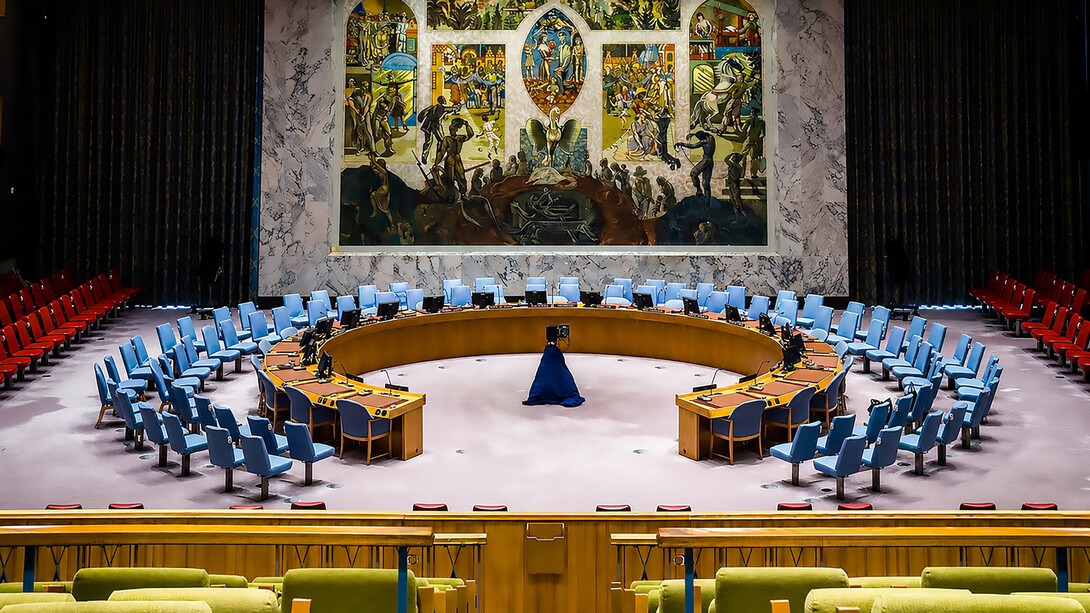
At a time when wars, humanitarian disasters, economic instability, climate emergencies, and geopolitical rivalries increasingly dominate international affairs, questions surrounding the effectiveness of the United Nations (UN) have become more relevant than ever. Established in 1945 in the aftermath of the Second World War, the UN was envisioned as a platform to maintain international peace and security, foster cooperation among states, and prevent future global catastrophes. Yet, nearly eight decades later, the organisation faces growing criticism over its inability to decisively address many of today’s most pressing crises. This raises an important question: can the United Nations still effectively manage global crises in an increasingly fragmented and polarised world?
The answer is neither entirely positive nor entirely negative. While the UN continues to play an indispensable role in global governance, its effectiveness has been significantly constrained by geopolitical divisions, institutional limitations, and the changing nature of international conflicts.
One of the strongest criticisms directed at the UN concerns its inability to prevent or stop major armed conflicts. The ongoing wars in regions such as the Middle East, Ukraine, and parts of Africa have exposed the limitations of the organisation, particularly the UN Security Council. Designed as the central body responsible for maintaining international peace and security, the Council is often paralysed by the veto power held by its five permanent members — the United States, Russia, China, the United Kingdom, and France. These geopolitical rivalries frequently prevent collective action, even in the face of large-scale humanitarian suffering.
The war in Ukraine, for example, highlighted the structural weakness of the Security Council when Russia, itself a permanent member, vetoed resolutions directed against its actions. Similarly, divisions among major powers have hindered stronger and more unified responses to conflicts in Gaza, Syria, and elsewhere. As a result, many critics argue that the UN increasingly reflects the political realities of 1945 rather than the complexities of the modern international system.
However, focusing solely on the failures of the Security Council overlooks the broader contributions of the United Nations system. Despite political deadlocks, the UN remains one of the world’s most important humanitarian actors. Agencies such as the United Nations High Commissioner for Refugees (UNHCR), the World Food Programme (WFP), UNICEF, and the World Health Organization (WHO) continue to provide critical assistance to millions of people affected by war, displacement, poverty, disease, and natural disasters.
During the COVID-19 pandemic, for instance, the WHO played a central role in coordinating international public health responses, sharing scientific information, and supporting vaccination efforts across developing countries. Likewise, UN humanitarian agencies remain essential in responding to refugee crises in Sudan, Afghanistan, Gaza, and other conflict zones. While the organisation may struggle to prevent conflicts politically, it still functions as a vital mechanism for humanitarian coordination and global assistance.
Moreover, the UN continues to serve as an important diplomatic platform where states, regardless of size or power, can engage in dialogue. In an era marked by increasing geopolitical tensions and declining trust between major powers, the existence of a multilateral forum remains highly significant. Even when concrete solutions are difficult to achieve, the UN provides a space for negotiation, mediation, and international consensus-building that would otherwise be absent.
Another area where the UN maintains relevance is global norm-setting. Over the decades, the organisation has played a crucial role in promoting international law, human rights, sustainable development, gender equality, and climate action. Frameworks such as the Sustainable Development Goals (SDGs) and international climate agreements demonstrate the UN’s continuing influence in shaping global priorities. Although implementation often depends on member states, the organisation still acts as a moral and institutional reference point for international cooperation.
Nevertheless, the growing shift toward multipolarity poses additional challenges for the UN. The international system is no longer dominated by a single superpower or a relatively stable bipolar order. Instead, rising powers such as China, India, and regional actors increasingly assert their own geopolitical interests. This has intensified strategic competition and complicated efforts to achieve consensus within international institutions. In many cases, states prioritise national interests and regional alliances over collective global action.
At the same time, contemporary crises themselves have become more complex. Climate change, cyber insecurity, pandemics, mass migration, food insecurity, and transnational terrorism require coordinated international responses that no single country can manage alone. Ironically, while global challenges increasingly demand multilateral cooperation, political fragmentation has weakened the very institutions designed to facilitate such cooperation.
For the United Nations to remain effective in the future, meaningful reforms are necessary. Calls for restructuring the Security Council have intensified, particularly regarding the expansion of permanent representation to better reflect current global realities. Many argue that countries from Africa, Latin America, and South Asia remain under-represented in global decision-making structures. Reforming veto mechanisms and improving institutional transparency could also strengthen the legitimacy and credibility of the organisation.
Yet, despite its shortcomings, it is important to recognise that the weaknesses of the UN often reflect the divisions among member states themselves. The organisation can only be as effective as the political will of its members allows. Expecting the UN to independently solve global crises without cooperation from major powers is unrealistic. The UN is not a world government; rather, it is a platform through which states attempt, sometimes successfully and sometimes unsuccessfully, to manage collective global problems.
In conclusion, the United Nations remains both indispensable and imperfect. Although it has struggled to effectively prevent conflicts and respond decisively to geopolitical crises, it continues to play a critical role in humanitarian assistance, diplomacy, international law, and global governance. In an increasingly unstable and multipolar world, the need for multilateral cooperation has become more urgent, not less. The real challenge, therefore, is not whether the United Nations can still manage global crises, but whether the international community is willing to strengthen and support the institution needed to do so.