English
 Español
 Français
 Deutsch
 Italiano
 Português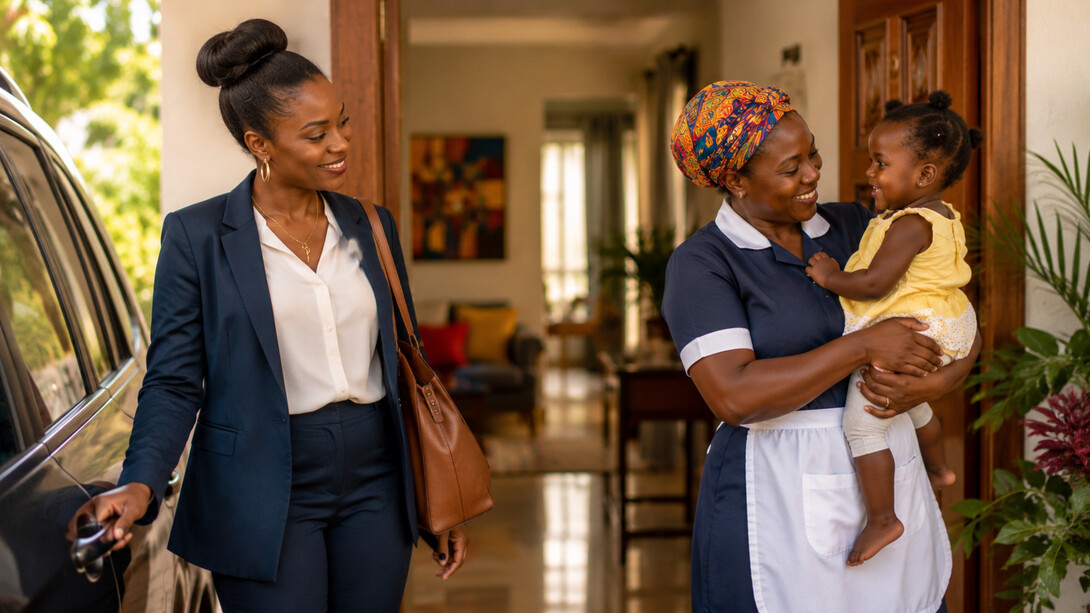
For generations, the African home was sustained by a collective, deeply woven communal ecosystem. The popular proverb noting that it takes a village to raise a child was never just a theoretical sentiment or a poetic phrase; it was a daily operational framework.
Grandmothers, aunties, older cousins, and trusted neighbours formed an intricate, reliable network of shared labour, childcare, and informal domestic education. In this environment, responsibility was distributed, and young people absorbed the realities of running a home simply by existing within this cooperative structure. However, rapid urbanisation, the economic necessity of dual-income households, and the monumental rise of the corporate African woman have drastically altered this landscape.
Today, the traditional village has largely been monetised and professionalised. In bustling urban centres across the continent, from Nairobi to Lagos, the historical communal network has been replaced by a thriving, indispensable industry of paid domestic workers. This shift has catalysed a profound sociological transformation within the modern family structure, unlocking unprecedented economic freedom for professional women while simultaneously rewriting the traditional rules of domestic life skills, maternal presence, and the cultural education of the next generation.
To fully understand the rise of domestic help in Africa, one must first acknowledge the immense structural freedom and equity it provides. For decades, the societal expectations placed on ambitious African women were inherently unsustainable, requiring them to compete equally in the cutthroat corporate boardroom while simultaneously managing a spotless home, cooking fresh meals from scratch daily, and raising well-adjusted children. The widespread availability of affordable, full-time domestic help has acted as a critical equaliser in this regard.
It serves as the hidden engine behind the rise of modern female leadership, allowing women to step into corporate, political, and entrepreneurial spaces that were historically dominated by men. By outsourcing labour-intensive, time-consuming tasks like laundry, deep house cleaning, and daily meal preparations, women have effectively reclaimed thousands of hours of their time annually. This salvaged time is directly reinvested into higher education, professional development, and community leadership.
Furthermore, this domestic economy provides vital economic empowerment and a crucial safety net for young women migrating from rural areas to urban centres, offering steady incomes, housing, and meals that fund healthcare, education and the overall wellbeing of their families back home. On a personal level, outsourcing these exhausting chores can actually enhance the quality of parenting; a mother returning home after a gruelling multi-hour urban commute is spared the physical exhaustion of immediate manual labour, allowing her to dedicate her remaining evening hours entirely to emotional bonding, assisting with homework, and truly engaging with her children.
Yet, despite these undeniable societal and economic benefits, the absolute, unchecked reliance on domestic workers has introduced a complex layer of psychological and cultural challenges. There is a growing, necessary critique that the modern African woman has, in some instances, stepped back too far from the domestic sphere, completely outsourcing the core management of her own home and children to the point of personal abdication. When a househelp transitions from an assistant to the primary caregiver, becoming the first person a child sees in the morning, the one who prepares every single meal, and the primary comfort they seek when they are hurt or crying, the essential parental bond inevitably begins to thin.
Some professional mothers find themselves in the painful, distressing position of watching their children instinctively run to a nanny for emotional security rather than to them, creating a subtle but devastating shift in parental authority and an unintended emotional distance. Moreover, managing a home is not menial work; it is a foundational form of leadership that requires budgeting, complex logistics, hospitality, and immense emotional intelligence.
When a woman detaches entirely from these operational realities, choosing to know nothing about the running of her own kitchen or household supplies, she yields a significant amount of personal agency. This total displacement leaves the household incredibly vulnerable, risking complete operational collapse the moment the helper leaves unexpectedly or goes away on holiday.
Perhaps the most profound and lasting consequence of this domestic shift is its direct impact on the learning culture of young women growing up in these modernised households. In traditional African settings, the home functioned as a foundational training ground where young people learned self-reliance, time management, grit, and basic survival skills by actively participating in daily chores. Today, in many affluent and middle-class urban homes, children grow up in a sterile environment of convenience where they may never wash a dish, make their own beds, or learn how to prepare a basic meal.
When these young women eventually enter university, study abroad, or move into their own independent apartments, they frequently face a rude and disorienting awakening. While academic intelligence and professional degrees are incredibly vital assets, they cannot replace basic life literacy. A young woman who can solve complex economic equations, code software, or draft brilliant corporate strategies but lacks the practical ability to manage her own living space, budget for groceries, or maintain a clean environment misses a core pillar of personal independence and self-actualisation.
This insulated environment can also inadvertently foster a corrosive culture of entitlement, completely erasing the grit, discipline, and humility that naturally come from manual labor and the responsibility of maintaining one’s own space. When a child grows up knowing they can simply leave a mess behind them or snap their fingers to have their immediate surroundings managed by someone else, it fundamentally alters their long-term work ethic, patience, and intrinsic drive.
Beyond the loss of individual independence, this heavy reliance threatens to break the chain of cultural transmission. In the African context, cooking and food preparation are not merely about nutrition or sustenance; they represent a rich repository of culture, oral history, family lineage, and communal identity. Traditional recipes, the secrets of blending local spices, and the specific art of slow cooking have historically been passed down directly from generation to generation within the warmth of the kitchen.
When the kitchen is completely surrendered to a househelp who may not share the family's specific cultural roots, this delicate chain of transmission is broken. The unique culinary identity and heritage of a family risk being lost entirely simply because the daughters of the house are not present in the kitchen to inherit them.
The rise of househelps in African homes is not a regressive trend that can or should be reversed, nor is it something to be viewed with shame; it is a natural, predictable byproduct of economic evolution, urbanisation, and female empowerment. The objective is never to force brilliant, capable women back into full-time domestic servitude or restrict their ambitions, but rather to find a healthy, conscious common ground.
True balance involves adopting a thoughtful, human-in-the-loop approach to running a household, where technology and external labor are integrated strategically without erasing human connection and responsibility. This means outsourcing the heavy, exhausting physical labor while intentionally retaining strict ownership of emotional check-ins, core mealtimes, and evening routines. It requires establishing firm household rules where children remain completely responsible for the upkeep of their personal spaces and actively assist with weekend tasks, ensuring they build resilience and practical life skills regardless of the number of domestic helpers employed.
Ultimately, a househelp should be viewed as a professional asset that empowers an African woman to thrive and innovate in all spheres of her life, not as a crutch that causes her or her children to lose their self-reliance, cultural grounding, and domestic autonomy. True empowerment, and the ultimate goal for the modern African woman, lies in the hard-earned ability to command the corporate boardroom without losing the vital, irreplaceable heartbeat of the home.