English
 Español
 Français
 Deutsch
 Italiano
 Português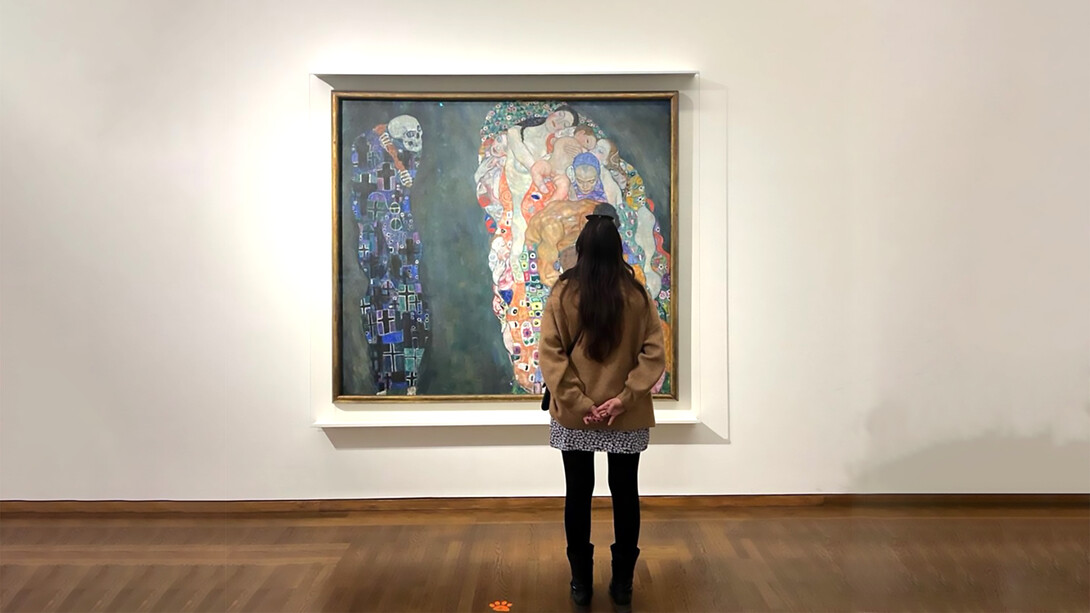
Nestled in the heart of Vienna’s vibrant Museums Quartier, the Leopold Museum stands as a luminous shrine to Austrian modernism. For anyone with even a passing interest in early 20th-century art, it is a must-see. But for fans of Egon Schiele, it is nothing short of a pilgrimage site. Having recently visited, I can say with absolute certainty that the museum offers not just an artistic journey, but a deeply emotional one. This is particularly true for those who revere Schiele’s singular vision and raw psychological intensity1.
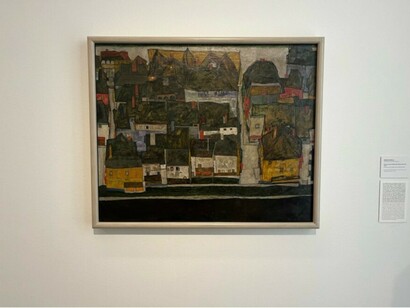
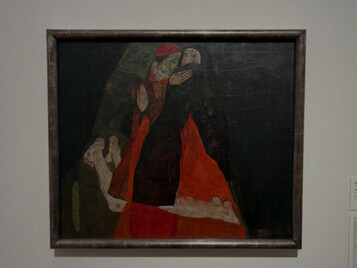
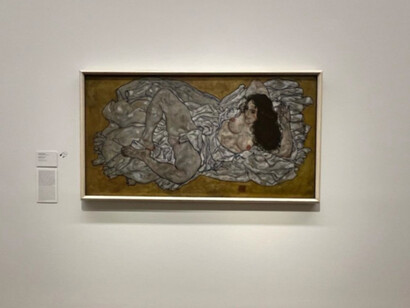
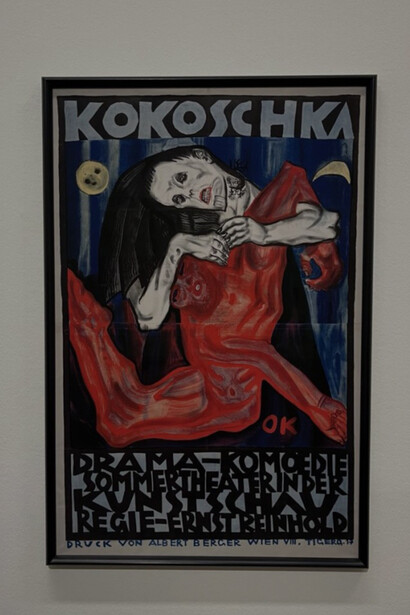
The museum, opened in 2001, houses one of the most important collections of Austrian art from the turn of the century. At its core is the Leopold Collection, assembled over decades by Rudolf Leopold, a passionate collector and early advocate of Schiele’s genius2. What began as a personal obsession, often pursued in the face of indifference from the art establishment, has grown into an internationally acclaimed institution. It now contains hundreds of works by Schiele, Gustav Klimt, Oskar Kokoschka, Richard Gerstl, and others who helped define Vienna’s golden age of art and intellect3.
From the moment you step inside, the museum’s architecture sets the tone for what follows. The space is modern yet meditative, with white walls, clean lines, and wide expanses of natural light. This deliberate simplicity offers a stark and respectful backdrop for the emotionally charged works on display. The absence of visual clutter allows you to stand face-to-face with the art, unmediated, as if the walls themselves are urging you to focus solely on what hangs before you4.
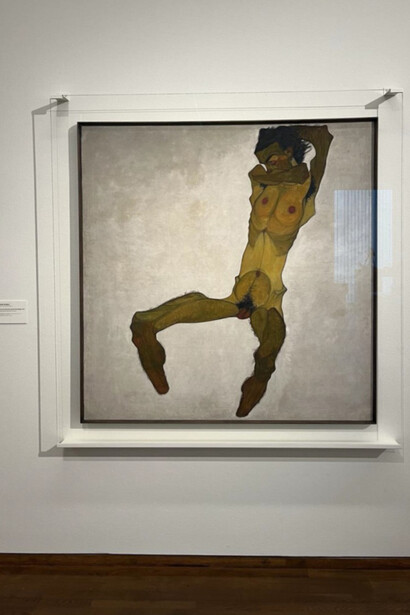
The sheer volume and intensity of Schiele’s work on display creates an atmosphere that is as gripping as it is unforgettable. It’s not just the quantity, it’s the sense of inhabiting his world. From his early academic sketches to the dark, gaunt self-portraits and unsettlingly intimate nudes, the collection allows you to trace his artistic and psychological evolution1. Standing before these works, I was struck by the tactile reality of them: the coarse texture of the paper, the deliberate irregularity of the line, the thin washes of watercolour that bleed emotion as much as pigment. No reproduction, no matter how crisp or well-printed, can prepare you for the raw energy that radiates from the originals.
One of the most moving experiences is stepping into the room devoted to his self-portraits. Schiele’s portrayals of himself, often twisted, emaciated, or staring with an unblinking gaze. They reveal an artist both enthralled and tormented by his own image. In person, they are disarmingly direct. You feel the weight of his eyes upon you, the way he used his own body as both subject and metaphor. The fragility of flesh, something Schiele returned to obsessively, takes on added resonance when you remember that he
died at just 28 during the 1918 Spanish flu pandemic, days after losing his pregnant wife. Here, art and biography collide with a force that is hard to shake2 .
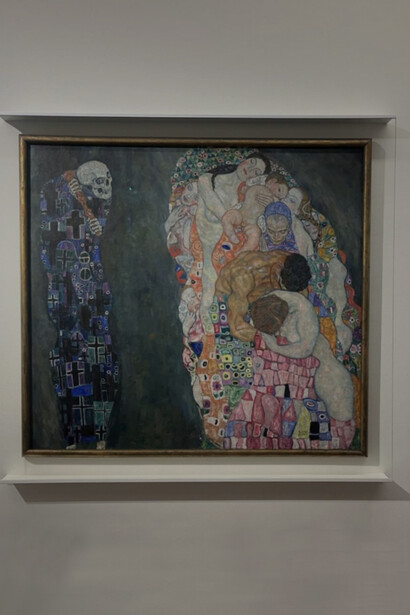
The museum does more than celebrate Schiele in isolation, it situates him within his broader artistic environment. Works by Klimt, his mentor and sometime patron, offer a shimmering counterpoint to Schiele’s starkness. Klimt’s sensuous gold and floral ornamentation can almost feel like a warm embrace before you step back into Schiele’s unflinching world. Kokoschka’s frenetic brushwork and emotional turbulence provide yet another layer to the era’s complex artistic tapestry. The curators use these juxtapositions to illuminate the crosscurrents of influence, rivalry, and shared innovation that defined Vienna’s modernist movement3.
Among the most powerful spaces is the section dedicated to Schiele’s prison drawings. These pieces were created during a brief incarceration in 1912, when Schiele was charged with indecency, a charge that stemmed from his erotic works and unconventional lifestyle. The drawings from this period are stripped down, intimate, and haunting. They seem to carry the weight of confinement and public condemnation, yet also a strange clarity of vision. To stand before them after reading about their origin is to feel the tension between vulnerability and defiance that pulses through so much of his work. In that room, Schiele is both artist and witness to his own persecution1.
Yet the Leopold Museum is not solely about Schiele. It also opens a window onto the wider world of Viennese modernism. Alongside paintings and drawings, the museum features decorative arts, photography, and furniture from the Wiener Werkstätte movement, demonstrating how the ideals of beauty and innovation permeated all aspects of life at the time. This broader context deepens the appreciation of Schiele’s place in history, not as a lone genius working in a vacuum, but as part of a larger cultural transformation that was redefining art, design, and daily living4.
The curatorial approach is one of passion balanced by precision. Thematic groupings and carefully written wall texts guide you without dictating your interpretation. You’re free to wander, to linger, to let the works speak in their own voice. For first-time visitors, the museum offers a compelling introduction to Austrian modernism; for returning guests, it rewards repeated viewing with new details and connections that emerge with each encounter.
When I finally stepped outside, I felt both emotionally charged and intellectually invigorated. The Leopold Museum doesn’t just display Egon Schiele’s works, it breathes life into them. It creates a space where they can haunt, seduce, and linger in the mind
long after you’ve left. For those who already love Schiele, it is the closest you will come to walking through the fevered dreamscape of his imagination. For those new to his art, it is a revelation, one that may leave you questioning not just the artist’s life but your own relationship with beauty, desire, and mortality.
If Vienna is often imagined as a city of gilded palaces, Strauss waltzes, and refined traditions, then the Leopold Museum is its necessary counterweight. It is a raw, honest, and brilliantly executed ode to the tormented beauty of human expression. It’s a place where you don’t just look at art, you feel it in your bones.
References
1 Kallir, Jane. Egon Schiele: The Complete Works. Revised edition. New York: Harry N. Abrams, 1998.
2 Leopold, Rudolf. Egon Schiele. Cologne: Taschen, various editions.
3 Schorske, Carl E. Fin-de-Siècle Vienna: Politics and Culture. New York: Vintage Books, 1980.
4 Gamper, Verena. Leopold Museum: Highlights of the Collection. Vienna: Leopold Museum-Privatstiftung, 2019.