English
 Español
 Français
 Deutsch
 Italiano
 Português
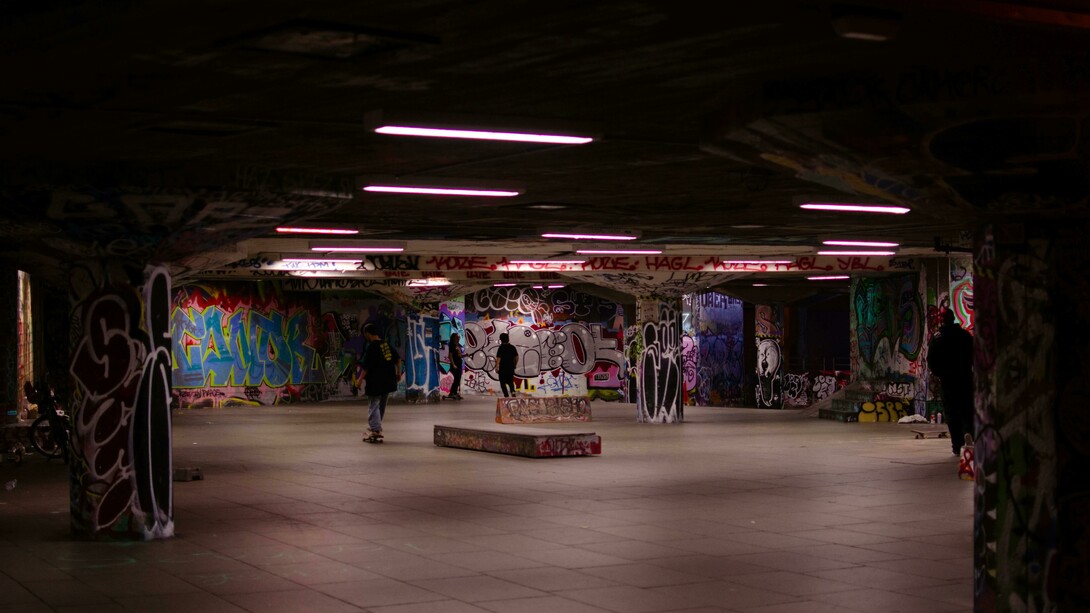
Around the early years of the 1960s, the downtown walls of many cities from around the world were used by the people as surfaces for graffiti and protest slogans. Even though the habit of using walls as media for scripts and protest phrases is not really new, the diffusion of new tools like the "spray can colors" (destined to fix cars, covering stains and scratches) permits people to write signs and scripts over buildings and downtown walls very fast with an unleashed desire. Is it the rise of the age of "graffiti on the walls"?
Initially, these "graffiti" were primarily a form of protest and occasionally included pornographic drawings. The end of the 60s is the age of the disputed "Vietnam War" and the political riots (not a real revolution!) of 1968 in Europe, and for a little bit also in the U.S.A. Slightly, the thing goes to an evolution: strange forms of illustration and iconic figures are appearing on the walls. Not only protest figures but also fantastic signs, cartoons, and personages are often created at once by the people with "spray cans" in their hands. A new form of expression in the world of contemporary art is born.
Jean-Michel Basquiat
Jean-Michel Basquiat (1960–1988) was an American artist who rose to fame during the 1980s as part of the Neo-Expressionist movement. Basquiat first achieved fame as part of the graffiti duo SAMO, alongside Al Diaz, writing enigmatic epigrams in the cultural hotbed of Manhattan's Lower East Side during the late 1970s, where rap, punk, and street art coalesced into early hip-hop music culture. Discovered and launched by Andy Warhol during the early 1980s, his paintings were exhibited in galleries and museums internationally. At 21, Basquiat became the youngest artist to ever take part in documenta in Kassel.
Basquiat's art focused on dichotomies such as wealth versus poverty, integration versus segregation, and inner versus outer experience. He appropriated poetry, drawing, and painting and married text and image, abstraction, figuration, and historical information mixed with contemporary critique. He used social commentary in his paintings as a tool for introspection and for identifying with his experiences in the Black community of his time, as well as attacks on power structures and systems of racism. His visual poetics were acutely political and direct in their criticism of colonialism and support for class struggle.
Keith Haring
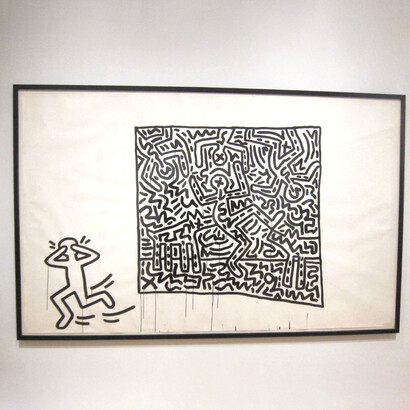
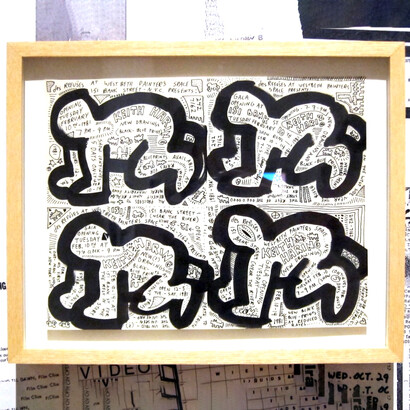
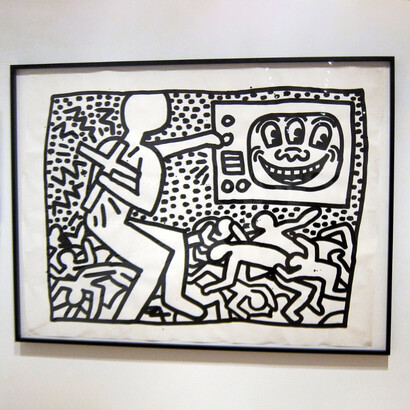
Keith Allen Haring (1958–1990) was an American artist whose pop art emerged from the New York City graffiti subculture of the 1980s. His animated imagery has "become a widely recognized visual language." Much of his work includes sexual allusions that turned into social activism by using the images to advocate for safe sex and AIDS awareness. In addition to solo gallery exhibitions, he participated in renowned national and international group shows such as documenta in Kassel, the Whitney Biennial in New York, the São Paulo Biennial, and the Venice Biennale.
Haring's popularity grew from his spontaneous drawings in New York City subways—chalk outlines of figures, dogs, and other stylized images on blank black advertising spaces. After gaining public recognition, he created colorful, larger-scale murals, many commissioned. He produced more than 50 public artworks between 1982 and 1989, many of them created voluntarily for hospitals, day care centers, and schools. Haring died on February 16, 1990, of AIDS-related complications.
Banksy
Banksy is a pseudonymous England-based street artist, political activist, and film director whose real name and identity remain unconfirmed and the subject of speculation. Active since the 1990s, his satirical street art and subversive epigrams combine dark humor with graffiti executed in a distinctive "stenciling technique." His works of political and social commentary have appeared on streets, walls, and bridges throughout the world. Banksy's work grew out of the Bristol underground scene, which involved collaborations between artists and musicians. Banksy says that he was inspired by 3D, a graffiti artist and founding member of the musical group Massive Attack.
Banksy displays his art on publicly visible surfaces such as walls and self-built physical prop pieces. Banksy no longer sells photographs or reproductions of his street graffiti, but his public "installations" are regularly resold, often even by removing the wall they were painted on. Much of his work can be classified as temporary art. A small number of Banksy's works are officially, non-publicly, sold through an agency created by Banksy named Pest Control. Banksy's documentary film Exit Through the Gift Shop (2010) made its debut at the 2010 Sundance Film Festival. In January 2011, he was nominated for the Academy Award for Best Documentary Feature for the film. In 2014, he was awarded Person of the Year at the 2014 Webby Awards.
Art to consume, art for success
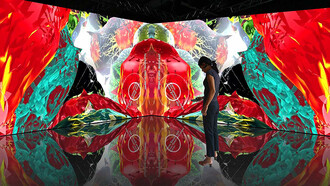
The world of contemporary art between the end of the 80s and the current day is no longer dominated by a main movement. After the rise of "Graffiti Art," the main news was the coming of "Digital Art," "Computer Graphic Design," "3D Design," and other tools. The market became varied, and modern art became a consumistic phenomenon. In Italy, the main experts to understand what's new and what's moving from the modern art horizon were Vittorio Sgarbi (more related to the classics or neo-figurative artists), Federico Zeri, Achille Bonito Oliva, and Philippe Daverio. Many modern art galleries are appearing in the Western world. For the first time ever, modern art becomes a "star system." Everyone is welcome!
Fernando Botero
Fernando Botero Angulo (1932–2023) was a Colombian figurative artist and sculptor, born in Medellín. He created his own personal style, also known as Boterismo, depicting people and figures with exaggerated volume, often interpreted as political criticism or humor.
As a highly successful seller of his works, he can be considered among the most recognized and quoted living artists in the world, with many of his masterpieces placed in some of the most important locations worldwide, such as Park Avenue in New York City and the Champs-Élysées in Paris.
Antonio Ligabue
Antonio Ligabue (1899–1965; born Antonio Laccabue) was an Italian painter. He is considered one of the most important Naïve artists of the 20th century.
During World War II, in 1942, the painter changed his surname from Laccabue to Ligabue. This change is presumed to have been due to his hatred toward his father, whom he considered guilty of the uxoricide of his mother. His early formation can be dated to September 1900, when he was entrusted to the Swiss Johannes Valentin Göbel and Elise Hanselmann.
Ligabue became known for his isolated and troubled life, working occasionally as a farmhand and leading a strange and wandering existence. This instability was one of the reasons for his hospitalization in a psychiatric clinic.
In 1928, after meeting Renato Marino Mazzacurati, Ligabue’s artistic abilities were recognized and encouraged. Mazzacurati supported him and introduced him to oil painting techniques. In the following years, Ligabue devoted himself more intensely to painting, although he continued to live a confused life, wandering along the River Po.
After 1948, he began painting more consistently, attracting the attention of journalists, critics, and art dealers. He died in 1965, having achieved recognition, though sadly after a long illness. Today, Ligabue is still considered one of the most important self-taught painters in art history and one of the most original artists of the 20th century.
Modern stars of architecture
Renzo Piano
Renzo Piano (1937) is one of the most famous Italian architects. Among his most notable buildings are the Centre Georges Pompidou in Paris (with Richard Rogers, 1977), The Shard in London (2012), the Whitney Museum of American Art in New York City (2015), and the Stavros Niarchos Foundation Cultural Center in Athens (2016). He was awarded the Pritzker Architecture Prize in 1998.
Piano was born and raised in Genoa, Italy, into a family of builders. His grandfather founded a masonry enterprise that was later expanded by his father, Carlo Piano, together with his three brothers, into the firm Fratelli Piano. After World War II, the company prospered through the construction of houses and factories and the sale of building materials.
After Carlo Piano’s retirement, the enterprise was led by Renzo’s older brother, Ermanno, an engineer who graduated from the University of Genoa. Renzo studied architecture at the University of Florence and the Polytechnic University of Milan. He specialized in the study of new technologies, writing a dissertation on modular coordination under the supervision of Giuseppe Ciribini. This work led him to experiment with lightweight structures and basic shelters.
Massimiliano Fuksas
Massimiliano Fuksas (1944) is an Italian-Lithuanian architect and founder of Studio Fuksas, which he runs in partnership with his wife, Doriana Mandrelli Fuksas, with offices in Rome, Paris, and Shenzhen.
In the early 1960s, a significant meeting with Giorgio de Chirico in Rome led to an important collaboration. Since 1985, Fuksas has worked in partnership with his wife Doriana Mandrelli, who graduated in architecture in Paris in 2007.
His international success led to the opening of additional offices in Paris (1989), Vienna (1993), Frankfurt (2002), and Shenzhen, China (2008). One of his major achievements is the design and construction of the new Terminal 3 of Shenzhen Bao’an International Airport (2008–2013), supported by the engineering firm Knippers Helbig. The project stands as an outstanding example of parametric design and advanced production technologies applied on a large architectural scale.
Digital art in modern mass media
The avatar: Roger Dean
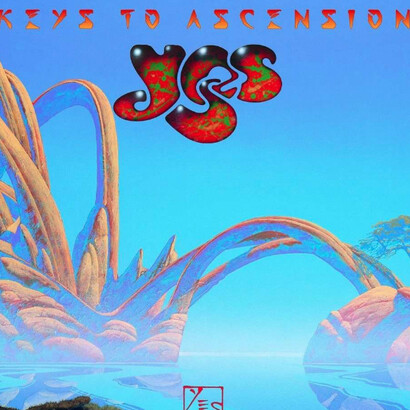
William Roger Dean (1944), known as Roger Dean, is an English artist, designer, and publisher well known to at least three generations of music collectors. He became famous for his work on posters and album covers for musicians, which he began illustrating in the late 1960s.
Some of his most recognizable works appear on album covers for the English rock bands Yes and Asia. These covers often feature exotic, fantasy, and surrealistic landscapes. His work has sold more than 150 million copies worldwide.
In later years, Dean became involved in a legal dispute after observing similarities between his paintings and scenes from James Cameron’s film Avatar (2009). Dean sued Cameron and the production team, claiming that the film’s 3D environments were deeply inspired by, if not copied from, his artwork. Reports indicate that Cameron’s defense was unsuccessful and that Dean won the dispute.
Hans Ruedi Giger
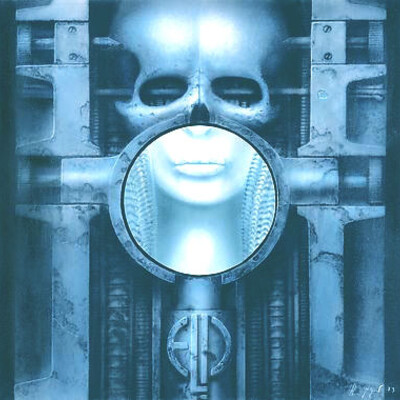
Hans Ruedi Giger (1940–2014) was a Swiss artist best known for his airbrushed images that blended human bodies with machines, creating a distinctive style known as biomechanical art.
Giger attracted the attention of film directors early in his career, most notably Alejandro Jodorowsky, who hired him for the ambitious but ultimately abandoned 1974 project Dune. The drawings produced for that project later became foundational to Giger’s future success.
After temporarily abandoning the airbrush in favor of pastels, markers, and ink, Giger joined the special effects team that won an Academy Award for the visual design of Ridley Scott’s 1979 science fiction horror film Alien. This film can be seen as the realization of ideas first developed during the failed Dune project.
His work is permanently displayed at the H.R. Giger Museum in Gruyères, Switzerland. His influence extends across multiple media, including album covers, furniture design, and tattoos.
Star Wars: 3d environments and design
Since the mid-1970s, communication and artistic production have changed significantly. The Star Wars saga is one of the clearest examples of multimedia ideas developed through technology, where cinema became the ideal vehicle for a complete fusion of the arts.
More than ever before, cinema required painters, sculptors, and graphic designers. George Lucas initially relied on painters for the visual development of his first film in 1975, leading to the rise of computer graphics by the late 1980s, which marked a major revolution. Traditional canvases, paper, and pencils were replaced by tablets, graphic pens, and advanced computers using programs such as Maya and 3D Studio Max to create environments, characters, and worlds.
The Hipgnosis and photo-retouching
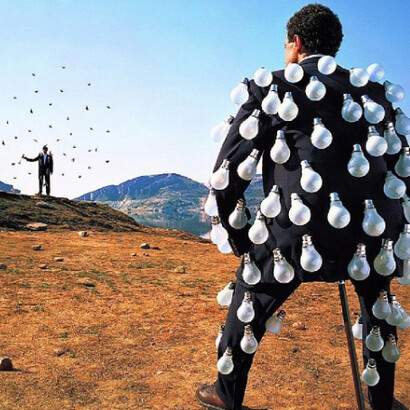
Hipgnosis was a London-based English art and design collective, widely recognized among music collectors and rock music fans. The group consisted of visionary and creative professionals specializing in album cover design for rock musicians and bands.
Their body of work is extensive, with notable commissions for Pink Floyd, T. Rex, the Pretty Things, Black Sabbath, UFO, 10cc, Bad Company, Led Zeppelin, AC/DC, Scorpions, The Nice, Paul McCartney & Wings, the Alan Parsons Project, Genesis, Peter Gabriel, Electric Light Orchestra, Rainbow, Styx, and Al Stewart.
The core members of Hipgnosis were Cambridge-born designers Storm Thorgerson (d. 2013) and Aubrey Powel, later joined by Peter Christopherson (d. 2010), who was also a founding member of the alternative rock band Throbbing Gristle. The group officially dissolved in 1983.
Thorgerson continued working independently in album design and advertising until his death. Powel later collaborated extensively with Paul McCartney and The Who in film and video production and currently serves as the creative director for both Pink Floyd and its lead singer, David Gilmour.