English
 Español
 Français
 Deutsch
 Italiano
 Português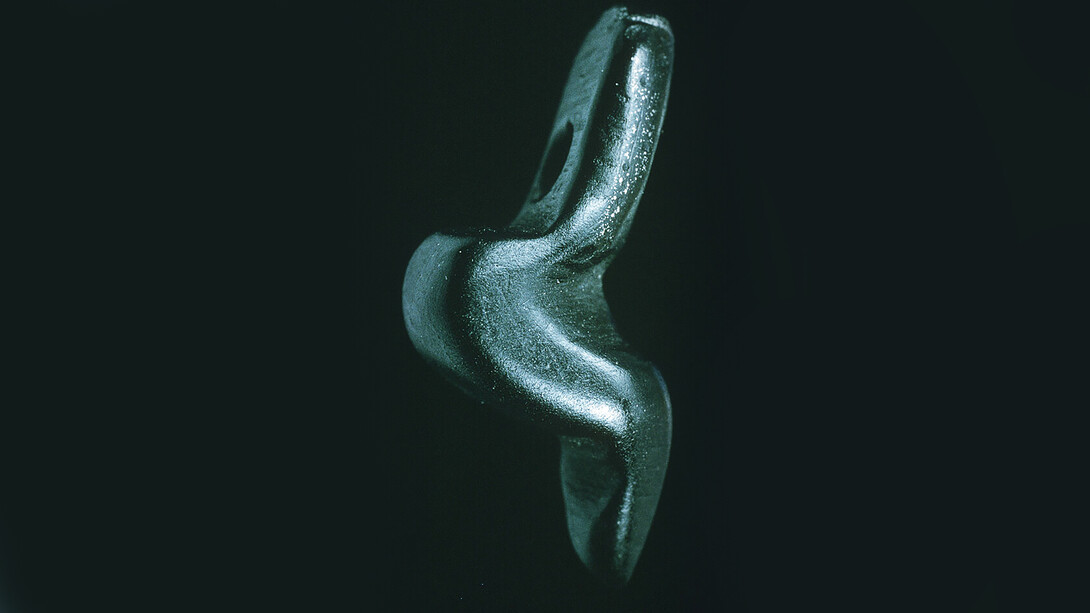
In the depths of prehistory, before written language and the invention of cities, something remarkable happened. Somewhere in the vast expanse of Ice Age Europe, a human sat with a tool in hand and shaped an image of the feminine form, not once, but perhaps multiple times, across regions now known as Switzerland and Germany.
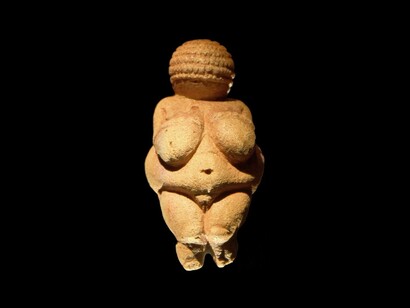
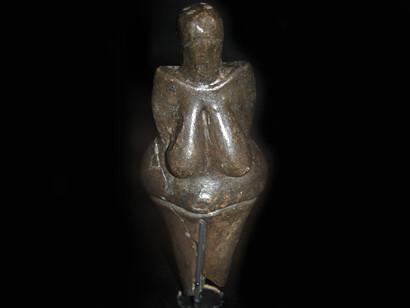
These sculpted relics, known today as the Venus of Monruz and the Venus of Engen, are more than ancient curiosities.
To me, they may represent something far more profound: the beginning of artistic recognition, the first whisper of what we now call fame.
It’s a bold thought. We often consider prehistoric art in the collective cave paintings drawn by tribes, symbolic etchings by a community.
But what if, in some cases, there was an individual behind the work?
Not just a faceless artisan, but someone whose style was recognized, appreciated, and sought after.
Someone whose creations were traded, bartered, and valued. The possibility that a single human could have carved both the Venus of Monruz and the Venus of Engen invites us to reframe the story of art: not just as communal expression, but as the origin of the artist.
The two Venuses
The Venus of Monruz was discovered in 1991 near Neuchâtel, Switzerland, during an archaeological excavation of a Paleolithic site. Carved from jet, a type of fossilized wood, this small figurine is delicate, with smooth curves and simplified anatomical details.
Scholars have dated it to roughly 11,000 years ago, placing it in the Magdalenian period, a time marked by refined artistic expression and increased human mobility across Europe.
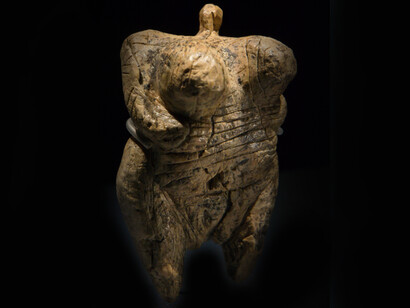
Just across the modern border, in southern Germany, lies the town of Engen. In 2003, archaeologists uncovered a remarkably similar figurine, the Venus of Engen.
Though carved from a different material (this one made of serpentine), the two share striking stylistic similarities: minimalist forms, elongated proportions, and a clear representation of the feminine.
These aren’t rough sketches of the human body. They are carefully thought out, composed, and sculpted with intention.
To the trained eye, they suggest the hand of a single creator, or at the very least, a highly specific artistic school or influence. But the question I find myself returning to is, could this be the work of one individual?
Style as signature
In today’s art world, we speak often of artistic style, a painter’s brushstroke, a sculptor’s form, and a visual language that evolves over time. Artists refine, iterate, and eventually develop a signature that distinguishes their work.
If we apply that same lens to the prehistoric world, what might we learn?
The similarities between the Venus of Monruz and the Venus of Engen may not be coincidental. They may represent the earliest evidence of such a signature. A distinct artistic identity.
What makes this all the more plausible is the relative proximity of the two discovery sites. The distance between Monruz and Engen is about 90 kilometers, a manageable journey even for nomadic groups of the time. The Magdalenian peoples were known to travel and trade widely. It’s entirely conceivable that an individual, known for their skill in carving, moved between groups, offering their craft in exchange for tools, food, shelter, or perhaps even prestige.
Imagine that: a Paleolithic artist who was known.
The artist as a figure
When we think of the term “artist” today, it conjures a variety of meanings: creator, thinker, rebel, and visionary. But at its root, being an artist means shaping materials with intention and skill, expressing something beyond the functional.
In prehistoric times, creating art was not a profession but a rare skill. Most people were concerned with survival: hunting, gathering, and staying warm. To take time to carve, to shape, to create an object not strictly needed for survival…that was something special. And it likely did not go unnoticed.
If the creator of these two figurines was, in fact, one individual, then they may represent the first known artist to gain recognition for their style. Their work had meaning. Perhaps it held spiritual significance or symbolized fertility, protection, or memory. But perhaps it also held aesthetic value; perhaps people simply admired its beauty.
In that admiration, we find the earliest seeds of what we might now call fame.
Barter, demand, and the value of art
Recognition doesn’t exist in a vacuum. It’s followed, inevitably, by demand.
In a world before currency, barter was the language of exchange. Skilled toolmakers, for instance, could trade their products for meat or hides. Hunters might exchange their catch for fire-making tools.
So what might an artist trade?
If these Venus figurines were indeed created by one hand, and if they traveled across regions, there’s a strong chance that they were bartered, exchanged for goods, or carried from place to place as prized possessions. Perhaps the artist was invited into different camps, not just as a traveler, but as someone who brought something special: beauty, symbolism, and craftsmanship.
That, to me, is a humbling and inspiring thought. The idea that even 11,000 years ago, art had value, not just symbolic, but social. That an artist could earn a place within the community not through brute strength, but through vision.
A mirror for the modern artist
As an artist today, I often reflect on what it means to be seen. In a world saturated with images, gaining recognition for one’s unique voice can be overwhelming.
But the journey is not new. It began, perhaps, with someone like the maker of the Monruz and Engen Venuses, someone who carved out a space in society by shaping their inner vision into tangible form.
This ancient creator might have known the feeling of being appreciated, of having their work sought after. Perhaps they experienced the early thrill of artistic fulfillment: not just in creating, but in connecting.
And isn't that what so many of us are still searching for?
The artist’s journey, from solitude to visibility, from personal exploration to public recognition, is as old as human creativity itself.
The Venus figurines remind us that even in the Paleolithic world, art mattered.
Beauty mattered. Expression mattered. And artists mattered.
The birth of reputation
Reputation, in its simplest form, is word of mouth.
If someone carved a beautiful figurine in Monruz, and weeks later a similar one appeared in Engen, those who saw it might have whispered, Have you seen the carvings of the one who travels? The one who knows how to shape the goddess?
Over time, that recognition could snowball. The artist might be remembered not just for one piece, but for a style, a feeling their work evoked. Reputation would precede them, opening doors and warming fires.
That’s fame, in its earliest and most human form.
Echoes through time
We may never know the name of this ancient artist, or even if such a person truly existed. But the existence of the Venus of Monruz and the Venus of Engen, so close in time, style, and geography, offers more than speculation. It offers a bridge.
A bridge between the ancient and the modern. Between anonymity and recognition. Between survival and expression.
In these figurines, I see not just the image of the feminine, but the silhouette of the artist, their hand, their eye, and their intention. And I am reminded that the need to create, and the desire to be seen for it, is not new.
It is as old as we are. Perhaps older still.