English
 Español
 Français
 Deutsch
 Italiano
 Português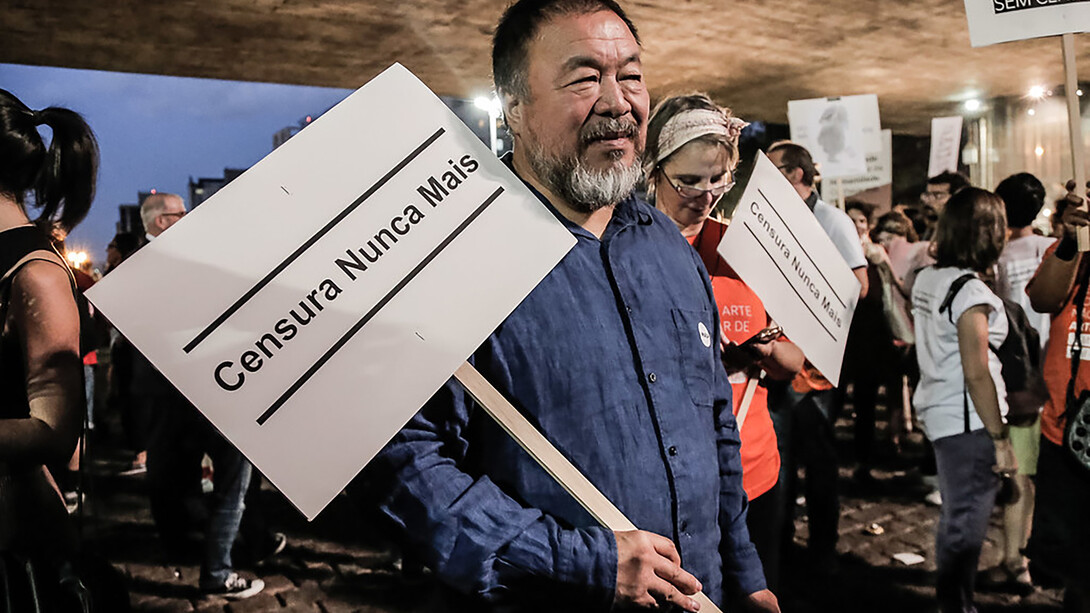
Freedom of expression in the arts—and the boundaries that may or should constrain it—has long been a subject of intense debate. Artists, critics, viewers, and institutions, both private and public, have all engaged in this ongoing negotiation of limits. The fundamental question is: how far can, or should, art go when confronting societal norms, moral and ethical values?
Artists—writers, musicians, performance and visual practitioners—often create work that expressly disturbs, provokes, or challenges. They build what I term the "zone of discomfort": an infinite, metaphoric space that leads the viewer on a path of reflection, resistance, or discovery. In this unsettling, unmapped territory, the viewer is urged to reconsider what they presume or believe. It is a place of tension, but one of potential, where intellectual and emotional growth can happen not just through harmony, but also by questioning, dissent, and debate.
Does this mean that artistic freedom of expression should be entirely unfettered? The short answer is no. The international, pan-European, and national legal frameworks define the right to freedom of expression, as do their limitations. In addition to this, there are several considerations to take into account when making an artwork publicly accessible, especially if dealing with sensitive cultural issues. These include the curatorial context and the cultural, institutional, and geographic setting in which the work is shown.
All of that notwithstanding, the line between ethical awareness and self-censorship is razor-thin, and too many artists are hurtling down the latter road. What one must ask oneself is not so much, "Will this offend someone?"—for offense is often dictated by numerous subjective factors—but rather, " What message do I want to communicate?" and "How is this message delivered through the work?"
And if the answer, honest in that case, to these queries is that the predominant intention is no more than to shock, that again is where more intensive consideration and reexamination are imperative. A glance through art history reveals movements, individual artists, and artist groups who came forward as expressive reactions of cultural, social, or political conditions within a given epoch. Their work was sometimes deemed by the public as distatsful and frequently labeled "aesthetically" or "morally offensive" for being in conflict with accepted standards of beauty, originality, technical proficiency, or decency.
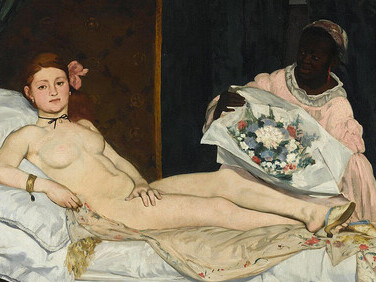
Many of these once-offensive works were later accepted—even canonized—demonstrating that boundaries of ethical acceptability and aesthetic worth are relative and ever-changing. Because these standards are temporary, blind obedience to them can lead to complacency, conformity, and ultimately creative stagnation. Olympia (1863), for instance, by Edouard Manet, elicited public outrage in the Paris Salon of 1865 for being considered both immoral and artistically offensive.
Audiences were appalled by its violation of social and artistic conventions: the model's direct gaze, unidealized figure, harsh lighting, and brushwork broke academic ideals of beauty and propriety.
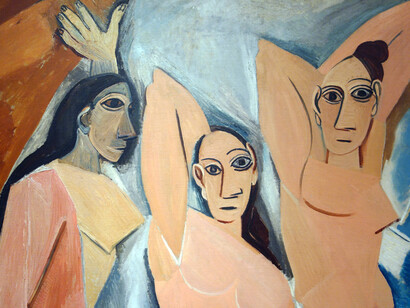
The title, which was linked to courtesans, and the inclusion of a Black maid further disturbed viewers, challenging racial and colonial assumptions of 19th-century France. Now, Olympia is well known as a pillar of modern art, praised for its realism, social commentary, and repudiation of academic idealism. Formerly condemned, it now graces the Musée d'Orsay in Paris. A few decades later, Pablo Picasso's Les Demoiselles d'Avignon (1907) similarly shocked the art world, including some of the artist's peers. Depicting five nude women in a brothel, the painting broke from Western convention in its confrontational gazes, mask-like faces, and primitivist references to African and Iberian art. So provokative was the work, that Picasso withheld it from public view for nearly a decade.
When ultimately exhibited, responses were divided: some called it grotesque and aggressive, while others praised its revolutionary possibilities.
Les Demoiselles d'Avignon, now in the collection of the Museum of Modern Art (MoMA) in New York, is recognized today as a pillar of Cubism and one of the most groundbreaking shifts in modern art.
The legal framework
The legal system is where abstract notions like freedom of expression are shaped and given concrete boundaries. Each country has its own legislation that defines what freedom of expression is and what its limitations are. However, there are also broader legal frameworks that safeguard this right at international and regional levels.
The two most important legal documents setting and securing freedom of expression across borders are Article 10 of the European Convention on Human Rights (ECHR) and Article 19 of the International Covenant on Civil and Political Rights (ICCPR).
Article 10 of the ECHR guarantees the right to freedom of expression as follows:
“Everyone has the right to freedom of expression. This right shall include freedom to hold opinions and to receive and impart information and ideas without interference by public authority and regardless of frontiers.”
Similarly, Article 19 of the ICCPR guarantees "the freedom to seek, receive, and impart information and ideas of all kinds, regardless of frontiers, either orally, in writing or print, in the form of art, or through any other media of his choice." However, neither of these rights are absolute, as both legal frameworks allow for certain restrictions. Freedom of expression can be restricted pursuant to Article 10 of the ECHR where it is found necessary in a democratic society, such as for reasons of national security, territorial integrity, or public safety; in order to prevent disorder or crime; for protecting health or morals; for protecting others' reputation or rights; for preventing the impartation of official secrets; or to maintain the authority and impartiality of the judiciary.
Article 19 of the ICCPR also permits corresponding restrictions, considering that they must clearly be established in law and aimed to preserve others' rights and reputations or to ensure national security, public order, public health, or morals. Keeping in mind that each state is best positioned to determine what is appropriate for its own society, particularly where matters are culturally sensitive, both articles provide some discretion to national governments in interpreting and applying these prohibitions. This leads to overall variation in application, notably under the ICCPR, one of the most ratified international human rights treaties, with over 170 states being signatories to it.
Terms such as "public morals" and "public order" have quite different connotations under political systems, with very extreme differences between democratic and authoritarian regimes, particularly regarding questions of nudity, religion, race, gender, and sexual matters.
As an example, all three nations, that is, the United States, China, and Iran, are parties to the ICCPR but use freedom of expression in vastly different ways.
The U.S. Constitution's First Amendment vigorously protects artistic expression, and U.S. courts time and again have ruled against censorship, except for when it is under specific legal standards. China's constitution officially enshrines freedom of expression, yet such freedom is not always implemented in practice. The state routenly censors artists who make criticisms of the government, like Ai Weiwei, whose politically charged work has led to surveillance, detention, and censorship.
Similarly, Iran enforces strict cultural controls such as in the case of Atena Farghadani, a cartoonist jailed for drawing lawmakers as animals to criticize gender segregation policies.
Thus, laws and their application can vary dramatically, even between countries bound by the same legal codes. In reality, artistic liberty is not an internationally guaranteed right but depends strongly on geography, political systems, religious environments, and cultural standards, much like the idea of offense and what is perceived as offensive.
Ethics and morality
This comes to further fruition in today's age, where the audience increasingly demands not only accountability for what is said but also for whom, and how, and under whose aegis—whether or not the artist is exercising their legal freedom of expression. Offensiveness is commonly evaluated in terms of perceived ethical injustices rather than legal ones.
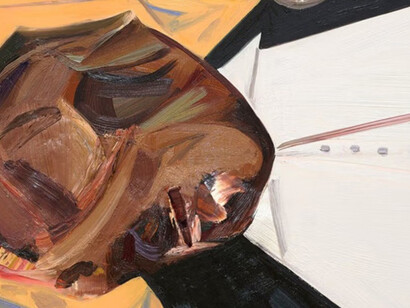
As cultural studies, postcolonial theory, gender studies, and identity politics made their entry, modern controversies in art now extend to include cultural appropriation, representation, race, and trauma. One highly contentious case is Dana Schutz's Open Casket (2016), which caused heated indignation when it was exhibited at the Whitney Biennial in 2017. The painting depicts Emmett Till, a 14-year-old Black teenager who was lynched in Mississippi in 1955, with his horrifically battered face. Some of the critics grumbled that Schutz, a white woman, had no ethical entitlement to depict Black suffering, particularly this extreme historical grievance rooted in racial violence.
Others called for the painting to be taken down or even destroyed, labeling it as a piece of cultural exploitation and appropriation.
Schutz was defending the piece in return, saying that she did not intend to appropriate Black pain but to be a mother talking and speaking out of empathy, and that Till's account had hit her very personally. The Whitney Museum supported its decision to exhibit the piece, citing the role of art in provoking difficult conversations. Another such example is Sam Durant's Scaffold (2012)—a sculpture that draws its inspiration from historical executions across various times, like the 1862 mass hanging of 38 Dakota men. When the installation was installed at the Minneapolis Sculpture Garden in 2017, it garnered intense opposition from Indigenous communities, who argued that the installation re-traumatized them and appropriated their history with no consultation.
In contrast to Whitney's response, the Walker Art Center engaged in a discussion with Dakota elders and ultimately took down the piece, allowing the community to bury it ceremonially.
In the end, even when freedom of expression is protected by law, its moral weight is shaped by context, identity, and power. As audiences increasingly shape the boundaries of artistic responsibility, artistic freedom remains a core value—yet one that does not exist in isolation.
Silence is not the answer; dialogue has never been more essential. The goal is not to silence dissent but to engage with it thoughtfully, creating space for both artistic expression and meaningful critique. Rather than seeing this as a threat to creativity, we might view it as an invitation to make art that is not only free, but also reflective and aware of its impact.