English
 Español
 Français
 Deutsch
 Italiano
 Português
The human animal is a survivor. If it hadn't been, we wouldn't be here now, on the cusp of possibly changing the planet to the point where we may no longer be able to survive. However, it all started in a very simple fashion. Hunting and gathering. In the scale of time, all other survival solutions, be they agriculture, industry, or AI, are but the merest of slivers of time in comparison to the time we spent as hunter-gatherers. This period has hard-coded many aspects of our neurology and physiology. Our addiction to fats, salts, and sugars dates to this time.
Our advanced pattern recognition neurology, and most importantly for this article, how we form and define fictional worlds and myths as a unifying mechanism to guide us in the dark. In many indigenous societies, we can see a similar importance placed on entering “other worlds” and telling stories as a means to bind the social group together; the storytellers, the dancers in the firelight, and the whistles and songs were all just as important as our harnessing of fire and our shaping of tools.
Nature is beautiful, but nature is equally brutal. The human animal's experiment with neurology as a survival mechanism had left the body weak. Yes, our ability to perspire and outrun our food was an advantage, but we were never one vs. one with an animal. We were and are a team animal. A large-scale and flexibly organized social organism.
But then, around 12000 years ago, the human animal experimented with two different solutions to the difficulty of survival: agriculture and pastoralism. In many ways, this laid the foundations for some of the most significant and ongoing lines of division that still influence us to this very day. This is largely due to the fact that in the age of the hunter-gatherer, ownership was a very blurry concept. However, by the time of pastoralism and agriculture, ownership became very clearly defined. We can see examples of this friction in Southern Africa with the interaction between the Khoi and the San.
The San were largely defined by their hunter-gatherer lifestyle, while the Khoi had developed pastoralism. For the San, all animals were animals, but for the Khoi, some animals were property. In the case of pastoralism, the solution was to have security defending your herd and, of course, through movement to new grazing lands outside the reach of any potential raiding.
With agriculture, the difference became far more pronounced, as was the case in Sumeria. What little we know of Sumeria is a consequence of what little has been found and what little managed to survive. This is the problem with archaeology. Not everything survives. And we cannot “know” if we have no evidence. Secondly, not everything that can be found is in fact found because we haven't looked for it, or we have chosen not to see it. Archaeology should not be political, but sadly, it often is. That is because it requires money to pay for digs and surveys. And that money is often an investment with political, cultural, or religious strings attached.
Sumeria created many lines of division, many of which seeped into its mythology. Civilisations and cultures are built, but they are also written. Successful mythology is perhaps more important for the survival of a civilization than the functionality of sewer systems. One such line of division that can be found in Sumerian writing is the difference in water sweet and bitter water. Such a core concept for a civilization so thoroughly dependent on the mastery of water as a foundation for every single aspect of its existence. There was also an additional concept of division: Kalam and Kur.
Kalam referred to the civilized. Those of the towns and cities of Sumeria. Those who lived off the chains forged by agriculture and a social structure that came about as a consequence of agriculture. Kur referred to both the people and the place outside the walls, outside the civilization, the rebellious, barbarous, and wild mountainous zones. The land was not fed by agriculture but by hunting, gathering, and, when possible, pastoralism.
This early line drawn between us and them has never left. And from the beginning to now, it has never been set in stone. The division between those inside the walls and those outside the walls has always been movable. But the function of the wall has almost always been the same: the wall functions as a dividing line; those inside the walls (or the system, or the myth) benefit, and those outside don't. Sometimes those outside the walls break down the walls. Sometimes those inside do the breaking. Nonetheless, almost all walls will collapse. Unless they are myths. Then they can outlive the human body and can pass from one generation to the next, entrenched, codified, and damn near unbreakable.
Whiteness and superiority
As stated in the introduction, division was very much encoded in mythology and superstition, reinforced by religious beliefs and cultural practices. Division was based on ethnicity and culture. Race did not factor into the equation. Empires were born, grew, reached their limit, and ultimately fed upon themselves, and those outside the definition of us, picked apart the pieces, only for new empires to form and to repeat the behaviors of those that came before. The common thread is that the strength of the Empire was based upon the strength of physical construction in the form of physical architecture of space, but equally important was the function of constructed myths of identity and the psychological bonding together of disparate groups through a shared and manufactured identity. Failure to have a shared myth in which to believe meant that regardless of how well the buildings were made, fractures would form, and the forces of humanity would turn against each other.
Out of the ruins of the Roman Empire, Europe formed. Fractured and broken, a bloody battleground of ethnic identity, soaked with death, torture, violence, love, and hatred, there was no such thing as White here. Walk a few kilometers down one road, and the sphere of Us ended and a new world of Other began. Take Christianity as an example. Catholicism ruled a close to unified sense of us. It is literally in its name; talk about excellent marketing. But then came Martin Luther, who took issue with the corruption that existed within the 16th-century church. As a consequence, Christianity split, and the consequence was centuries of bitter and brutal violence that tore Europe apart. Again. The fault lines of this division can still be seen today in Ireland and have been exported to many nations outside of Europe. One place this division was exported to was a land that would later become the USA, the land of the Free.
The 17th century was the century of the Enlightenment. A time when, theoretically, religion as a means to explain the universe and all the things in it, was replaced by science, the old myths of division gave way to new myths of division. This time, rather than being based on belief and superstition, they were based on carefully selected facts, viewed through very specific lenses, that supported very specific world views. Something else was taking place in the world in the 17th century, and that was the expansion of European settlements in other regions of the world. Some were “empty”; others were not. Regardless, there was always space for Europeans to bring civilization and culture, oh, and capitalism. Also Christianity. The different types of Christianity had very different consequences for those very lucky and not at all unfortunate lands, “empty” or otherwise.
In the “empty” land of America, there was the problem of there being people who had long inhabited the land before European arrivals. It is always a problem when you have to deal with someone living on your empty land. Nonetheless, it was quite easy to justify the occupation of “empty” land:
Option 1: God said I can.
Option 2: As stated, it's “empty.”
Option 3: When all else fails, might is right.
Option 4: all of the above.
The settlement of America brought with it a lot of Old World social structure. Wealth and privilege along class lines are one of the many exports from Europe. In Virginia in 1676, a man named Nathaniel Bacon was not happy about people living in the “empty” land and wanted them to leave so that the land could actually be empty enough for him and others like him. The colonial governor disagreed with him. Thousands agreed more with Mr. Bacon. And they rose up against the elite. Why they rose up is problematic. Who rose up is what is interesting. The who in this case cut across “racial” lines. The crew was a mix of indentured servants (slaves with a sprinkling of freedom) from European and African backgrounds. Ultimately, the rebellion was put down, but the elites learned a very important lesson: there were more of Them than Us. As a result, they would very much need to be divided. And divided they were, into Black and White. White would have privilege, sometimes lots, sometimes not. Black would have none. None. Like, the property had none.
And this was not just built on feelings and opinions. This had science to support it. The science of skulls and skull measurement, to be precise. A very, very good and not at all unreliable science.
Eugenics and scientific racism
By the end of the 18th century, Europeans had gone everywhere. They were establishing colonies and settlements on every continent and expanding global trade networks. Some of this had been driven by religion, as can be seen in the Americas and the spread of Catholicism, and some had been driven by mercantilism, as was the case with the Dutch East India Company and later the British East India Company. The only god worshipped by these two groups was profit. And in the absence of a religious view, new means of defining why it was acceptable to take from others were being defined.
In 1796, Johann Friedrich Blumenbach was studying skulls. He had one in particular that he thought of as the perfect skull. In the process of defining skulls and organizing skulls into some sort of Black Metal skull pyramid of hierarchy, he came up with the term Caucasian. This became part of the foundation of the idea of White supremacy over other “races,” whether they were those of the Americas, Africa, or Asia. All humans were now placed on a scale from inferior to superior, the shape of the skull, face, and nose, and skin colour defining the position.
These theories built and grew, and by the middle of the 19th century, Darwin published On the Origin of Species. His theory of evolution became another important element in this foundation of supremacy. This line of thinking was taken a step forward by Darwin's cousin, Sir Francis Galton. In his book Inquiries into Human Fertility and Its Development, published in 1883, he developed the concept of eugenics: selective breeding of humans for a purpose.
These ideas were embraced in many different parts of the planet, as men of this new scientific and industrial age were looking for scientific and industrial explanations for superiority.
Revolutions and evolutions
The 19th century was quite literally revolutionary. It began with one foot still in a superstitious and unscientific past, defined and governed by the old ways of doing things: monarchy, God, and violence. The end of the century had become capitalism, science, and violence. Completely different.
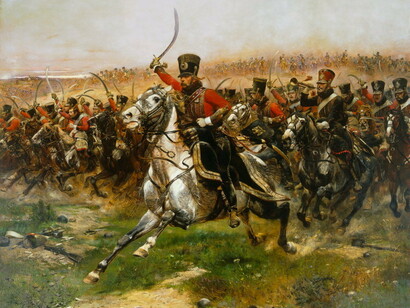
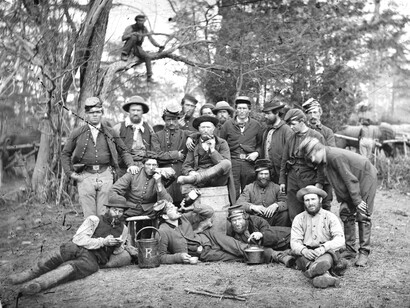
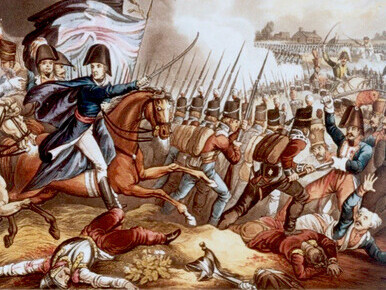
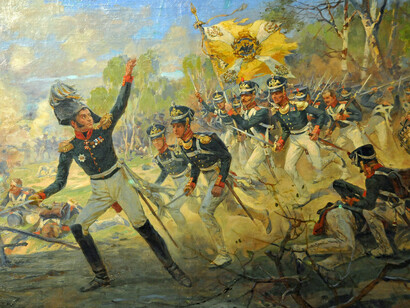
Wars were fought, won, and lost over how the world would be ordered and over who was going to lead in this new Industrial and Scientific world. First would be the Napoleonic Wars, which attempted to drag France and the world out of its aristocratic stupor into a modern world where meritocracy was the driving force in social elevation, rather than the lottery ticket of birth. Second would be the American Civil War. The industrialized North was fighting against an agricultural South that depended on slavery for economic survival. Industry won. Not morality. Finally, by the end of the 19th century, there was the Anglo-South African War (1899-1902).
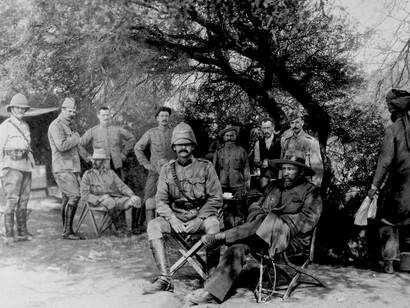
Multiple levels of significance can be attributed to the Anglo-South African War. One was the importance of the discovery of gold in the region and how this brought South Africa more into the world, rather than just being an agricultural nation on the fringe. Secondly, the British use of concentration camps on the Boer population and how this became a key component of Totalitarianism of the 20th century. Thirdly, the use and abuse of the African population by both sides during the war and how this would later influence attitudes in the 20th century. Finally, how this psychologically scarring experience influenced Afrikaner identity later in the 20th century.
In the next part, we will focus more specifically on apartheid, how it functioned, how it was part of a wider global movement, and how it did not exist in isolation. Finally, we will conclude by looking at the end of apartheid and how it never in fact ended, and what the consequences have been.