English
 Español
 Français
 Deutsch
 Italiano
 Português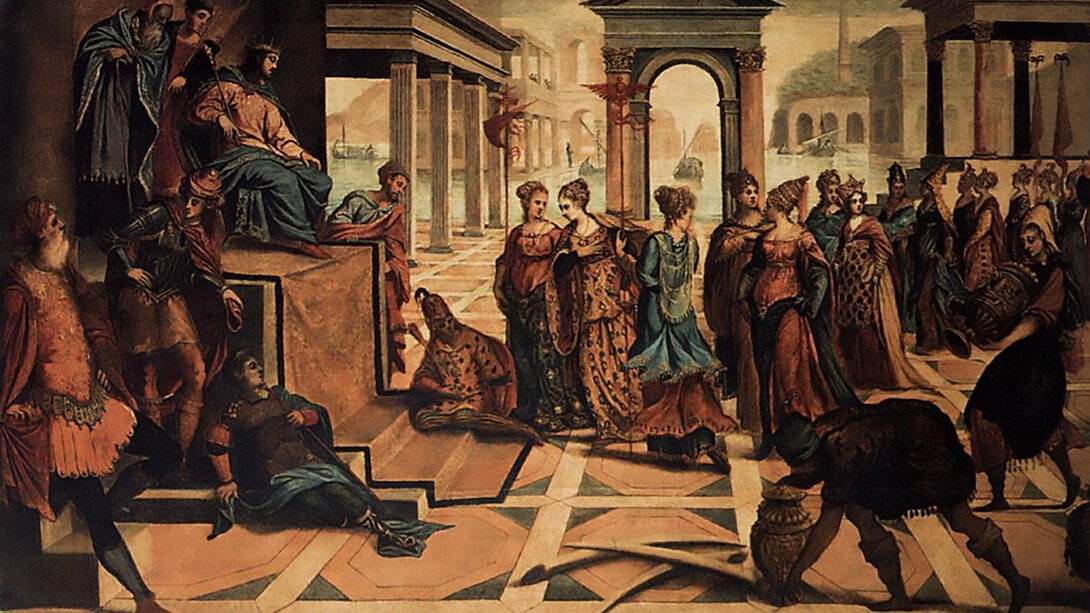
In the history of mankind, there are significant moments captured by revelation. These moments are not just stories for entertainment; they offer timeless lessons for our hearts and minds. Many stories from the ancient world survive only as fragments, shaped by the voices that recorded them and the silences they created. The story of Queen Bilqis, ruler of the Kingdom of Saba’, is one such tale. Often wrapped in legend or simplified to a symbol, she is much more than a mythical figure. When we reconsider her actions and decisions through history, scripture, and cultural memory, Bilqis stands out as a transformative leader. Her voice reshaped the concepts of justice, dignity, and freedom in ancient Yemen.
In ancient Yemeni memory, freedom held deep meanings of dignity, autonomy, and self-determination. These ideals appeared in inscriptions, royal proclamations, and legendary accounts that expressed the region's values. Within this cultural and political landscape, Bilqis shines as a ruler whose leadership embodied these principles. Her story reflects a society navigating authority's boundaries while seeking a more inclusive and ethical vision of power. Her journey and her discussions represent female power in a male-dominated ancient world. Her story resonates with contemporary notions of freedom and empowerment in Yemeni culture.
Early accounts depict Bilqis as a ruler closely connected to her land and people. Her reign brought stability, prosperity, and vibrant urban life during a golden era. She strengthened Saba through justice and ensured her people's security, understanding that dignity starts with stability and meeting basic needs. Her leadership relied not on domination but on responsibility, wisdom, and service. Her kingdom was known for its prosperity, advanced civilization, and riches. The Quran describes her kingdom as "a great throne," highlighting her impressive rule. One of the aspects of Bilqis's character is her intelligence and wisdom. Islamic sources depict her as a knowledgeable and inquisitive leader. In the Quran, she is mentioned as having a keen understanding of politics and a well-organized administration.
Her restoration efforts not only strengthened the land but also symbolized her commitment to the stability and dignity of her people. The greatest hallmark of her leadership was her practice of consultative governance (shūrā). In a time when absolute monarchy was the norm, Bilqis introduced a political culture grounded in collective decision-making. A woman at the height of authority, and yet she did not act autocratically. This alone reveals a sound and balanced mind. The Qur’an documents this moment when she addresses her council on the perfection of her intellect, for she did not elevate her opinion above that of her counselors but involved them in the decision. As Allah says:
O chiefs, advise me in my matter. I do not make a final decision without your counsel.
(Qur’an 27:32)
This verse stands as historical evidence of her political philosophy, one that viewed leadership as a shared responsibility rather than a personal privilege. Scholars of Islamic history often identify this as one of the earliest references to participatory governance in the Arabian Peninsula—Shūrā as the Core of Peaceful Nation-Building.
Bilqis’s leadership also displayed diplomacy, strategic thinking, and moral courage. Historical accounts describe her as the ruler who freed the people of Saba from the tyranny and corruption of Dhu al-Adh’ar (Al-Hamdani, Al-Iklil, 10th century). She rejected arrogance, preferred negotiation over coercion, and refused to rule with absolute power. Her decisions consistently balanced justice with compassion, showing that true strength comes from wisdom, not force.
Bilqis’s intelligence and strategic skills often get overshadowed in popular retellings that focus on beauty or spectacle. Yet classical narratives consistently present her as perceptive, diplomatic, and brave. She viewed her people as individuals deserving of fairness and protection. She recognized the dangers of unchecked power and chose consultation instead. Her clear vision allowed her to lead with humility and discernment, guiding her society toward a future shaped by justice, cooperation, and moral strength.
One of the most remarkable aspects of her leadership was the strength and reach of its political system. Her court was not only large but also intentionally inclusive. She appointed both men and women to various positions. She had six hundred women serving her, relied on three hundred and thirteen male advisors, and was supported by three hundred and sixty noble Himyarite women whose political influence was evident. This setup challenged the common belief of the ancient world that governance and strategic leadership were for men. By giving women real authority and visibility, Bilqis increased participation, reshaped the boundaries of power, and redefined leadership as a shared and inclusive responsibility. Her decisions altered the social order, demonstrating that freedom thrives when every voice can lead instead of being silenced.
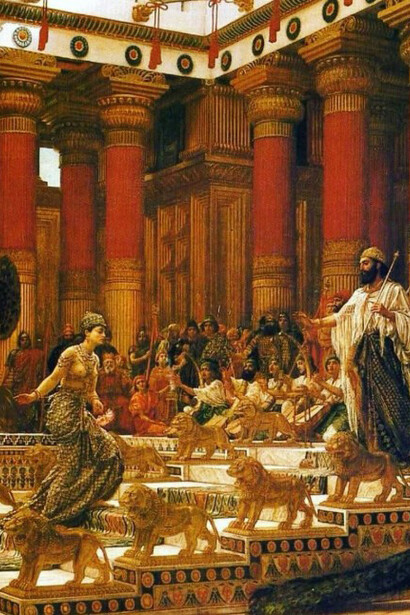
Her approach to religion shows a strong commitment to intellectual and spiritual freedom. When she entered Solomon’s palace and mistook the glass floor for water, she realized how easily appearances could mislead. This led her to confront the deeper reality of the One God. She did not respond with fear or resistance but instead reflected, remained open, and was willing to reconsider her inherited beliefs. Acknowledging her mistake, she chose faith based on clarity instead of tradition or external pressure. This moment illustrates her independent thinking and her courage to pursue truth over convention. The Qur’an depicts her as a leader whose spiritual insight is as strong as her political wisdom. It affirms that true freedom includes the ability to think, question, and believe with conviction. Allah says:
She was told, "Enter the palace." But when she saw it, she thought it was a body of water and uncovered her shins [to wade through]. He said, "Indeed, it is a palace [whose floor is] made smooth with glass." She said, "My Lord, indeed I have wronged myself, and I submit with Solomon to Allah, Lord of the worlds.
(Qur’an 27:44)
This verse stands as evidence of the best leader, who valued truth over tradition and insight over authority. In this way, freedom during her reign was not only political; it was also a journey of moral clarity and spiritual understanding. Through her inclusive politics, independent judgment, and brave spiritual awakening, she became a key voice for freedom in ancient Yemen.
When we reclaim her narrative from myth and examine it through credible historical and literary sources, Bilqis emerges as a leader who influenced one of the most sophisticated civilizations of the ancient world. Her reign shows that freedom is not just the absence of oppression. It is the creation of a society where voices are heard, decisions are shared, and dignity is upheld. In this way, Bilqis becomes a lasting symbol of freedom in Yemen’s history. She understood that true authority does not silence others; it empowers them. Through justice, consultation, and wisdom, she transformed her kingdom into a place where people could shape their lives and futures. Her voice—steady, wise, and brave—continues to resonate as a timeless example of ethical leadership and shared human dignity.