English
 Español
 Français
 Deutsch
 Italiano
 Português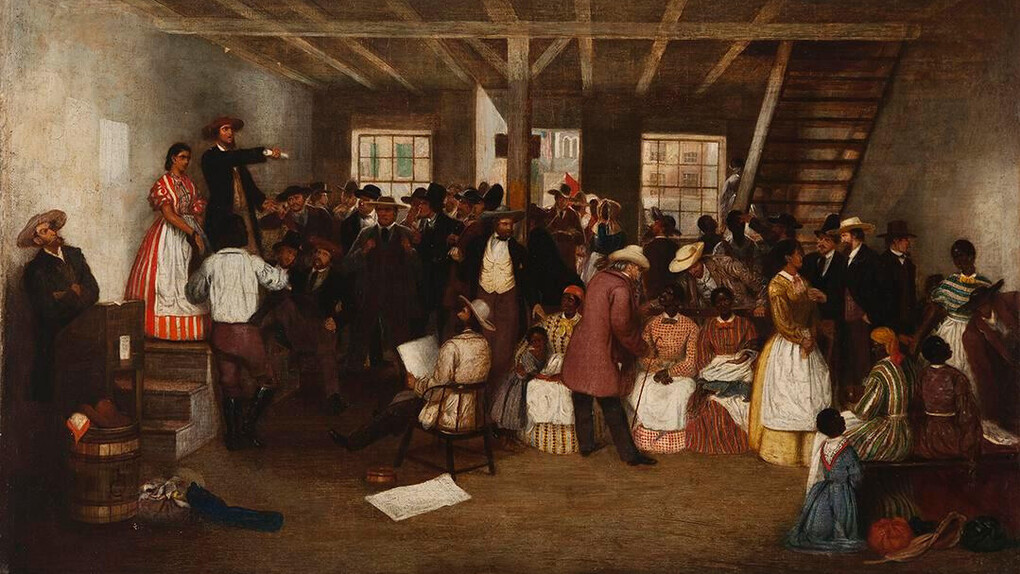
But when they are taken by the white people and taught to work in the field, they are clothed and fed as human beings; they become, as a matter of necessity, civilized, and by frequently hearing the gospel preached, they become Christians and are elevated far above their former condition in the scale of human beings.
(A History and Defense of African Slavery, William Trotter, 1861)
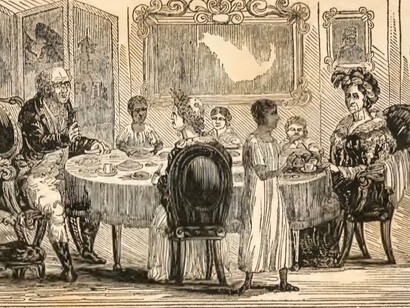
A relationship is a connection between two or more persons, regardless of the form or circumstances that exist between the entities. The type and quality of the relationship are dependent upon the perceptions held of the other by each party. The relationship between the enslaved chattel, believed not to be human, and the slave owner, believed to be a superior defined by white supremacy ideology and Christian theology, produced a very complex relationship between the two entities.
If slavery is to be understood in its full context, the relationship between master and enslaved, defined by overt and covert emotions, is crucial. The outward behavior of each entity was based upon human emotional needs, be it control or accommodation. The behavior of the master must be examined to understand the emotional needs satisfied by control of another human being.
The behavior of the enslaved must be explored as well to determine how suppressed emotions were experienced and released, as well as what emotional needs each aspect of enslaved behavior was being satisfied.
The need to feel superior and control
What emotional needs did owning another human being satisfy? A core emotional need of the slave master was control. Experiencing control of another satisfied the need to feel powerful, the desire for validation, and a delusional sense of superiority and self-importance.
Slave owning provided a sense of belonging, a rise in social status, especially for those whose generational family histories were those of the peasant or yeoman class in Europe. A rise in social rank, including wealth, a refined lifestyle, and power, could be attained by owning another human being. Slave owning could also produce moral disengagement, a need to become a benevolent caregiver as a result of cognitive dissonance and moral contradictions.
Two important American leaders, George Washington and Thomas Jefferson, dealt with the complexities and moral contradictions involved in owning and benefiting from the dehumanization of another human being.
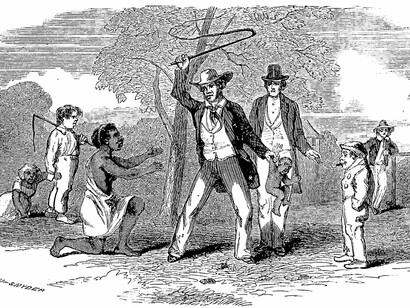
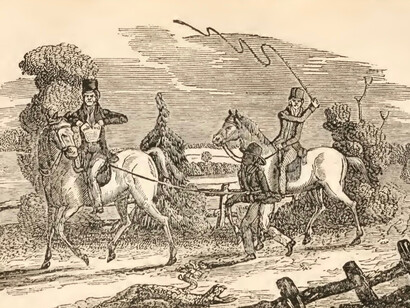
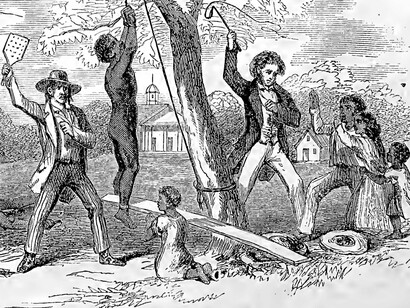
While the emotions of the master and overseer must be observed and responded to appropriately at all times, because the enslaved were not considered to be human, the expression of their emotions was forbidden and punished if the code was violated.
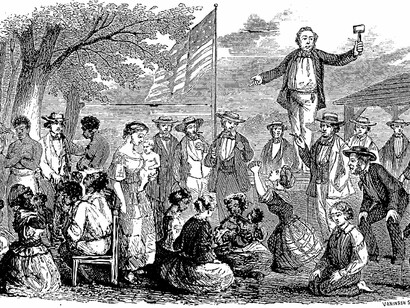
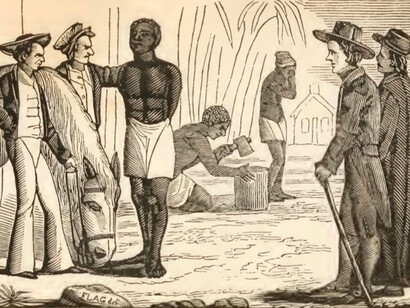
Three key emotions were invoked in the enslaved by the master to maintain his emotional need for control: humiliation, grief, and fear. The auction block was the public, legal sale of a human being, and chattel was the most savage, brutal experience of enslavement. Here, the human being was exhibited, inspected, and sold to the highest bidder.
The enslaved had to enact prescribed roles while their personal space (body) was violated. For a moment, imagine the pain in the chest, possible dizziness, skin tightening, and feeling of nakedness, as the enslaved stood with head bowed, lifeless eyes in a downward gaze, while experiencing the feeling of being degraded, and no regard for one’s humanity.
The auction block served as a source of grief and despair for enslaved families. There, empty stares were the only permissible emotion of the breaking and aching hearts of family members. The fear of the auction block and the separation of families were similar. Physical death was final; there was grief, but also a peace in knowing that the loved one was free. The auction block provided a death filled with grief and uncertainty about a loved one.
While the enslaved were thought to have no intellectual ability or human emotions, the master class was ruled by a set of emotional needs and desires. Despite the beliefs of the masters, the enslaved did possess human intelligence and emotional needs that guided their overt and covert behaviors.
How did the enslaved heal the negative emotions experienced?
While the slave owners perceived the enslaved as inhuman, simply objects to be controlled, the enslaved, despite the Middle Passage, the knowledge of their true African identity and spirit remained in the enslaved. The love of family members, the creation of new kinship bonds (fictive kinship), the sense of community, “we are one,” African spirituality, which included connection to deities from different ethnic groups, reverence, and invoking the ancestors.
The enslaved found and maintained psychological strength through cultural preservation, such as storytelling, which created memories, music, and singing. Despite the brutality of the auction block, the enslaved maintained their true African identity, sense of self, and humanity. In fact, the enslaved regarded themselves as spiritually and morally superior to the enslavers.