English
 Español
 Français
 Deutsch
 Italiano
 Português
Quite recently, and by pure chance, I found out that I am still fluent in the Yorkshire dialect. I was in Crete going down a steep, narrow incline. A couple was coming up, chatting, but with care. I picked up on their dialect, and when they were a meter or so away, I addressed them in a twang between Roreston and Mapplewellian. The surprise was apparent as they held on tight to the low wall inside.
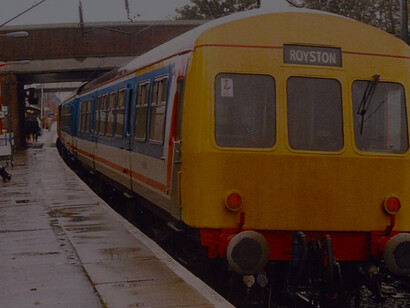
I recall my last entry into Royston by train. I remember pobs, bread and drippin, cock eggs, and Sena tea. I remember the blackouts, brodding and blaging, kick-out cans, and football on the pond. The Green Un on Saturday evening and the strange color cast by sodium lamps at the Wells. Soot was everywhere, but through the gloom, the life I wanted came through—the best life, a life well lived. The Corp and Rozanna Davis, Mr. Trulove at the organ, Caleb and haircutting, the milkman who made and lost a fortune, the curate who left and never arrived, and Holy Joe. The boy sopranos, the Royston rep, Daddy’s fiddle, and the Rogers. Miss Warring and Jack Williams. My mother exchanged rationed sugar for meat.
There were tragedies, deaths, and broken backs in the mines along the way, as well as leavings for Canada, Australia, and New Zealand. Fair Alice, triple-tonguing Ray, Peter, and Cynthia. And two waters so good of unsurpassed taste—Peniston Pop and Middleton’s Farm—well water. Hot cross buns, Christmas cake, and the occasional Mars bar. Grandmas’ meals and sweets. There was Alice Wright and her chips; Archie and Quentin and their farms; and Jimmy Jones and his ice cream. And where do I put my monkey boots and nettle pop?
My early memories of industrial Northern England are strong. We were surrounded by cornfields anad coalfields in a world where resilience meant making it home from the dangerous mines at the end of a shift. My mother kept our world together with her sayings, laughter, optimism, and singing. My steadfast father kept food on the table. At 80, he told me that he spent three-quarters of his life in darkness. Such a sacrifice gave me and my sisters light. Our extended family was some kind of safety valve. Derrick and Nancy, Donald and Darry, Gordon and Avril, Aunts Esther, Ivy Nora, and Kathleen, Uncle Bill, Vernon, Herbert, and Harry, and our Lil. Soot was everywhere, but through the gloom, the life I wanted, came through—the best life, a life well lived.
In my life’s journey, I adapted and moved on. I rolled with the punches. I coped well in adversity as a result of humor, a positive attitude, always looking on the bright side, support from friends and family, appreciating the little things in life.
Every world is different; every world is much the same. Each life has a beginning and an ending. What goes on between is a repeat of the same and similar things, but only known to the immediate family, and sometimes not. Life can be short, or it can be longer. I can be long. My world has bridged the industrial and intellectual revolutions; engineering and physics, coal and steel, and the age of information; bit, artificial intelligence and robotics. My life has spanned Yorkshire and the UK, Europe, Northern Africa, the USA, and touched upon Latin America, Greece, the Balkans, the Eastern Mediterranean, and now Malaysia. It covers areas of engineering, optometry, medicine, philosophy, public health, and peace. I am a long way from underground accidents, emphysema from coal dust, and agriculture with horse drawn carts.
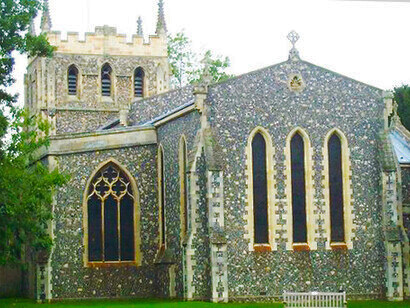
If there is just one person around that I can surprise, I will be content. And if, upon the Moors, I can find my Gipsy Meg Merrilies, the Old Meg I loved, I will be over the moon eating swart blackberries. In some churchyards when I was young, Meg told me that she had wandered far and wide over stretched out time but never left. I took her roughened hand, left the church, crossed the road, and entered the school in the snow. The school is no more, but Meg still sings. As war came, I was in the sandboxes of its somewhat eastern wing, and as it ended, I was at the western end, next to the school meal kitchen.
My childhood world was wartime WWII in Yorkshire and a life that straddled agriculture and coal mining, where humor was abundant and people addressed each other as love. It was a time of concern, and lockdown lasted 5 years. Light had to be held indoors, but outdoors we could follow the stars. Indoors, there was always a coal fire. Gas masks stood by in the case of potential threats and as a reminder of the awful effects of gas in the trenches of WWI. Except for the headmaster in the west, my teachers were all female (Miss Copley, Miss Butterwood, and Mrs. Smith) and what I learned was that education and teachers were important to my development and helpful in mysterious ways.
I found my first copy of the Rubaiyat by Omar Khayyam on a market stand and later gave it away to a girl. I was struck and maybe awestruck by his poetry of practical fatalism and advice to “do not let today’s pain endure but enjoy each given moment now. I was a recipient of a technological scholarship made possible by Headmaster Fox and Principal Llewellyn and granted by the West Riding, which no longer exists.
Wartime news came from radios run on batteries and the BBC, as well as from newspapers, the Herald and the Worker. There was a sense of adventure in the woods, according to legend. Dick Turpin, it was said and believed, stayed in Archie’s farmhouse while Black Bess ate hay in the barn and watered at the pond at the top of the field. We made it into the highwayman’s stopover as he galloped north or south. There was Robin Hood House on Midland Road, which made a great deal of sense since the two villages were on the edge of Sherwood Forest. In the woods of dense trees, bluebells crowded together as far as the eye could penetrate, and every so often, rhododendrons in all their splendor and crisp watercress in gently running streams of cool water. On the edge were crab apple trees and hedgerows that provided us with cheese and a fresh sprig, which we ate while in the adjacent fields of clover myriads of bluebells, darkish blue and enchanting. As you picked up armfuls of them, they just seemed to spring up again.
In summer, Abeldy Quarry was a place to be with its spring and cool stream full of frog spawn, and above the stream was a tall tree that we climbed. I recall falling from one of its branches directly onto my back. I landed with a heavy thud on the soft earth, which winded and dazed me. All went silent, but the sky above seemed brighter. As I got my breath back, laughter pealed through the quarry from my companions, in which I finally joined in. One winter, I found myself with my cousin in the ice fields down back, not far from Strawberry Gardens. We had to cross them to get home. The deep furrows from the plough were filled with water and iced over. Our fragile footwear took a beating, and our legs bled from ice cuts. In late spring, in the same area, we would nick large russet pears and sometimes get nabbed. And who can forget the painful tingling in the hands of the long cane of Mr.
My story began more than eight decades ago in the West Riding of Yorkshire, which no longer exists. We were well into the Industrial Revolution when a slug was a force to be reckoned with; surrounded by coal mines, steel works, and coal and clay interspersed on agricultural land where most people had worked until its beginning 100 years earlier. Up until then and over the previous millennium, most people’s living resources were minimal, but as the Industrial Revolution took off, so did economic gain.
In 1939, it was wartime, peace had failed, and there were no lights. When the night sky lacked cloud cover and atmospheric smoke had been dispersed by wind, it was magnificent. Relief came from a great storyteller, an uncle, some local theater, many choirs and brass bands, fish and chips, and the pub. As victory came, it was Ivor Novello’s perchance to dream, in Leeds, of the of the nationalization of coal, the NHS, and coronation. It was the BBC music, theater, lectures, and comedy heard on a battery-powered radio and picked up and charged each week at the local relay shop. The change of gender in the national anthem caused me hiccoughs. The teen queen put her lasting and indelible mark upon her reign with selfless dedication to become a philosophical queen. There was the horror of the atomic bomb and the fight for nuclear disarmament.
As my story continues today in the Balkan region in health and philosophy and some memories fall apart, I still recall the pungent smell of greenhouse tomatoes, rhubarb, and the sweet taste of the giant marrow enhanced by a little butter and milk and a sprinkling of salt and pepper; cabbage water, sandwiches with thinly sliced cucumber; or dripping. Sennapod tea for worms was in a jug that stood on a high place while a sentinel kettle sat on the hob. School meals, orange juice, cod liver oil, and marbles on the way home.
I remember my wartime primary school teachers who left me with several persistent thoughts that I still retain: that Hector was a better man than Achilles, that the Acropolis was the most refined structure known to man, and that Troy was a gem of the Bronze Age. I had an inkling of the Homeric Epics as exciting Greek stories of tales of the Trojan War and of the return home of Odysseus after a stay on Corfu with a girl called Calypso. It was difficult for me to understand when first looking into Chapman’s Homer by Keats. Reading and the Golden Bough; Germinal told of disaster down below.
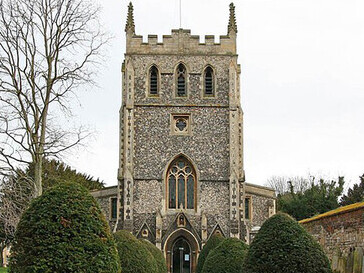
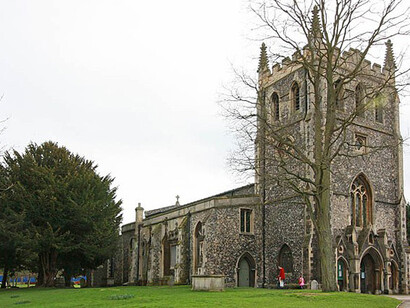
I am not sure whether I took the road less traveled by or whether, for some odd reason, the road simply took me. I got on it at Royston, having traveled down Lea Lane to reach the High Street. Where I will disembark, I don’t know. Then it seemed that the anti-war movement was strong and fought tooth and nail.