English
 Español
 Français
 Deutsch
 Italiano
 Português
Nowadays, having found home in sunny Spain and watching real estate prices skyrocket, turning affordable housing into an unattainable dream, I increasingly drift back into memories of my childhood.
A decade of moving from one rented apartment to another taught me how closely living conditions are tied to quality of life, opportunities, and a sense of stability.
My parents were assigned to move from a noisy industrial city to a small mining town—one of those places once called “satellite towns” in the Soviet era.
A satellite of what, you may ask?
A bright socialist future?
The promised happy life of its residents?
Alas, it was far more prosaic—these satellite towns were established wherever production, extraction, and the needs of the vast Soviet state demanded it.
We lived in a town founded in 1949 during the wave of coal mining development. Its original name in Kazakh, Tentek, was changed to Shakhtinsk. From the Russian word "shakhta"—mine.
Mines surrounded us: Shakhtinskaya Mine, Lenin Mine, Tentek Mine, and Dolinskaya Mine. They crisscrossed the land like dark arteries, their chimneys releasing plumes of smoke into the sky. They fed cities and villages and hundreds of families and carried decades of hard physical labor, risk, and the sorrow of lives lost underground.
Just beyond the city garages began small hills overgrown with grass and shrubs. To us kids, they were almost mountains. In summer, we went on “expeditions” there, lighting fires and roasting potatoes directly in the embers; in winter, we sledded and skied down them. There we felt incredible freedom, because our vivid childhood imagination told us we had reached distant, unexplored lands, leaving behind the mining town where life flowed at its own peculiar rhythm beneath the endless sky and beside the dark waters of Lake Sassykol.
My parents were young specialists assigned to this small town, where fresh hopes mingled with the scent of a new life. Thrilled to receive a free apartment, even though it was far from family and friends, they embraced this new stage of life. They witnessed the town being built, sprouting shops, cinemas, and schools. A dairy plant, a bread factory, clinics, and a stadium were under construction.
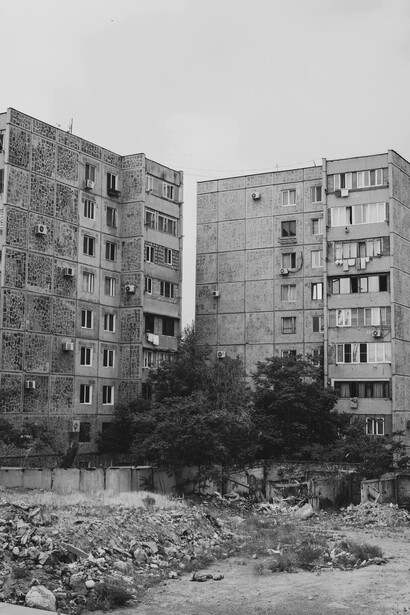
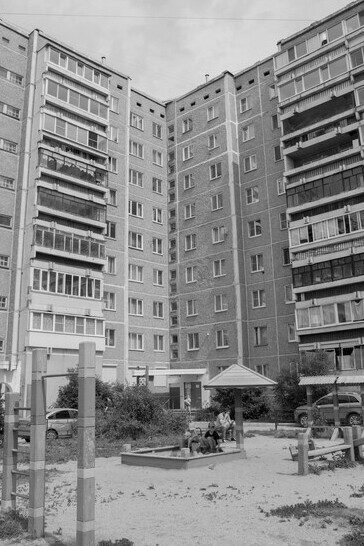
The panel apartment buildings—commonly called Brezhnevkas (built during Brezhnev’s era) or simply “panels”—looked nearly identical, and most apartments had the same layout. We lived in the 26th block near the building with the Olympic Bear1, on 40 Let Pobedy Street2. My kindergarten was not far from Aurora3, the building whose end wall bore the inscription “1917–1987 Aurora” on Karl Marx Street—these names truly spoke of Soviet propaganda.
To reach Shakhtinsk from the district center, Karaganda, one could take route 121. We didn’t have a car. Visiting family in Karaganda, 50 kilometers away, meant taking a bus to the station. The paradox of Soviet housing policy lay in the contradiction between ideological promises and reality. A proud sign at the city entrance read, “Shakhtinsk—beloved city,” while behind it lay broken roads, monotonous shops, and harsh climatic conditions.
The city’s infrastructure was planned around miners’ needs. Bus routes connected it to district and regional centers, but while summer journeys were adventurous—passing several settlements, the central enrichment factory where my father worked, and the eerie Novodolinsk cemetery near Dolinka, infamous for the Gulag4 network—in winter, waiting for the bus became a torment.
We used to stay on the last platform, and I was constantly monitoring the numbers of passing Ikarus5 buses: 127 passes, now 145 leaves, then 107 to other satellite towns. Frost on eyelashes, nose stinging, nostrils sticking together—it was truly cold. The woolen scarf wrapped around my face left a taste in my mouth. 121 was nowhere in sight. My toes went numb despite being double-socked. “Jump, walk, wiggle your toes,” my mother said gently, stepping on my feet in black felt boots embroidered with a white snowflake.
Shakhtinsk, founded in the coal fields, exemplified Soviet urban planning. The state provided young specialists not only with jobs but also a roof over their heads. Behind the façades of uniform buildings lay an entire system: work, home, school, and transport—all subordinated to a single logic. The state solved the housing issue through production, creating a closed cycle of workers’ lives.
Several generations of my family received housing under this system: my grandfathers, my parents, and my uncle and aunt. After the Soviet Union collapsed, these apartments were privatized, becoming personal property of those who lived in them.
Life in a satellite town had its peculiarities. For adults, it was a chance at a new life; for children, a space of discovery. We, young residents of Shakhtinsk, found joy in simple things like kids everywhere: winter or summer games, the smell of kindergarten soup, and rare Soviet ice cream.
We weren’t surprised by men with “lined” eyes on the work buses—we understood they were miners, living in identical panel buildings, each housing unique family stories.
Yet life in a mining town was not without tragedy. Accidents at mines periodically claimed lives. I vividly remember when I was in eighth grade: the father of my classmate Ruslan, who had cerebral palsy, died in a mine. We went to offer our condolences, and the image of Ruslan crying bitterly on his doorstep is etched in my memory forever.
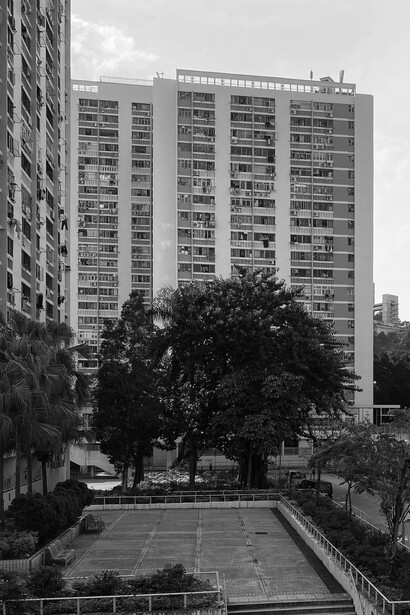
The panel buildings embodied the state’s approach to housing: every floor, every apartment, and every staircase followed the same template. This enabled thousands of families to be housed quickly, but life inside was standardized: identical kitchens, identical rooms, and identical windows.
The social and domestic structure of a satellite town functioned as a single organism. Young specialists worked in factories, mines, and plants, raised children, and built a life.
But this approach had consequences. People’s lives were constrained to work and home; personal and creative spaces were limited. Cultural life consisted of a few cinemas and a House of Culture. The city’s main holiday remains Miner’s Day.
Looking back, I realize these satellite towns were not merely places to live; they became a school of life for an entire generation. They shaped character, forged friendships, and built families.
I remember the post-Soviet energy crisis, when people abandoned apartments and left. The panel buildings stared blankly at the remaining residents, who, without electricity or gas, lit fires and cooked outside. The post-apocalyptic feeling lingered—the buildings seemed frozen in time, walls cracked, balconies looming dangerously. Some entrances contained old newspapers and children’s toys, as if time had stopped.
Eventually, these “emergency” panels were demolished or blown up, and the townspeople breathed a sigh of relief.
Panel neighborhoods, once gray and monotonous, are now seen as part of the historical testament to an era when, despite architectural uniformity and a closed spatial structure, these towns provided housing to many people.
And no, I am not an apologist for the Soviet system.
Yet, for me, the town always felt too small. Real life seemed to bubble somewhere beyond its limits, the big cities I read about in books and saw in films. These thoughts were especially strong when I, being a teen, stepped onto the balcony of our small fifth-floor apartment, without an elevator, on 40 Let Pobedy Street, after watching another episode of Sex and the City.
I looked at the neighbors’ window across the street, where a red carpet hung on the wall, and mentally asked the Big Dipper, spread across the dark Central Asian sky, whether the world was really so boundless.
Was Manhattan real? The Latin Quarter in Paris? Trastevere in Rome?
Shakhtinsk, like a page from an old album, holds my memories of childhood and youth, of a time when every day was filled with simple joys and big hopes. It continues to live as long as the industry survives. Children are born there.
And my sense of confinement and longing for something greater was perhaps part of growing up—the desire to find my place in the wider world, which began beyond the familiar streets and yards.
References
1 The “Olympic Bear” refers to Misha, the official mascot of the 1980 Moscow Olympics. A small statue of Misha often appeared in Soviet towns and public spaces, symbolizing optimism, childhood joy, and the Soviet Union’s participation in international events.
2 This name commemorates the 40th anniversary of the victory in the Great Patriotic War (World War II).
3 Aurora was a Russian cruiser, famous for its role in the October Revolution of 1917.
4 The Gulag was a network of forced labor camps established in the Soviet Union, where millions of people—political prisoners, criminals, and those deemed “enemies of the state”—were imprisoned under harsh conditions. The Karlag mentioned in Shakhtinsk was part of the Karaganda camp system in Kazakhstan, notorious for its brutal working and living conditions.
5 Ikarus was a Hungarian brand of buses widely used across the Soviet Union and Eastern Bloc countries. Known for their distinctive design and durability, Ikarus buses served as the primary means of public transportation for cities and towns, connecting residential areas, industrial sites, and district centers.