English
 Español
 Français
 Deutsch
 Italiano
 Português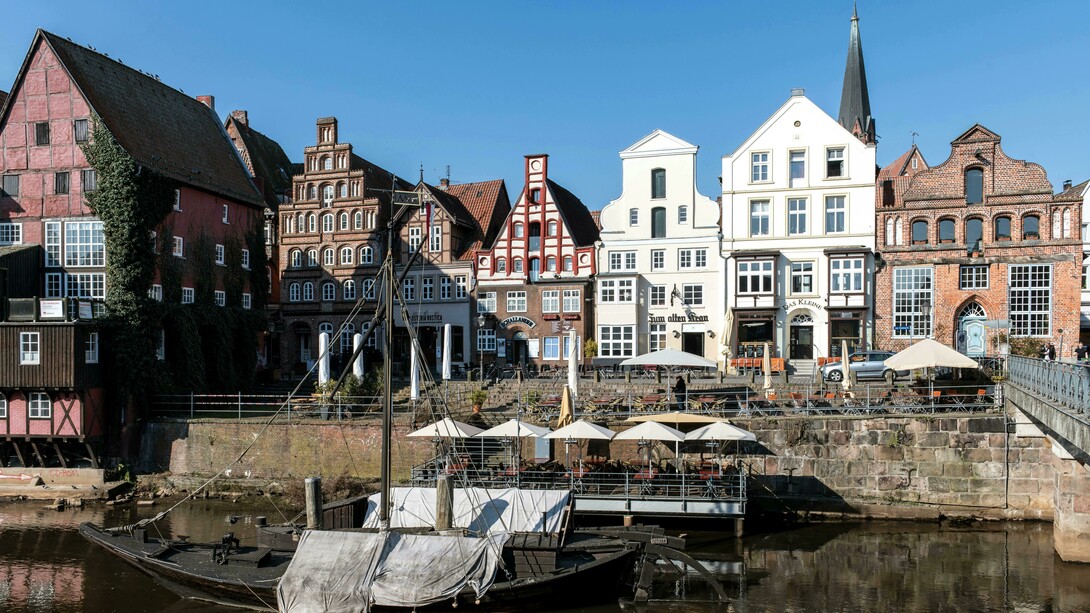
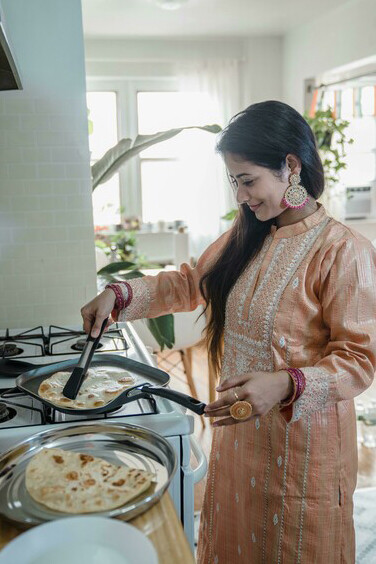
It’s been almost three years since I moved to Germany. I’ve seen cold, lonely winters and summers bursting with life and people. I'm still a master’s student at Technische Universität Ilmenau, and my journey so far has been nothing short of a roller coaster. But one moment remains especially vivid—when my Desi mom, visiting from Haryana, India, didn’t just come to Germany… she took over a tiny German kitchen to make hot, spicy parathas for me and my friends.
The moment she landed, I knew things were about to get interesting. She was wearing her usual salwar kameez, with a dupatta tucked behind her back and white sports shoes that squeaked through the silent airport. The Germans, calm and quiet in their coats and sneakers, glanced at her as she adjusted her bangles and tried to push a trolley that seemed to have a mind of its own. "Is trolley ka bhi system ajeeb hai" (Even this trolley has a weird system), she muttered, already mildly annoyed.
Her first culture shock arrived within an hour: the cold. It was only September, but for her, Germany might as well have been Antarctica. Wrapped in a shawl, she sat in my apartment like she was braving a Himalayan snowstorm, declaring, "Inke yahan thand ko bhi shauk se rakha gaya hai!" (Here, even the cold is preserved with pride!)
But the real adventure began in the kitchen.
My mom, like every Indian mother, is a legend when it comes to food—especially ghee-drenched parathas stuffed with aloo (potato), gobhi (cauliflower), or paneer (cottage cheese). So, it didn’t take her long to inspect the compact German kitchen. She looked at the induction stove like it was a spaceship. "Gas kahaan hai? Yeh button se kya banta hai?" Where's the gas? What does this button even cook?) Within five minutes, she had opened every cupboard, rearranged the spices, and decided that the fridge was too small, the salt was not salty enough, and the sugar was not sweet enough.
Shopping for groceries with her was like taking a bull into a china shop—but with questions. At the supermarket, she loudly questioned everything: "Yeh doodh kaunsa desi hai? Ghee milta hai yahaan? Sab kuch packed kyun hai?" Which of these milk is local? Do they sell ghee here? Why is everything packed? I caught a couple of Germans staring as she tapped a cucumber like it owed her money.
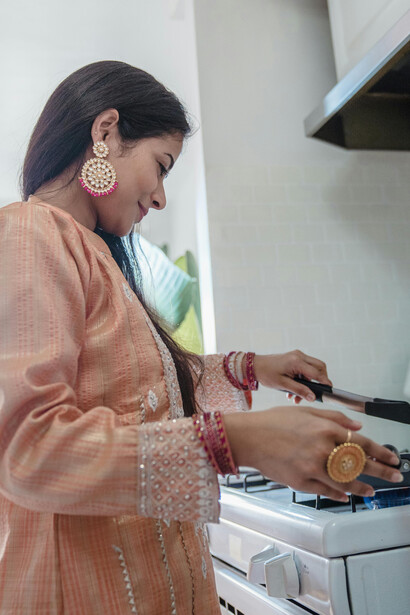
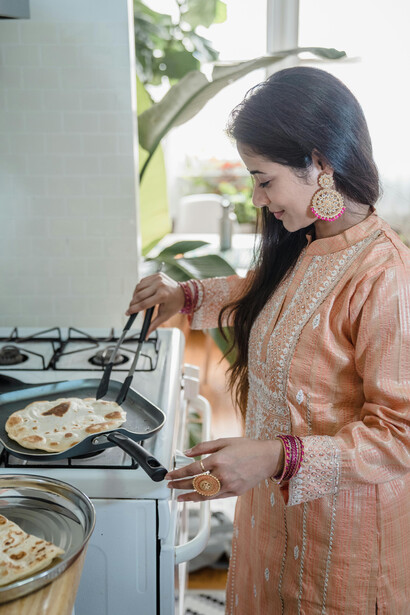
But when she finally cooked her first batch of parathas—stuffed, spicy, and slathered with home-brought ghee—the whole dorm smelled like home. My flatmates peeked in, asked questions, and even joined for a bite. She loved it. For her, food was not just about taste; it was a language she could speak fluently in a country where she understood little.
Then came her observations on fashion. She was scandalised by the clothes in Germany, especially during warmer days. "Kapde poore kyun nahi pehnte yeh log? Thand nahi lagti kya?" Why don’t these people wear full clothes? Don’t they feel cold?) She'd whisper loudly in Haryanvi, tugging my sleeves down as a form of protest. On a tram one day, a girl walked in wearing shorts and boots. My mom stared for a full minute, then declared, "Isse toh mummy ne ghar se nikaal diya hoga." (Her mother must have kicked her out of the house.)
But perhaps the most amusing clash was with German silence. She found the quiet unsettling. On buses, in shops, and on footpaths—people barely spoke. She kept asking, "Sab chup kyun hain? Kisi se ladayi ho gayi kya?" (Why is everyone so quiet? Did they all have a fight? On one occasion, she tried to strike up a conversation with a stranger at the bakery, who smiled politely and walked away. "Ary me to bs bhr jane ka rasta hi puch rahi the" (I was just asking for directions to the station!).
Yet slowly, she began noticing things that amazed her: how the buses came on time—at least for her, German buses were on time. How people picked up after their dogs, how no one jumped the queue, and how people traveling with cycles were also traveling on buses! She liked the discipline, even if she didn’t always agree with it. When she saw an elderly woman carrying groceries alone, she rushed to help. The woman, surprised but grateful, smiled and said, "Danke schön." My mom replied with a cheerful "bitte!"—this was the only German word she learned during her trip.
One of the biggest battles was recycling. My mom, who’d never separated waste in her life, was now expected to distinguish between bio, plastic, paper, and Restmüll. "Itna kachra alag karne ka kya kaam hai?" (Is separating this much trash even a job?) she complained, standing in front of the bins with two apple cores and visible confusion. But by the end of her stay, she became a recycling queen, even reminding me, "Botalen alag rakhiyo, Pfand milta hai." (Keep the bottles separate; you get money back!)
The experience changed her. She didn’t stop being Desi—she still made chai strong enough to wake the dead, and she still wore her dupatta like armor. But she adapted in her own ways. She started saying "Hallo" to neighbors. She insisted I learn how to make ghee from scratch. She even followed a German baking recipe once—and doubled the sugar, of course.
When she left, my fridge was full, my flatmates were emotional, and my heart was heavier than my luggage. She had come as a visitor but left as a legend.
Sometimes, when I make parathas now—not as good, of course—the smell brings her back to me. In that quiet German kitchen, I hear her voice: "Beta, ghee thoda aur daal de." (Add a little more ghee.)
And somehow, everything feels warm again...