English
 Español
 Français
 Deutsch
 Italiano
 Português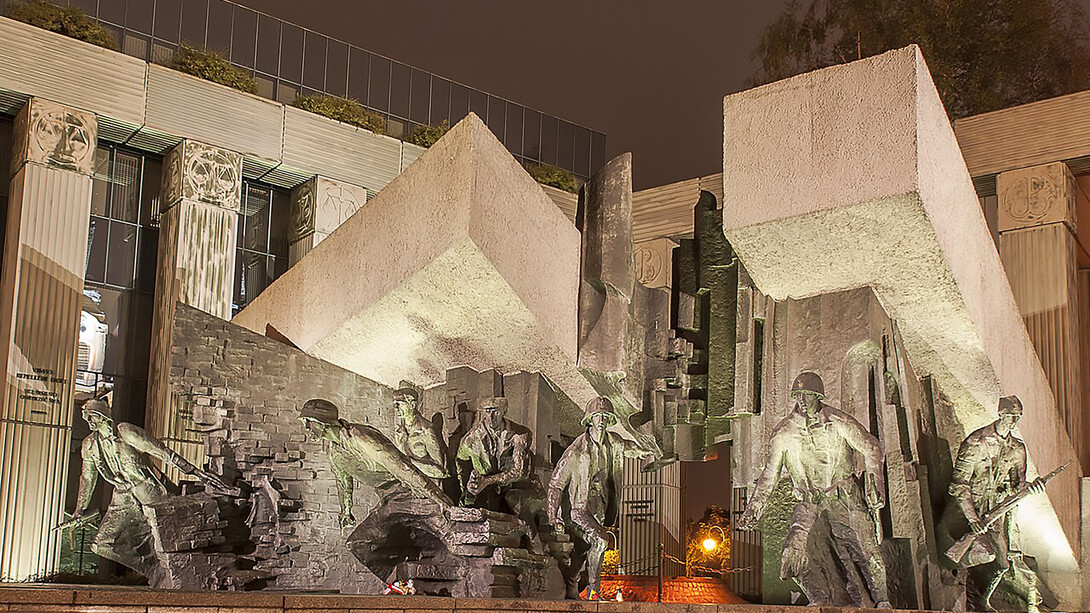
Few cities in the world embody rebirth as completely as Warsaw. Rising from the ashes of war, it has earned the name “the Phoenix City”—a city that perished almost entirely and yet was reborn, not by miracle but by the collective will of its people. To walk through its Old Town today is to witness one of the greatest acts of urban resurrection in history, where every stone and façade tells a story of devastation, courage, and faith in continuity.
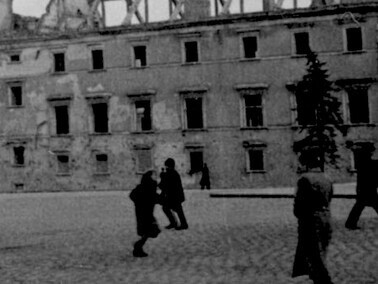
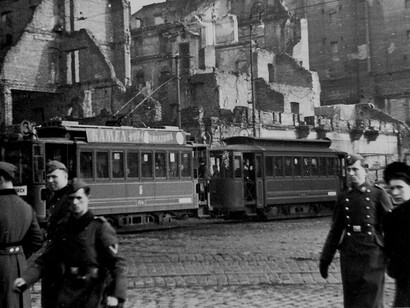
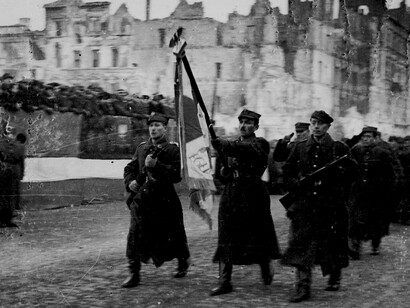
At the end of the Second World War, Warsaw was a landscape of ruin. Systematically destroyed by German forces after the failed 1944 uprising, the city lost over 85 percent of its historic core. Streets were reduced to rubble, churches to hollow shells, and the Royal Castle, once a symbol of Polish sovereignty, lay in fragments. Only a small fraction of the prewar population remained, and what they faced was not a damaged city but an obliterated one. From this desolation, few would have imagined that Warsaw could be reborn as a functioning capital, let alone as the living heart of Polish culture and history once more.
And yet, almost immediately after the war ended, a remarkable movement began. Citizens, students, artists, and architects returned to the ruins not to mourn, but to rebuild. Carrying bricks from collapsed houses, they salvaged fragments of sculptures and cornices and began the task of reassembling a city from its own remains. This was not only reconstruction but also a symbolic act—an insistence that Poland’s past would not be erased, that its capital would not remain a monument to loss but become living proof of survival. The rubble itself became the raw material of rebirth, a literal embodiment of transformation.
One of the most extraordinary tools in this process came from art itself. The eighteenth-century Italian painter Bernardo Bellotto, known as Canaletto, had once served as court artist to King Stanisław August Poniatowski. His meticulous cityscapes of Warsaw, painted decades before the partitions of Poland, turned out to be astonishingly accurate records of the city’s appearance. After the war, these paintings became invaluable blueprints. Planners and restorers used them to reconstruct façades, streets, and perspectives with a precision that modern photographs could not provide. Canaletto’s brush had preserved what bombs had destroyed, allowing a vision of Warsaw to re-emerge from pigment into brick.
The rebuilding of Warsaw’s Old Town was officially coordinated by the Office for the Reconstruction of the Capital, established in 1945. Yet despite state supervision, the spirit of the project was profoundly communal. Volunteers from across Poland came to help; architecture students measured ruins and sketched missing details; older residents provided memories of streets and courtyards as guides. The process blurred the line between professional expertise and popular devotion. It was not only about restoring buildings but also about restoring meaning—about reuniting a city with its identity.
The rebuilt Old Town was not a perfect copy of what had been lost. The planners made deliberate choices, drawing on multiple historical layers. Some buildings were restored to their eighteenth-century forms rather than their more recent nineteenth-century versions, producing a harmonized urban landscape that recalled Warsaw’s classical past. The result was an artistic interpretation as much as an archaeological reconstruction—a poetic vision of continuity that sought not to reproduce ruins, but to recreate spirit. UNESCO later described it as “an outstanding example of a near-total reconstruction,” recognizing not just the accuracy of the architecture but the moral power of the act itself.
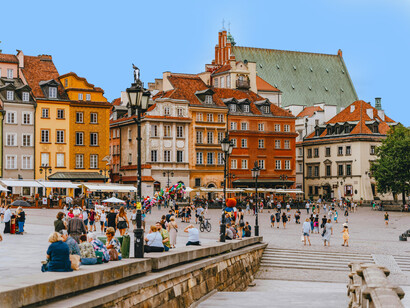
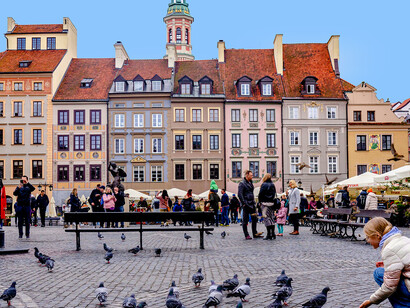
By the 1950s, the heart of Warsaw began to beat again. The Market Square regained its pastel façades and sculpted gables; the cathedral rose anew; the cobblestones echoed with footsteps once more. Slowly, shops reopened, families returned, and life resumed in a city that only a decade earlier had been a graveyard. The Royal Castle, whose ruins had stood as a painful reminder for decades, was reconstructed in the 1970s and ’80s through public donations—a national effort that united citizens across generations. When it reopened, fully restored, it symbolized not merely the return of architecture but the resurrection of dignity.
To call Warsaw’s rebirth miraculous is not to deny the complexity or the controversy of the process. Scholars and conservationists have debated whether the reconstructed Old Town represents authenticity or an idealized image. The rebuilt façades, for instance, conceal modern interiors; the urban layout sometimes smooths irregularities that history had once imposed. Yet these debates underscore rather than diminish the project’s significance. Warsaw’s reconstruction redefined what authenticity means. It suggested that authenticity can lie not only in original material but in faithful memory—in the continuity of place and meaning even after physical destruction. What makes Warsaw’s Old Town so moving is precisely this duality: it is both ancient and new, both artifact and testimony.
Today, visitors strolling through Castle Square, gazing up at the Sigismund Column or the reconstructed castle towers, may find it hard to imagine the scale of loss that once stood here. Yet the story of destruction and rebirth is inscribed everywhere—in museum exhibits, in black-and-white photographs displayed along the streets, and in the quiet pride of Varsovians themselves. The city has embraced its scars not as shame but as heritage. The nickname “Phoenix City” is not a mere metaphor; it is an identity born of endurance. Like the mythical bird, Warsaw was consumed by fire and yet rose renewed from its own ashes.
What makes the city’s restoration even more remarkable is how it continues to evolve. The Old Town, preserved as a World Heritage Site, coexists with modern architecture that reflects Warsaw’s forward-looking energy—glass towers, cultural centers, and the striking Museum of the History of Polish Jews, itself built on the site of profound wartime tragedy. This juxtaposition of the old and new reveals a city that has learned not only to rebuild but to keep building, to weave memory and modernity into a single urban fabric. The miracle of postwar Warsaw did not end with the completion of the Old Town; it endures in every act of renewal, in every structure that turns resilience into design.
Warsaw’s story challenges the idea that destruction is final. It demonstrates that a city is more than its walls—that what truly defines it is the collective will of its people to remember and to rebuild. When UNESCO inscribed Warsaw’s Old Town on the World Heritage List in 1980, it acknowledged not only architectural excellence but moral courage: “It is an exceptional example of the reconstruction of a historical sequence of events, representing the determination and dedication of the entire nation.” No other city has been so thoroughly resurrected with such historical precision and emotional intensity.
The miracle of Warsaw lies not in the erasure of tragedy but in its transformation. The ruins were not hidden; they were integrated into the new city as quiet witnesses. Fragments of old stonework are embedded in walls; memorial plaques mark places of resistance and loss; every street name carries echoes of what once stood there. This openness to memory gives the rebuilt Warsaw a rare depth—it is a city that remembers, even as it lives fully in the present.
To stand on the Market Square today, surrounded by façades that seem centuries old but are scarcely seventy, is to feel something profoundly human. It is not deceit but defiance that makes these buildings stand—defiance of annihilation, of forgetting, of despair. In that sense, Warsaw is not only a Polish story but a universal one: a testament to humanity’s capacity for endurance and imagination. The “Phoenix City” reminds the world that even after the most complete destruction, art, knowledge, and will can restore what seemed irretrievably lost.
Warsaw’s rebirth is often described as miraculous. Yet the real miracle is not divine intervention but human determination—the countless hands that carried bricks, the architects who studied paintings, and the citizens who refused to surrender their city to silence. From ashes, they built not only a capital but a symbol: that no act of violence can erase the human need to create, to remember, and to begin again.