English
 Español
 Français
 Deutsch
 Italiano
 Português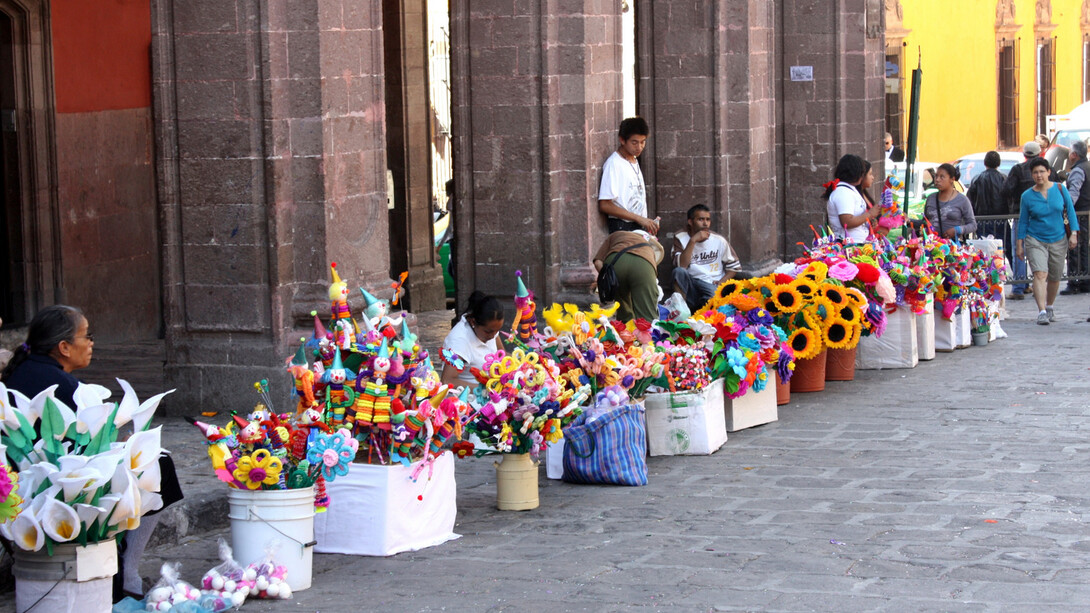
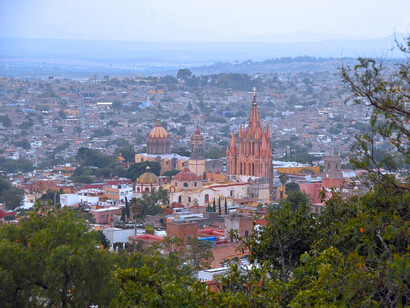
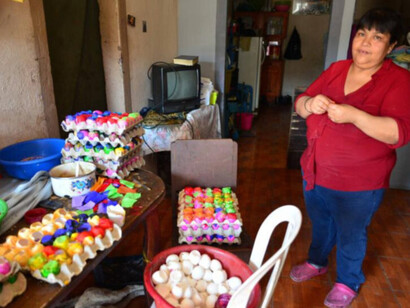
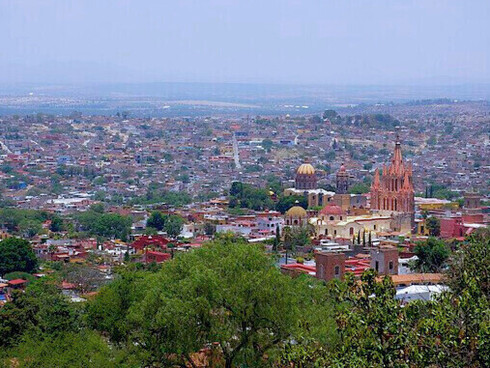
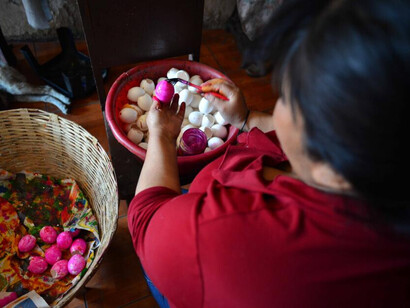
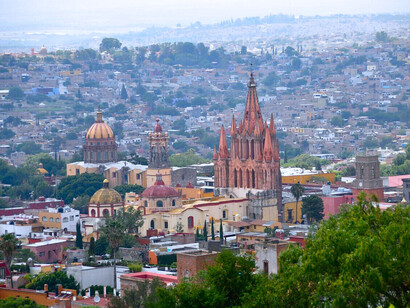
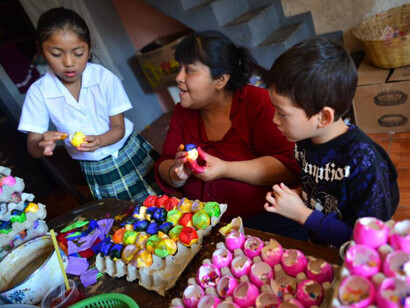
It’s El Día de los Cascarones in San Miguel de Allende, a lovely UNESCO World Heritage site 160 miles north of Mexico City in the Picachos Mountains in Central Mexico. Vendors line the cobblestone streets leading to the Jardín Principal or main plaza centered around the magnificent Parroquia de San Miguel Arcángel, selling bags of painted hollowed-out eggshells stuffed with confetti. Called cascarones, the idea is to break them over the heads of others, sending confetti drifting through the air and creating a bond between non-family members.
In other words, if someone cracks a cascarón over your head, it’s a friendly gesture.
I asked our server at ALTAR, a rooftop restaurant opposite the Parroquia de San Miguel Arcángel, the Neo-Gothic/Baroque church first built in the late 1500s and added on to and restored over the centuries, about the holiday. Though his English isn’t great and my Spanish is exceptionally poor despite frequent trips to Mexico, I’m able to take away that this is a pre-Lenten tradition practiced every night until Easter. Seeing as it’s just the middle of February, that means a lot of eggs will be broken over the next month or so.
It’s an incredibly messy tradition if you’re the one cleaning up the confetti, and I decided against taking any eggs home because of this, but it’s also lively and fun, like everything in this city in the State of Guanajuato, known for its large ex-pat population, which is one reason why I’m here.
I was invited by my friends Steve Kinney and Dawn Garber, who had rented a home on a narrow cobblestone street about a mile from the Parroquia de San Miguel Arcángel, probably one of the most photographed churches in all of Mexico. Made of pink cantera, which is a decidedly pink colored limestone quarried locally, it’s all arches, spires, towers, and finials, fitted with niches filled with stone carvings of saints and religious figures.
Illuminated at night, it is the main focus of the central plaza where musicians perform, food and craft vendors gather, and families congregate. And if you’re wondering what time it is, the bells ring loudly every fifteen minutes.
For those who have spent most of their time along the coastal cities and villages of Mexico—Cancun, Playa del Carmen, and Puerto Vallarta, to name a few, this part of the country is so much older, having been under the rule starting in the 1500s of the Spaniards who plundered the mines in the surrounding mountains for gold and silver. In the 18th century and even after, the nearby city of Guanajuato was the leading silver producer in the world. The mines in and around the city, including the La Valenciana mine producing approximately 30% of the world's silver for more than 250 years.
There were trains and narrow roads through the mountains and jungles where ore was shipped to the coast to ports where it was carried on ships across the ocean, and, of course, since money was involved, stories of bandits who attacked the trains and armed groups of men carrying silver on donkeys and burros. Another train traveled north along the Silver Route, taking the treasure into the U.S., which at the time was still Mexico. Hence, some of the ballcaps I saw reading Make America Mexico Again.
The Spaniards, made rich by it all, built mansions and government buildings, often in an elaborate decorative Moorish style called Mudejar. As for the Mexicans, whose country it was, they often went into the mines to work. Doing so was a death sentence of sorts because life expectancy for those who did was said to be ten years.
But the Spaniards pumped money into their churches, which are gilded in gold—the higher to the ceiling and God, the more karats used. And church doors, often open, should always be explored because of their stunning beauty.
The colors of the buildings in towns like San Miguel and other surrounding mining cities, such as Zacatecas and Queretaro, are washed in yellows, dusty reds, sherbet, and greens, accented with wrought iron balconies and tiled stairways. The streets often wind, rising up and down steep hills, which can make walking somewhat tricky, but then these were designed for the days of horses, long before cars came along in neighborhoods dating back four hundred years or more. Often, large double doors open up onto businesses—big enough for stagecoaches or wagons carrying goods to enter.
Because San Miguel is home to a wide range of people from other countries who come for the weather, the beauty, and the sense of getting away from it all, the food scene is lively and represented by culinary foodways from around the world. During my stay, I dined at such international restaurants as Berlin, which as the name implies, is German, and Bocaciega, a Greek eatery. But I also walked down Callejon Blanca where my friends had their rental to Mercado de San Juan de Dios, a sprawling building filled with a multitude of foods. Here, nestled between tables piled high with fresh fruit, handmade tortillas, and pastries, were vendors selling meats and cheeses and lunch counters where women in aprons filled plates full of food ladled from big ceramic bowls.
And while the prices at the high-end restaurants were amazingly inexpensive, the plates of food served at Cocina Economica Dona Raque at Mercado de San Juan de Dios were often less than a few dollars and consisted of such fare as gorditas filled with meat, chiles rellenos (cheese and spinach stuffed peppers dipped in batter and fried), or chicken in a dark brown mole sauce, all accompanied with rice and beans. Oh, and the price included a soft drink.
The types of beans commonly served here are different than those we typically use in making refried beans back home. There are several varieties of white beans grown in Guanajuato State, including Alubias Blancas, a white kidney bean, Flor de Junio, which is a beige bean with very light lavender swirls, and Ayocote Patachete, a large heirloom bean.
A common recipe for white beans, called potaje or habichuelas guisada, turns out a dish where the beans are creamy and the broth somewhat thick. I bought a couple of pounds, weighed them out, and poured them into a paper bag to take home, as well as a clay pot decorated with swirls of colorful flowers and a matching lid to cook them in. Add another $7 to my bill.
I may not have the history, the colors, or the warm weather when I return to Michigan, but I’ll have the flavors of San Miguel to remind me of my journey.