English
 Español
 Français
 Deutsch
 Italiano
 Português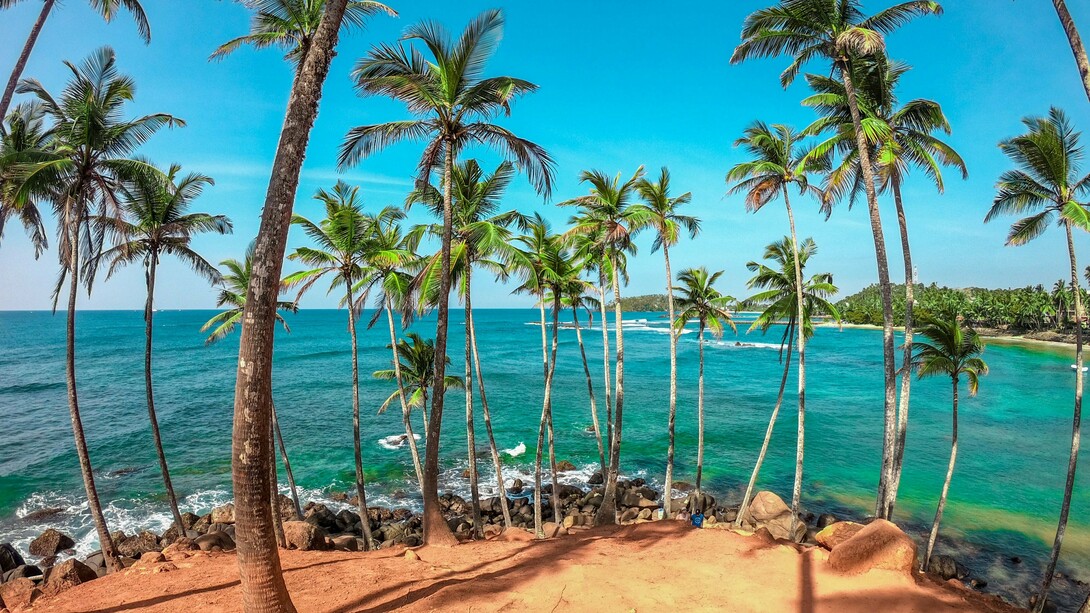
The small nation of Sri Lanka is not the most common tourist destination. However, it is gaining recognition as an excellent surfing destination, and its beaches, jungles, waterfalls, delicious cuisine, welcoming people, abundant wildlife, and rich cultural offerings are worth experiencing. The Democratic Socialist Republic of Sri Lanka is an island country in South Asia, off the southeastern coast of India, blessed with blissful beaches and monumental religious sculptures. It also bears the scars of civil war and a 2004 tsunami. Its shape and location have led to its being referred to as the “teardrop of India.”
Sri Lanka, formerly known as Ceylon, has more than 830 miles (1,340 km) of coastline and an inland terrain of gently rolling hills, with a mountain range dominating the south-central interior. Tea plantations and ruined palaces can be found, as well as wild elephants and leopards. Visits to tea plantations afford tastings and an understanding of how tea is harvested, dried, and produced for consumption. Sri Lanka is known for its Ceylon tea, which is a major export product.
Sri Lanka is also home to naturally grown Ceylon cinnamon, formerly a symbol of wealth and status, which local farmers hand peel and dry with incredible skill. Cinnamon harvesting is a skill passed down through generations.
Sri Lanka was colonized by the Portuguese, Dutch, and British before gaining independence in 1948. Colonial architecture can be observed, especially in places like Galle in the south. A remnant of British colonialism is also evident in its cars and tuk-tuks driving on the left side of the street. Malaysian influence is seen in sarong-clad men. Sri Lanka’s two official languages are Sinhala and Tamil, with English defined in its constitution as the link language.
Buddhism is considered its official religion, practiced by more than 70 percent of the population. Buddha statues dot the land. Hinduism was the dominant religion before the arrival of Buddhism in the 3rd century BC. The Temple of the Tooth in Kandy houses what is believed to be Buddha’s actual tooth, Sri Lanka’s most sacred object, protected by armed guards.
Approximately 60 percent of marriages are arranged marriages, based on caste, religion, income, family status, and horoscope. One guide shared that if you choose to marry someone with an incompatible horoscope, all your marital problems will be blamed on that choice.
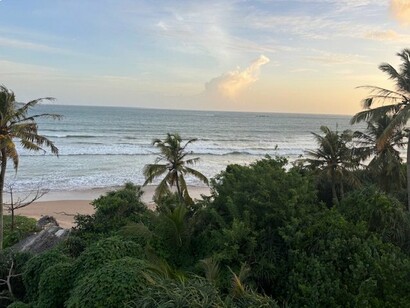
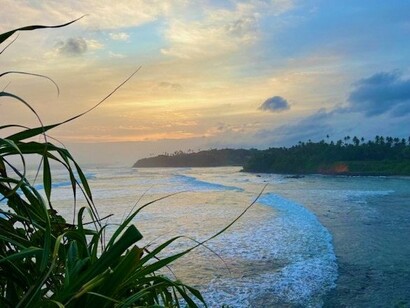
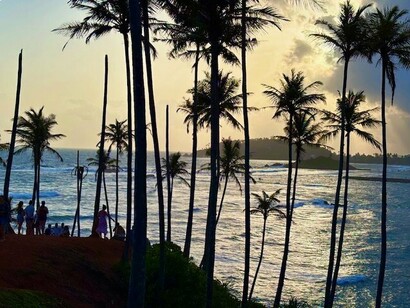
It is the highest-ranked country in South Asia in terms of development and has a high literacy rate among developing nations. Tourism is becoming an important part of its economy and it is touted as an excellent place for surfers, especially in Arugam Bay, on the southeast coast. Surfing schools are numerous on the southern coast, notably in Weligama and Hiriketiya.
While cricket is Sri Lanka’s most popular sport, I was intrigued by the stilt fishing. Men sit atop poles in shallow water and drop fishing poles into the crystal blue water to catch small fish. While only becoming popular in the last 70 years, images of the stilt fishermen have become famous.
Taking a train journey to see this country is an enjoyable experience. One enters British colonial-era railway stations and sees mountain views and tea gardens while journeying through the country’s interior. The Colombo to Ella itinerary passes through the Instagram-famous Nine Arch Bridge. Coastal train routes, like that from Colombo to Galle, provide views of the Indian Ocean and swaying palm trees. Heading north to Jaffna, one can enjoy views of green rice fields and coconut trees. Vendors on many trains sell tea, coffee, chili-sprinkled fresh fruit, roasted peanuts, and more. Train reservations are recommended.
Car and bus rides can be thrilling as the drivers dodge and weave, using the middle lines as passing zones. I was amused to see a “Danger, Peacocks Ahead” sign warning drivers on the highway. Take care if you rent a car, as road discipline is not well observed.
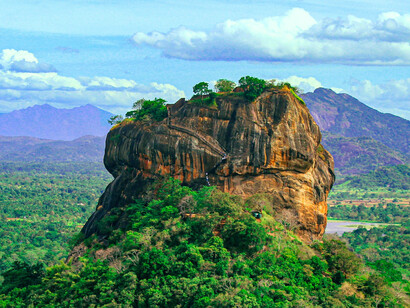
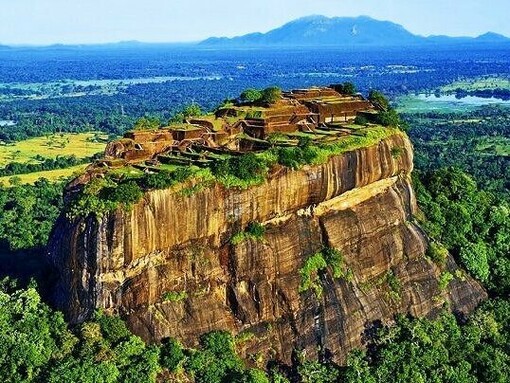
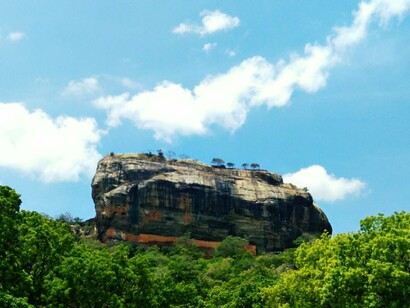
The ancient rock fortress of Sigiriya, a UNESCO World Heritage Site, is probably the most famous landmark in Sri Lanka. It is considered to be one of the best preserved examples of ancient urban planning. Its water, cave, boulder, and terraced gardens are among the oldest landscaped gardens in the world. Sigiriya is located in the northern Matale District in the Central Province. In CE 477-495, King Kashyapa is reported to have selected the area as his new capital. He built a palace on top of the rock, decorated with colorful frescoes. Sigiriya, which means the Lion Rock, is derived from the gateway that is in the form of an enormous lion. It is advisable to arrive when it opens at 6:30 am to avoid lines and crowds, especially on the single-file walkways. There is a nearby rock one can hike to take photos of Sigiriya.
I visited Sri Lanka during its rainy season, but the rain was infrequent. In any event, the rain did not diminish my enjoyment of this verdant, myth-filled, friendly, inexpensive country, and I was grateful for the lack of crowds.
The traditional Sri Lankan greeting is Ayubowan, which means may you live long. May you live long and abundantly enough to experience the wonders of Ceylon.