English
 Español
 Français
 Deutsch
 Italiano
 Português
Something strange is happening to film lovers. They’re buying controllers.
Not to chase high scores or learn frame-perfect combos, but to sit with a story for thirty hours, make questionable decisions, and emotionally bond with fictional people who would absolutely ghost them in real life.
Prestige TV once promised immersion: long arcs, complex characters, morally gray dilemmas. But lately, it feels rushed. Compressed. Afraid of losing attention. Meanwhile, narrative games are out here asking you to commit, emotionally and temporally, like a relationship that refuses to stay casual.
This is playable cinema: not games pretending to be films, but interactive stories doing what cinema increasingly can’t: letting you live inside the narrative.
This didn’t happen overnight. Early narrative games like Heavy Rain or Until Dawn openly marketed themselves as “interactive movies,” borrowing cinematic language almost defensively. They were important, but still felt like games asking for the film’s approval.
What’s changed is confidence. Today’s narrative games aren’t trying to prove they belong at the cinema table. They’ve built their own. They don’t just mimic film grammar: they bend it around agency, duration, and consequence.
Games didn’t become cinematic: cinema became limiting
Games have flirted with cinema for decades. Cutscenes, orchestral scores, celebrity actors. For a long time, it felt like insecurity: games trying very hard to be taken seriously by film culture.
Then something shifted. Instead of copying cinema, narrative games leaned into their own strengths:
Time instead of brevity.
Participation instead of observation.
Responsibility instead of detachment.
Films ask you to watch characters make mistakes. Games ask you to make them yourself. Once you’ve crossed that line, it’s hard to go back.
"Alan Wake II": prestige TV with a controller
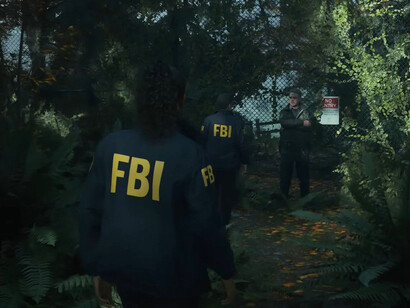
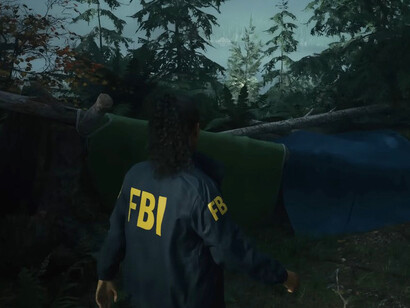
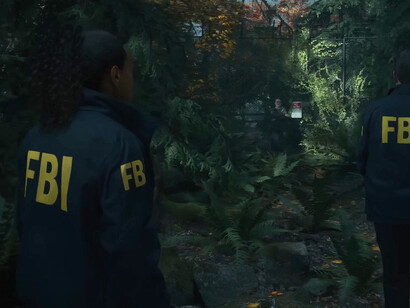
Alan Wake II (Remedy Entertainment, 2023, psychological horror, thriller) feels less like a sequel and more like a late-season prestige series that decided to get weird and didn’t ask for permission. The game follows two protagonists, writer Alan Wake and FBI agent Saga Anderson, trapped inside overlapping layers of fiction, memory, and paranoia.
What makes it cinematic isn’t just the visuals (though the lighting alone could win awards). It’s the structure. The story unfolds in episodes, complete with musical interludes, title cards, and moments that stop gameplay entirely to let live-action footage bleed into the narrative.
A standout example: entire scenes where the game abandons traditional mechanics and stages surreal musical numbers or television segments that advance the plot. This isn’t filler. It’s storytelling that trusts the audience to follow the tone instead of tutorials.
Film buffs love it because it behaves like auteur television: controlled pacing, a strong authorial voice, and zero interest in being universally accessible. It doesn’t explain itself. It dares you to keep up.
"Death Stranding": slow cinema, you have to carry yourself
Hideo Kojima made Death Stranding (Kojima Productions, 2019, post-apocalyptic sci-fi) and then watched half the internet ask if walking was really “gameplay.” Film people nodded quietly and kept playing.
Set in a fractured America where society survives via isolated pockets of connection, the game casts you as a courier rebuilding bonds, literally carrying supplies across vast, empty landscapes. Combat exists, but it’s not the point. Movement is.
One of the most cinematic moments isn’t a cutscene at all: it’s the first time licensed music fades in as you crest a hill, revealing a massive, desolate vista. No dialogue. No action. Just space, sound, and time. A long task you perform by walking through it.
This is slow cinema in interactive form. Repetition becomes meditation. Silence becomes narrative. It demands patience, emotional endurance, and a willingness to sit with loneliness, qualities cinema once celebrated and now rarely dares to require.
Telltale’s "The Expanse": drama with consequences
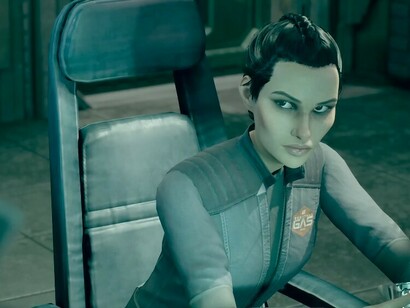
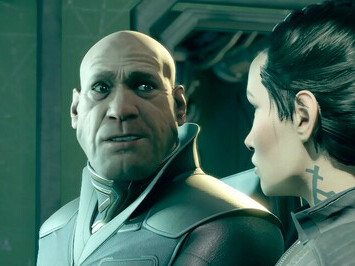
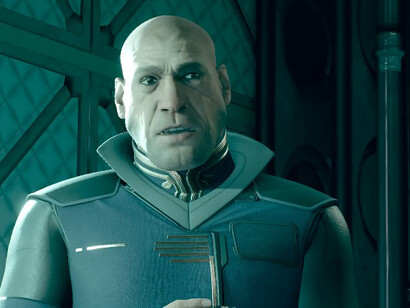
Telltale’s The Expanse (Telltale Games, 2023, episodic narrative adventure) adapts the sci-fi series not by recreating spectacle, but by focusing on interpersonal tension, moral compromise, and quiet authority struggles.
You play as Camina Drummer, navigating political pressure, crew loyalty, and impossible choices in space. The structure mirrors television: episodes, dialogue-heavy scenes, and cliffhangers. But unlike TV, the responsibility sticks.
Here, dialogue choices don’t lead to immediate consequences; they quietly shift how characters treat you episodes later. There’s no dramatic music cue screaming, “This was important.” You feel it when trust erodes.
For film and TV audiences, this is the appeal. It’s a familiar narrative, grammar, and character-driven drama, but with accountability. You don’t just critique characters’ decisions on social media. You live with them.
"Clair Obscur: Expedition 33": arthouse cinema, turn-based
Clair Obscur: Expedition 33 (Sandfall Interactive, 2025, fantasy RPG) looks like it escaped from a European arthouse film festival and accidentally became a game. Developed by Sandfall Interactive, it centers on a surreal world where a godlike figure erases people from existence at a certain age, and an expedition sets out to stop the countdown.
What stands out immediately is the visual language: painterly environments, theatrical lighting, and character designs that feel symbolic rather than realistic. It’s not chasing Hollywood polish. It’s chasing mood.
One cinematic example lies in how combat is framed. Turn-based battles aren’t frantic; they’re rhythmic, almost choreographed, like scenes blocking emotion rather than action. Fights feel like narrative punctuation, not spectacle.
Film buffs are drawn to it because it prioritizes atmosphere over explanation. It feels authored, restrained, and metaphor-driven, closer to independent cinema than blockbuster storytelling.
That artistic ambition hasn’t gone unnoticed. Clair Obscur: Expedition 33 has already picked up attention at major showcases and award circuits, praised for its art direction and narrative vision—the kind of recognition usually reserved for independent cinema rather than turn-based RPGs. When juries and festivals start talking about games the same way they talk about films, it’s no longer a metaphor. It’s a category shift.
"Detroit: Become Human": interactive melodrama with a moral UI
Detroit: Become Human (Quantic Dream, 2018, interactive drama, sci-fi) is what happens when a filmmaker looks at games and says, “What if we just made a movie, but let people mess it up?” Directed by David Cage at Quantic Dream, the game follows androids in a near-future Detroit as they develop consciousness, emotions, and inconvenient opinions about servitude.
The structure is unapologetically cinematic: motion capture performances, sweeping camera moves, heavy-handed symbolism, and chapter-based storytelling that feels closer to prestige drama than gameplay-driven design. You don’t “play” so much as you direct.
One key example of playable cinema is the decision tree itself. After each chapter, the game shows you a branching flowchart of what could have happened: scenes you missed, deaths you avoided, and revolutions you accidentally triggered. It’s like seeing the editor’s timeline of a film you just altered.
Another moment: entire scenes where the tension comes not from action, but from stillness, deciding whether to obey an order, speak up, or stay silent while the camera lingers uncomfortably on your face. The drama happens in the pause.
Film buffs gravitate toward Detroit because it offers something cinema rarely does: visible consequence. The story doesn’t just unfold; it mutates in response to your choices. It may be melodramatic, occasionally on-the-nose, and allergic to subtlety, but so is a lot of prestige TV.
And just like prestige TV, people keep arguing about it long after the credits roll.
Why film buffs are crossing over
The games are not “becoming better.” It’s all about evolving storytelling.
Narrative games offer what film increasingly struggles to:
Time: stories that breathe.
Agency: emotional investment through choice.
Risk: weirdness without fear of alienating algorithms.
Intimacy: participation instead of consumption.
Prestige TV is under pressure to be bingeable, brand-safe, and endlessly scalable. Narrative games, meanwhile, are free to be slow, strange, and demanding. And audiences are noticing.
Of course, playable cinema isn’t for everyone. Some players want mechanics, mastery, and momentum. Some film lovers don’t want responsibility: they want to sit back and judge characters from a safe distance. Interactivity demands effort, patience, and complicity.
But cultural shifts don’t replace audiences; they expand them. The rise of narrative games doesn’t kill cinema any more than television did. It simply offers another way in.
Playable cinema isn’t a gimmick: it’s a shift
Skeptics still insist that games are “just games.” Cinema once heard the same dismissal.
Playable cinema isn’t replacing film. It’s expanding the definition of storytelling. It’s for people who want more than observation, who want involvement, responsibility, and time to feel something deeply.
Film taught us how to watch stories. Narrative games are teaching us how to inhabit them. And once you’ve lived inside a story, pressing “play” starts to feel passive.