English
 Español
 Français
 Deutsch
 Italiano
 Português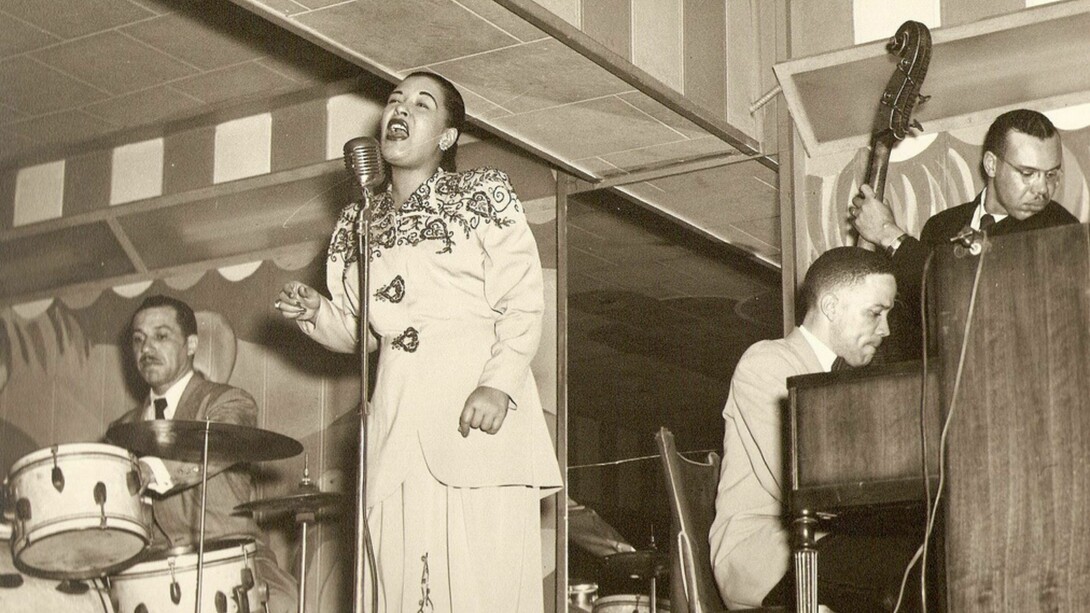
Any time we choose to remember the deceased, we must decide what exactly is to be remembered. No act of remembrance can preserve the entirety of someone’s life. One must decide what is included and, consequently, what is not. Certain experiences are emphasized, others are omitted, and over time these decisions become the legacy through which the deceased are understood. Therefore, remembrance is never a neutral preservation of the past, but rather an interpretive statement about which perception is chosen for future generations to inherit.
Tribute albums are no exception to this process. The selection of songs and style of their performance reveals both what the creator admired about the artist and what the creator believed the artist should be remembered for.
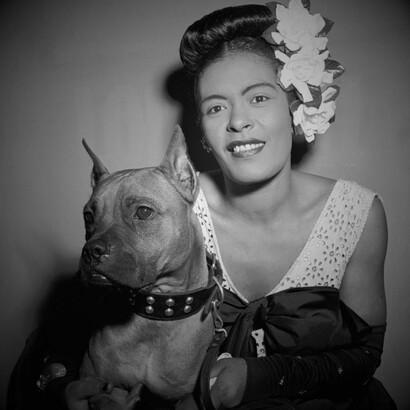
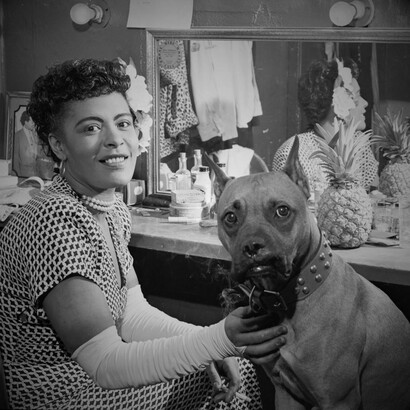
Changamiré’s tribute to Billie Holiday acknowledges the selective nature of remembrance. Rather than presenting itself as an act of imitation, the project describes itself as one of inheritance. This distinction is significant. A voice can be imitated, a song can be recreated, specific stories can be retold. An entire life, however, simply cannot be reproduced. Every memorial or tribute, therefore, must be selective, carrying certain aspects of a person’s life into the future while leaving others behind. In this way, remembrance resembles inheritance rather than imitation. Consequently, how we view the life of a deceased person is determined both by what has been passed down and by what was left out.
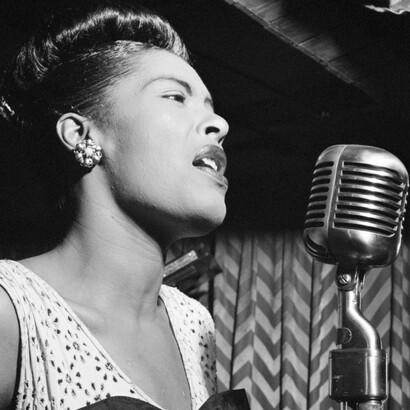
So what perceptions of Billie Holiday have we inherited? How Holiday is remembered, of course, varies from person to person. She might be remembered as one of jazz’s greatest vocalists, an advocate for civil rights, a victim of racism, or an addict. None of these labels is wrong—Holiday was all of these things. But she was also more than any one of these things. And crucially, these labels describe who she eventually became rather than the circumstances that led her to become these things.
This distinction is especially significant in Holiday’s case. Her addiction, for example, has often been remembered independently of the poverty, abuse, racial violence, and trauma that preceded it. Consequently, her legacy often highlights the effects of her suffering while overlooking the circumstances that produced them.
Furthermore, while her pain is often acknowledged, the ways in which Holiday expressed this pain caused either extreme praise or judgment. When she expressed her pain through music, critics praised the emotional depth of her voice, often attributing its power to the hardships she endured1. Yet the authenticity celebrated in her music became intolerable once it appeared outside the boundaries of performance.
When the same suffering manifested through addiction and emotional instability, she was met with moral judgment and criminalization rather than compassion. This contradiction illustrates the selective way we often respond to pain. We celebrate suffering once it has been made beautiful, but recoil from it when it remains messy. The pain that made Holiday’s music distinct is no different from the pain that fueled her substance abuse. Yet one expression of her pain is celebrated while the other is viewed as a moral failure.
Crucially, the point is not to excuse the harm addiction can cause or claim that both her career and addiction should be equally celebrated. Rather, the point is to recognize that both emerged from the same lived experience. While the audience encountered Holiday’s suffering through her performances, Holiday herself experienced the suffering throughout her life. What listeners encountered as emotional authenticity, for her, was an ongoing reality that extended far beyond the stage. Consequently, the pain admired in her music could not remain within it. Instead, it also appeared in her addiction, in her relationships, and in her behavior. To separate the two manifestations of her suffering is to admire the expression of her pain while overlooking the experience.
Holiday’s life illustrates this connection. Before she became one of jazz’s defining voices, Holiday’s childhood was marked by poverty, sexual assault, and instability. Born to a teenage couple, Holiday was sent to live with relatives in Baltimore, where she experienced abuse before being placed in a Catholic reform school. Later, she was sexually assaulted before moving to New York City in 1929, where she was arrested for prostitution at fifteen2. Remembering only Holiday’s addiction obscures the poverty, abuse, and violence that shaped it.
But Holiday’s suffering did not end as she entered the music industry. She continued to experience exploitation, abuse, and racial discrimination3. Even while she was alive, however, this pain was valued when it could be transformed into something beautiful. The separation between Holiday’s art and her humanity was not only a feature of her later legacy; it shaped how she was treated during her lifetime. For example, while Holiday performed for White audiences, she was not allowed to enter venues through the front door to avoid offending her audience. The same audiences who admired the suffering in Holiday’s music were unwilling to confront the suffering in her life.
Arguably her most famous performance, “Strange Fruit”, exemplifies when suffering cannot be separated from the person experiencing it. The song’s power comes from its refusal to make racial violence something distant or abstract. Instead, the song acted as a confrontation with racial violence4. Holiday did not allow audiences to appreciate pain without confronting its source. Still, these same audiences remained unwilling to protect Holiday herself from the very systems of racial violence that the song exposed.
Following her continued performances of “Strange Fruit”, Holiday became a target of government authorities5. This targeting continued until the final moments of Holiday’s life. In 1959, while hospitalized with severe health complications, Holiday was arrested for possession of narcotics and placed under police supervision6.
Holiday’s final days reveal that the reduction of life into a few labels does not begin after death. Remembrance inherits reductions that often began during life. Before Billie Holiday became a legacy and memory, institutions and audiences had already learned to encounter her through a limited set of identities. Even in her final moments, she was seen first as a narcotics offender rather than as a woman dying after a lifetime of trauma and exploitation. The complexity of her life had already been condensed into a single category: criminal.
If remembrance inevitably inherits lives that have already been reduced, then every tribute inherits not simply a person but an interpretation of that person. The task of remembrance, then, is not to avoid selection but to decide what should be carried forward. It is within this responsibility that Changamiré’s tribute should be understood.
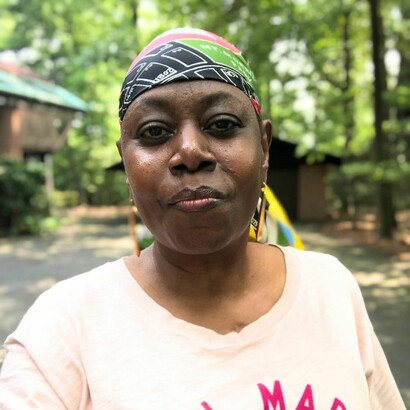
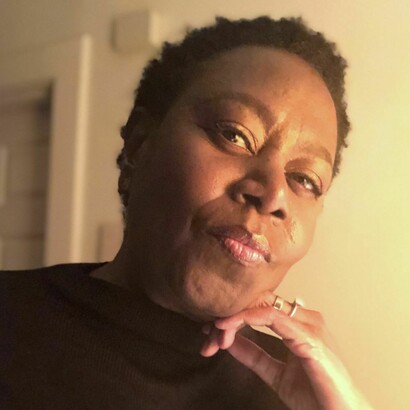
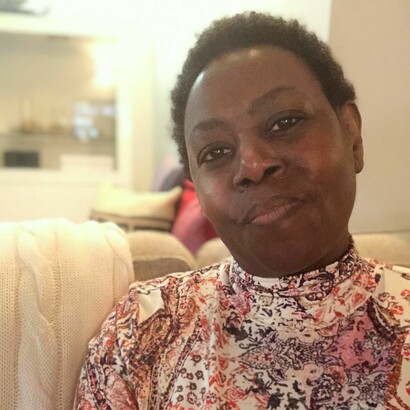
Changamiré’s Seeking Billie: The Unusual Tribute to Billie Holiday approaches this responsibility by refusing to treat Holiday as a completed historical figure. As Changamiré explains, she was not only interested in Holiday as a performer, but in “who she was in her private time, and who she might have become7 .” In doing so, Changamiré rejects the labels that have defined Holiday’s legacy and instead approaches her as a complete person whose life cannot be reduced to achievements, suffering, or struggles.
Rather than remembering Holiday as a singer, addict, or victim, the album seeks to understand the person who existed beyond these categories. Crucially, this does not mean that Changamiré escapes the selective nature of remembrance. Like all acts of tribute, Seeking Billie must still choose which aspects of Holiday’s life to inherit. The tribute succeeds not by preserving Holiday’s entire life, which is impossible, but by choosing to inherit the complexity of her life rather than the simplified identities that have come to define her.
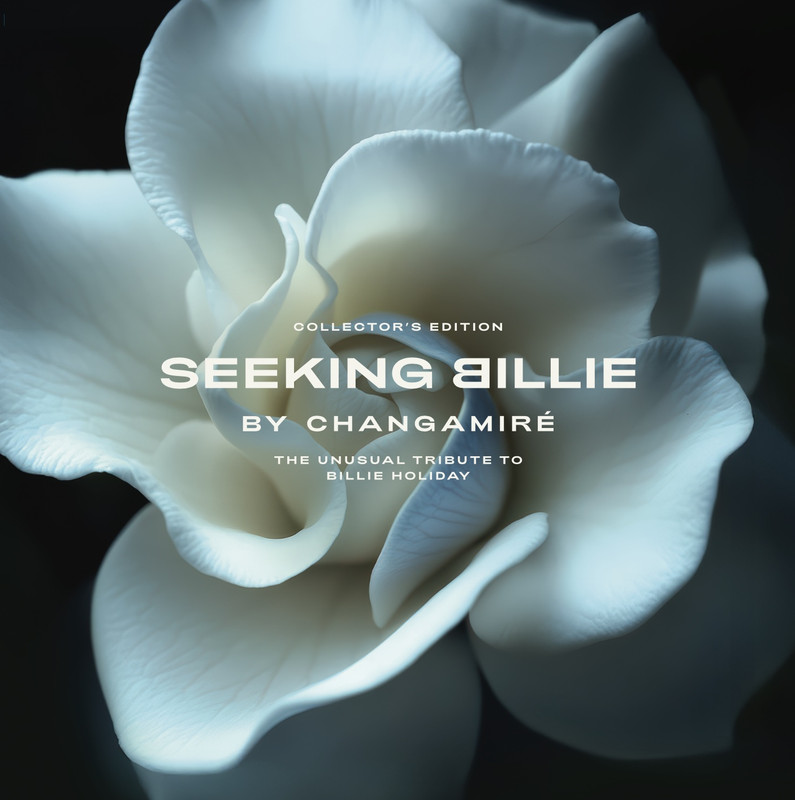
This approach to Holiday is rooted in a relationship that began long before the creation of Seeking Billie. Changamiré was introduced to jazz as a child through her aunt’s record collection. In this collection, she first encountered the music of Holiday8. Holiday, therefore, was not simply a historical figure whom Changamiré later chose to interpret; she was an artist whose work became part of Changamiré’s own musical inheritance.
Changamiré’s relationship with Holiday, therefore, reflects the distinction between imitation and inheritance. She does not attempt to become Holiday or preserve a fixed version of her identity. Instead, she carries forward the influence Holiday left behind while allowing it to persist through her own artistic perspective. This approach is reflected throughout her tribute, where Changamiré’s musical choices reveal not an attempt to recreate Holiday’s recordings, but an effort to continue the artistic and emotional conversations that shaped them.
The album’s opening track, “It’s April”, clearly demonstrates that Changamiré’s tribute does not treat Holiday as a fixed historical figure. The song is not a reinterpretation of a song from Holiday’s catalog, but an original composition created in response to her legacy. This choice is significant because it shows how Changamiré views Billie Holiday’s artistic legacy as something that can continue to produce new expression rather than something that can only exist through repetition.
While Changamiré could recreate Holiday’s recording, such a recreation would only preserve a small part of what made Holiday who she was. By including an original composition alongside Holiday’s existing songs, Changamiré acknowledges that remembering an artist requires more than attempting to reproduce what they left behind.
Changamiré’s reinterpretation of “Sophisticated Lady” further demonstrates the difference between inheritance and imitation. Rather than attempting to recreate Holiday’s version, Changamiré transforms the song through contemporary instrumentation and a modern rhythmic style. Holiday’s influence is therefore preserved not through exact replication but through continued artistic reinterpretation.
“Where’s the Sun” resists the earlier-mentioned tendency to remember individual tragedy rather than the conditions surrounding it by situating suffering within a broader social and historical context. Through lyrics that confront racial violence, Changamiré recalls not only the emotional pain associated with Holiday’s music but also the social realities that shaped her life and artistry. In doing so, the album extends the legacy of “Strange Fruit”, refusing to separate artistic expression from the historical injustices that inspired it. The album inherits not only what Holiday expressed, but the world she was responding to.
If remembrance inherits lives already simplified, then every act of tribute carries a responsibility that extends beyond commemoration. It must decide whether to preserve those simplifications or challenge them. Seeking Billie chooses the latter. By remembering Billie Holiday as a person whose artistry, suffering, and humanity cannot be separated, Changamiré demonstrates that remembrance is not merely about preserving the past. Remembrance is about resisting the reductions that began long before death.
Notes
1 Vitale, T. (2010, November 22). Billie Holiday: Emotional Power Through Song.
2 Arvada Center for the Arts and Humanities. (n.d). There Early Life of Billie Holiday.
3 Arvada Center for the Arts and Humanities. (n.d). There Early Life of Billie Holiday.
4 Godfrey, A. (2020, November 6) Singer, Activist, Sex Machine, Addict: The Troubled Brilliance of Billie Holiday. The Guardian.
5 Godfrey, A. (2020, November 6) Singer, Activist, Sex Machine, Addict: The Troubled Brilliance of Billie Holiday. The Guardian.
6 The New York Times. (1959, July 18). Billie Holiday DIes Here at 44; Jazz Singer HAd WIde Influence.
7 West, M.J. (2025, April 29). Changamire Seeks Billie Holiday in the Unusual. Washington City Paper.
8 When Sunny Gets Blue (n.d.). Bio.