English
 Español
 Français
 Deutsch
 Italiano
 Português
Once upon a time, racism wore its ugly face openly, shouting from the rooftops, carving laws into stone, and dividing societies with clear lines of color: segregation, discriminatory laws, and blatant hate defined an era where prejudice was impossible to ignore. But evolution is relentless, and as society inches toward equality, it has grown more aware that racism has undergone a silent transformation, morphing from outward hostility into covert, often invisible acts that hide behind the mask of civility, progress, and politeness.
Today, racism no longer demands a loud, aggressive voice for its presence to be felt. It lurks in the shadows of everyday interactions and institutional corridors, cloaked in social norms designed to appear fair and inclusive but which, deep down, maintain the status quo. This new form of prejudice is insidious, difficult to detect, yet just as damaging—and perhaps more complicated to dismantle.
From overt hate to whispered bias
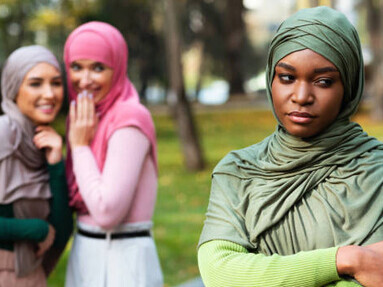
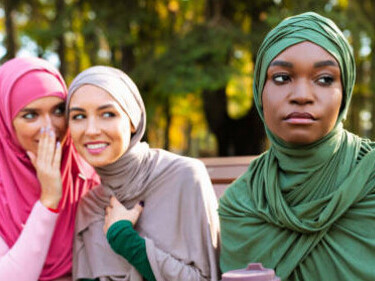
Remember the days when legal segregation segregated neighborhoods, schools, and water fountains with clear "whites only" signs? Those days are mostly gone. But now, racism manifests less in overt laws and more in the quiet assumptions that guide our daily lives—a whisper here, a sidelong glance there, a subtle slight that hints at deeper biases.
Take, for example, the college student who can be openly rude to a professor of color—rolling their eyes, dismissing ideas, acting dismissively—yet when a lecturer of the same race walks in, they suddenly become courteous, attentive, even deferential. It's a paradox woven with prejudice: kindness for those who share our skin and dismissiveness for those who don't. The subtleties of such micro-behaviors reinforce the invisible barriers that keep inequalities alive.
The illusion of diversity
Many institutions take pride in their commitment to diversity, showcasing posters, hosting multicultural events, and recruiting from a diverse pool of applicants. But beneath this polished veneer often lies a less glamorous truth: the biases that influence who gets hired, admitted, or promoted. A university might invite applications from all races to appear inclusive. Still, on decision day, those choices are subtly steered—favoring familiar faces, those who mirror the decision-maker's backgrounds, perpetuating an internal echo chamber that claims to embrace diversity but champions comfort over actual change.
Similarly, in the corporate world, diversity initiatives may be loudly promoted in open meetings, but what is often overlooked is quiet favoritism—where the "diverse candidate" is seen as a token, a box to tick, rather than a valued addition to the team. In these spaces, stereotypes linger in the background, quietly skewing opportunities.
The mask of colorblindness
One of the most common masquerades for modern racism is the pretension of "colorblindness." The idea that "if we don't see race, racism will disappear" sounds noble, right? But in reality, it's a mask that conceals rigid biases and structural inequalities. Pretending not to see race ignores the lived experiences of marginalized communities and shields prejudiced behaviors from scrutiny.
For instance, a hiring manager might claim they judge solely on merit, yet unconsciously favor candidates who look, speak, and behave like themselves. Their "blind" criteria are, perhaps unknowingly, shaped by stereotypes reinforced through social conditioning. When "colorblindness" becomes an excuse for inaction, it feeds the faintly sinister myth that ignoring race equals fairness when, in truth, it often sustains existing inequalities.
Microaggressions: the small stings that bite deep
They look minor—just a passing comment, a sideways glance, an offhand remark. But microaggressions are the stealth weapons of veiled racial bias. They pile up like tiny pebbles in a shoe—uncomfortable, persistent, unwelcome.
Stereotypes such as "You're so articulate" to a person of color imply surprise, implying they shouldn't be, based on racial assumptions. Asking "Where are you really from?" when someone is of the same nationality or assuming an Asian student must be good at math are microaggressions that keep stereotypes alive, subtly undermining confidence and sense of belonging.
Each microaggression might seem insignificant on its own. Still, in the aggregate, they carve deep ruts of marginalization, continuous reminders that despite claims of progress, racial bias persists just beneath the surface of polite society.
The invisible, yet unbreakable, structures
Systemic and institutional racism have become the silent architects of inequality, building barriers that are less obvious but no less concrete. Consider the way standardized tests in admissions favor those with access to expensive prep courses and tutors, often privileging students from wealthier, predominantly white backgrounds. Or the subtle ways specific workplace policies favor applicants from familiar race groups, reinforcing hierarchies where diversity remains decorative, not transformative.
Criminal justice, healthcare, and housing—the very fabric of society—are stitched with invisible threads of bias and inequality. These systemic patterns persist not because of overt hatred but because of ingrained assumptions, policies, and practices that favor the privileged and marginalize others. They silently reinforce cycles of disadvantage for communities of color, often going unnoticed by those not directly affected.
What makes modern racism especially insidious is its ability to hide behind the guise of neutrality—arguments of merit, professionalism, or progress. It adapts to new forms, cloaking old prejudices with the language of diversity and inclusion, even as the underlying structures remain unchanged. In workplaces, educational institutions, and government policies, the façade of fairness often conceals a persistent bias that continues to shape lives.
Recognizing this veiled racism requires more than just awareness—it demands active vigilance and a willingness to confront uncomfortable truths. It calls for questioning not only individual behaviors but also the policies and systems that perpetuate inequality. In the fight for genuine equality, understanding the subtle, often invisible ways in which racism operates is crucial. Only then can we begin to dismantle the deeply rooted structures that continue to divide us—beyond the surface into the heart of a more just society.