English
 Español
 Français
 Deutsch
 Italiano
 Português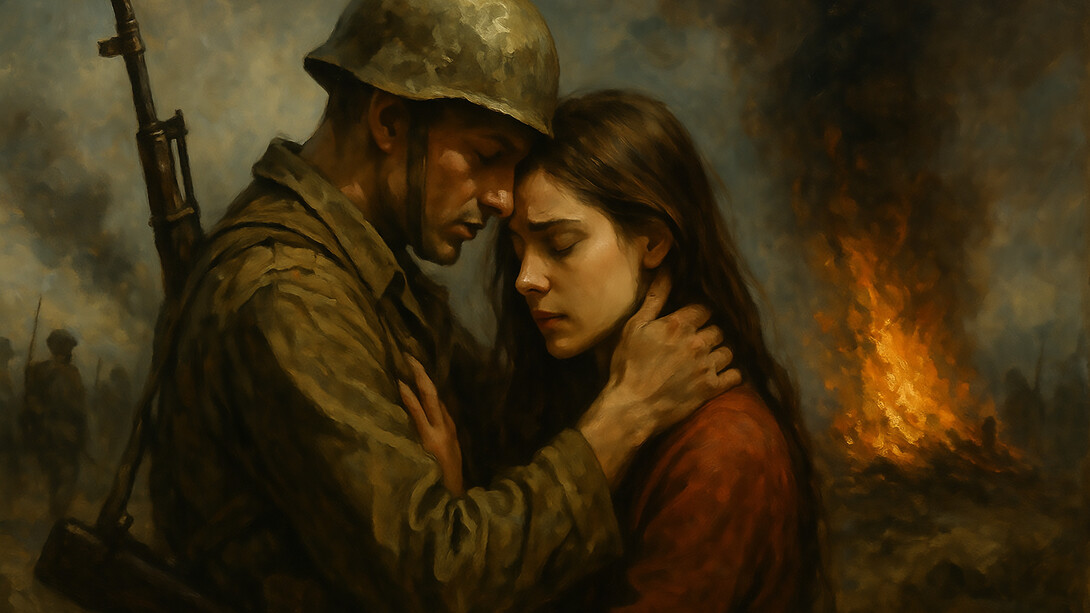
War is not solely about hate or revenge. While it is undoubtedly mixed with strong emotions and action-motivating impulses fueled by anger, the root cause lies in love and the desire for protection. We aim to protect ourselves and our loved ones, serve our motherland and nation, remain faithful to our religion, and conserve our traditions and culture. We choose the variables that shape our identity. What is ours, we protect. We value and appreciate these aspects, and the fear of losing them—or even the possibility of their danger—transforms our mindset and can lead to decisive action.
In this context, fight or flight is not simply an either-or question. We fight for what we deeply believe in and love to protect. We build fences, we bite, we shout, and we shoot. We grieve and celebrate afterwards. At the top of the piles of corpses we send to the afterlife, we sing national anthems, offer prayers to our chosen God, and cry out "I love you" to those we aimed to protect with the very same actions from which we are terrified they might suffer.
The tragedy is the casualty of choosing to take care of our significant others, family, nation, religion, etc., with cruelty towards others. Actions that, on the scale, we would label as the opposite of love. Violence does not exist in itself. It has to have a root and direction. It destroys and demolishes fearlessly. For such a heavy emotion, it must have a strong root to fuel the anger. And what could be stronger than honor, love, and respect? It feeds us and gives us meaning and reason to live. Protect in any circumstances, with any price. With this logic, violence is not the antithesis of love. It sits on the opposite side, but they are at the very same table, eating the same dinner with their significant others, praying for triumph.
Here, love and brutal action against the so-called opposition party are entangled. Helen Fisher, an anthropologist and neuroscientist, researched love and the human brain’s mechanisms behind it. According to her, love is such a strong, fundamental element of humanity that people will even die or kill for it. She realized the neuro pathways that are activated when someone is “madly in love.” It shifts the mindset into an obsessive, deeply interested, concentrated, and motivated state. Loving, mating, and caring about our loved ones make us human, and conversely, they make us do the most cruel, inhuman actions at the same time.
Love is not only a romantic idea, but it is also strengthened by societal roles, capitalism, and culture. It is deeply rooted in such foundational needs, which are derived from evolution. Survival requires the protection of others.
Today, I am afraid we tend to forget about the possible way of survival: protection through accepting, not over-demolishing. As violence gives birth to violence. Love can give birth to fear, which leads to violence as well, legitimized by love. Blinded reasoning will see the light if we can see the humans on the other side. According to András Feldmár, a Hungarian psychotherapist, love is when I could hurt you very badly, but I won’t. I deeply agree, but it raises the question, what about the others, whom we don’t tend to like? It sounds romanticized that we should love everyone, not just our significant others. And we should. Even when they hurt us?
Without falling into idealized whataboutism, I would like to raise the idea here that every logic will fall if its root is not based on love. (Time to roll your eyes!) Not only to our chosen people and spheres of life, but to each human being as a foundation. Idealistic, I know. Just as a world without war.
The problem is the pain, which can rob us of our ability to look around and feel the pain of others. If I could find a solution accompanied by a nice spiritual quote to spread awareness of what we need to see to prevent destruction in the world, I would do it. There have been a few who have attempted this, but unfortunately, the end of the story has often turned into a new trendy meditation practice that sells overpriced products and holds retreats on the beach for a good amount of money. And the teacher trainings shortly after.
These practices are all useful and spread a valuable message in themselves, but they also cause harm and pain as well, including cultural exploitation. They also elevate capitalism among their gods. This is, of course, inevitable to a certain extent, due to the current societal working methods, but the proportions in this recipe are quite important.
Here we are, in the field of spirituality, religion, and their consequences. Wars, violence, and forced conversion in the name of love and peace. The duality of this phenomenon is that we believe it humanizes us while also leading us to take actions that are far from humane. I don’t claim that religion is the root cause of hate, violence, and war. But it is just as guilty as we are when we legitimize a murder as a reason for the protection of our values. The line becomes liquid if we stray from our intention and lose sight of the results.
Without getting lost in the complex forest of religions and spirituality, it is essential to acknowledge that love is a prominent pillar in all of them. Refraining from generalization, most religions and spiritual ideas share this consensus. However, the pain and suffering that have often followed these groupings like a shadow throughout history are also extremely interesting.
If the starting point is such an elementary and important need, then we humans are lost in this dense forest. The tree is not very big, into which we cut our axe with the aim of living in love. But our axe is blunt, and by the time we make the hundredth cut on that trunk, we can already be in a sufficiently peppered and angry mood.
Community is a prominent feature of these phenomena. It protects us as we protect them. It gives us strength, faith, hope, and loyalty. However, if we become committed members of a group, we must be cautious when applying the theory of binary opposites. According to Claude Lévi-Strauss, human thought sees the world in binary opposites. Life-death, good-evil, male-female, order-chaos. These cognitive categories unconsciously guide social systems, culture, and myth-making.
These binary opposites also create hierarchies, where one element appears superior to the other. If we return to spirituality, cultural exploitation is a prime example of this. The post-colonial spread of yoga portrayed the original practitioners of the practice as culturally and spiritually rich, yet “backward” in their civilization, in contrast to the "high-art, civilized" lifestyle of the colonizers, which was perceived as lacking in depth and connection to nature. The designation of art as a "high" category is itself a telling phenomenon.
Patriotism, military service, and family love are intertwined into a narrative that serves political goals, nationalist ideas, and ideologies, all lacking in their attempt to alleviate the suffering caused. Usually labelled as “civilized” for interfering in other communities' lives, but with purely selfish reasons on the institutional level. Causing more harm than anything else
Suffering is a tricky emotion, as it can blind you to everything else around you, including the suffering on the other side. If I act from pain, I am likely to cause you pain. The possibility of our loved ones being hurt is one of the highest causes of why wars can have extreme outrage and celebration after destroying lives.
Revenge, blindfolded reaction, and self-centered narratives serve politics today. When it comes to war, it’s not a football match where you have to choose a side.Bystanders even now feel the need to have a strong idea of which party acted “understandably.”As a concerning issue, we can fall into the trap of identifying people with their nation’s political ideas. People are not their leaders. But they do have responsibility. Even when they are used by powerful nations and manipulated with strong emotions like hate or love.
I believe hate comes after love. Not because it sounds poetic. But due to that, hate is a consequence of some kind of action from earlier. You hurt me by doing something that goes against my morals, so I would rather not see you. (in better cases) or see you suffering. (or even worse)
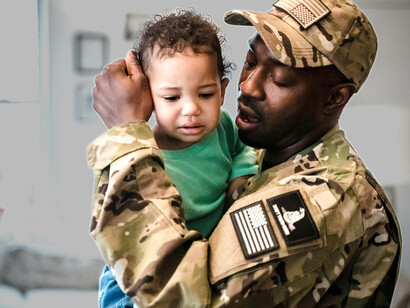
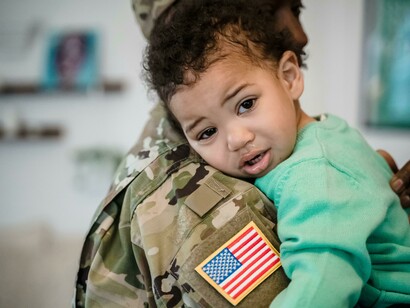
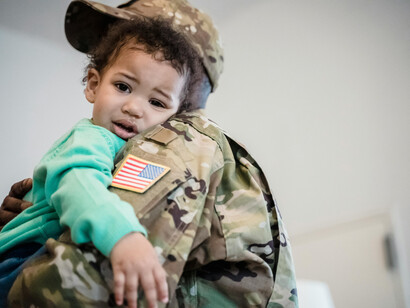
Benedict Anderson, in his idea about imagined communities, described the phenomenon of the root that feeds the protection of one's group. Nations are imagined communities held together by emotional bonds—especially love for one's countrymen. This logic causes the reasoning of love to justify killing for the collective as a morally high and right action, serving the fatherland. Soldiers often go to war not to kill the enemy but to protect their brothers, family, and homeland. They’ve been taught to cherish their circle, and fewer thoughts and less humility go to the opposite party.
In 2006, one of the most well-known episodes of Hungarian xenophobia research was the case of the Pirézek. The TÁRKI social research institute included this fictitious ethnic group—which has never existed—among the nationalities listed in their survey in order to measure the extent of general xenophobia. A significant proportion of respondents—around 59%—said they would not want the Pirézek to settle in Hungary, even though they could not possibly have had any information about them. This experimental element vividly demonstrated that rejection was often not based on concrete experience or rational arguments, but rather on a generalized xenophobic attitude. Since then, the story of the Pirézek has frequently been cited as an emblematic example of prejudice and xenophobia in Hungarian society.
Also in Hungary, the church bell at noon serves as a reminder of 1456, when Hunyadi János, a Hungarian military hero, halted the Ottoman Empire's invasion. The fear of migration is existential, recalling the hundreds of years of oppression. These small rituals are even unconsciously supposed to strengthen our honor and also our fear. The government is capitalizing on fear, thereby garnering votes from those who fear the most for their loved ones, traditions, religion, or homeland.
Interestingly enough, having friends and neighbors who tend to be part of a minority group (homosexual, Jewish, Arab, Chinese, etc.) is decreasing the fear, except in the case of the Gypsy community. Even a good interaction would be considered an exceptional event, which still strengthens the judgment.
Labelling prevents understanding, or even the will to try to see the other as a human, similar to us. According to Scott Atran, terrorists carry values more similar to ours than one would assume and are influenced by social connections. They die for each other, not for a cause. The roots can be surprisingly similar, but the environment shapes us, and we end up forgetting about that.
If concepts based on opposites form the basis of our orientation in the world, and this is supplemented by our inner values (such as family, love, religion, and commitment to the nation), then we can find ourselves in a conflict in which neither truth nor humanity remains. The goal for which we strive (and the means we use to achieve the desired direction) should recognize the “us” just as the “they and we” opposition.
Man as such is not just an individual operating in his own context, according to his moral and ethical rules. He does not exist in a vacuum. Ethnocentrism is a blunder that ignores the fact that, together with the presence of mutual influence, different rules (or even the same ones) are reflected differently in man.
Cultural relativism is essential in the study of any phenomenon. However, full understanding of a distant and different culture from ours will be lacking even after a lifetime of research. This does not mean that it is meaningless; quite the opposite. It is important. However, we must be aware that discrepancies and anomalies not filled by knowledge or experience are often subconsciously filled by our own ethnocentric thinking. This is inevitable because even labeling and self-justification are psychological processes that we can attribute to our evolutionarily vital functioning; however, we must simultaneously recognize this and correct it step by step to the best of our ability.
In my opinion, complete objectivity is an idea that exists on paper, much like an anatomically impossible pose that we are trying to train ourselves to achieve. It is impossible to get there, but it is our duty to recognize it and strive for it. The solution will not be the point where we can think objectively but where we already see that we are biased, and this is not necessarily a bad thing, since we have values and opinions. But we do not exist in a vacuum, so these can and should be changed and polished.
The most objective and accessible insight can be achieved by first trying to understand the situation under consideration, based on its given values and contexts, and not on our own world and worldview. And this is true even when we are faced with the most inhuman phenomena. This is not an agreement but a quest for understanding. An assumption of why and an openness to receiving possible answers.
Then we must apply the same recipe to opposing opinions. And finally, like a good tiramisu, it must stand for a while before our own position can be formed. This is sweaty and lengthy work.
Whether the variable in the equation is Hutu-Tutsi, Israeli-Palestinian, Russian-Ukrainian, or even male-female, we cannot neglect the presence of the media, which is loud, biased, and takes a stand. This makes our own work of understanding the world and its continuous expansion all the more urgent. So that we don't just adopt a template and color it like a child's coloring book, staying within the given framework, but we ourselves take out the clean sheet and try to set up a permanent image for thinking and reflecting.
Claude Lévi-Strauss’s structuralism posits that cultural expressions—such as myths, rituals, and narratives—are constructed upon underlying binary oppositions (life/death, nature/culture, good/evil). These oppositions reveal hidden structures of meaning beneath the surface of a story.
Applied to news media, structuralism suggests that news is not a neutral “reflection of reality” but a narrative construction shaped by cultural codes. News reports often frame events through oppositions such as us/them, victim/perpetrator, and chaos/order. Even when claiming objectivity, the media projects a subjective worldview, selecting which binaries to emphasize.
Thus, like myths in Lévi-Strauss’s analysis, the news tells us less about “what happened” and more about how society organizes meaning—which identities, fears, or values are reinforced in the process.
When we think about the media, let's not forget the issue of money, whether it is a direct or indirect influencing or motivating factor. Political forces aim for power and respect, so individual values can no longer find a common denominator with them at the starting point. Before my subjective writing would throw all trust out the window and would go against the very reason why I believe in the importance of social sciences, I would like to daringly state: the basis of the most inhuman actions is love. I do not think so at the institutional level, but in the world of individuals, it does. And if love, for which we are even capable of killing, gives us such strength, then this is precisely what can give us hope. After all, it is the most human feeling. And peace is much closer to it than war.
The greatest suffering, which even now appears in front of our eyes in connection with war, does not demolish love on the individual level, and this is what cannot be silenced by nuclear weapons or even with money. I believe that understanding the other side would be possible if our pain recognized each other’s pain. Our values see the others’, and we recognize the human in the opposition party. Don’t have to share their values, but the attempt to understand them is key.
It is a difficult task, especially when political and institutional forces dictate the tune. Seeing and feeling outside of ourselves during times of great pain is even more painful. But I believe that the root of humanity will give us strength not to break under pressure and will fuel us to a common ground of understanding. With this idealistic idea, let me finish with a quote, so feel free to roll those eyes for once more.
In Sorrentino’s Parthenope, Devoto Marotta to Parthenope
Devoto Marotta: "It's very difficult to see, because it's the last thing you learn."
Parthenope: "When do you learn to see?"
Devoto Marotta: "When everything else begins to be missing."
Parthenope: "What is everything else?"
Devoto Marotta: "Love, youth, desire, emotion, pleasure."
I would say it's worth trying to train our vision and truly see when we still have all of those.