English
 Español
 Français
 Deutsch
 Italiano
 Português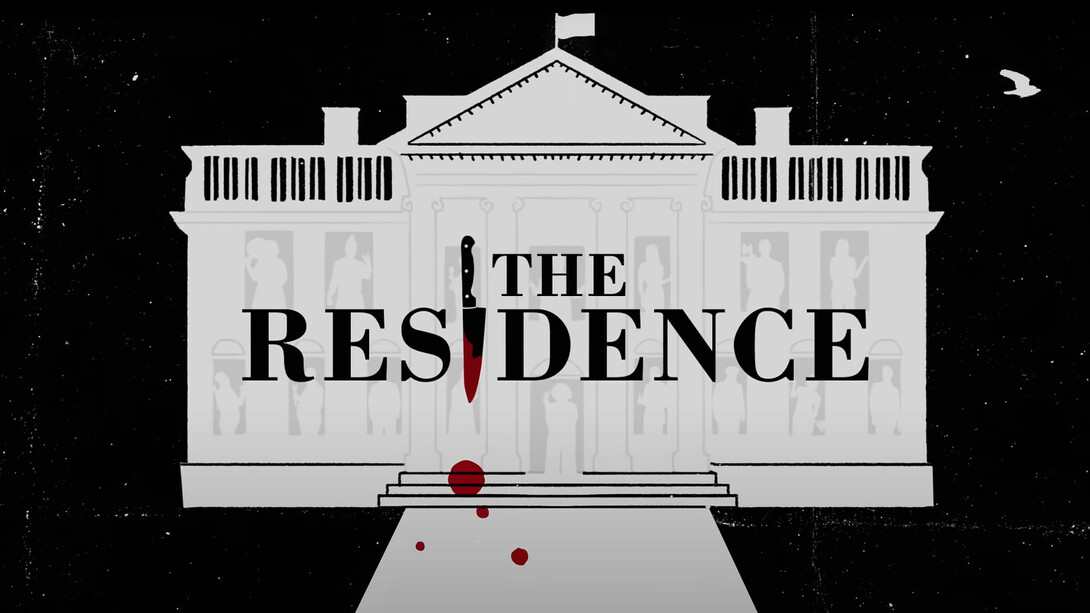
Spoiler alert! This may contain some spoilers for the Netflix 2025 series The Residence
For an avid television consumer like me, there rarely comes a series so captivating that it warrants me to keep my phone face-down on the center table and completely forget about it while being transported into a dizzying world of non-linear narrative. And even rarer that I finish watching the whole series, go to sleep in complete awe of a masterpiece that consumed me as much as I it, only to wake up in the morning and play episode one again.
The Residence, an eight-episode murder mystery that was released on 20th March 2025 on Netflix, is in a league of its own. Produced by Shondaland and created by Paul William Davies (For The People, Scandal), it does what makes for epic cinema: it builds a story world with characters so real, you forget it is fiction.
While the series has been inspired by journalist Kate Anderson Bower’s The Residence: Inside the Private World of the White House, the execution is phenomenal entertainment. One may think, “Well, who doesn’t love a ‘whodunit’? they are meant to be addictive.” The Residence is not just any whodunit. It is a plot ripe with reality and representation in the bright hue of a perfect dramedy. It is addictive for sure – I did rewatch it twice back-to-back and am likely to go for a third soon as I am done here. The Residence is also engrossing in its technical finesse, creative choices, subtle symbolism, and incredible performances.
Story world & characters
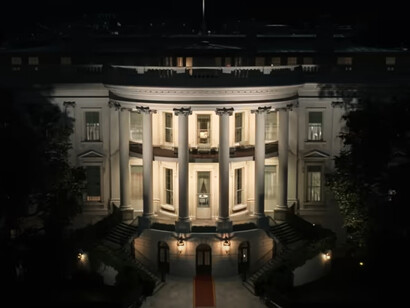
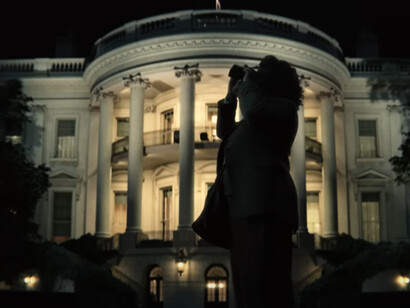
As the show opens, it sets the stage with a charged atmosphere that you know is going to end in someone’s death. What elevates this specific charged atmosphere? It is in the White House – which has set the scene for many an iconic TV drama like Aaron Sorkin’s West Wing and Shonda Rhimes’ Scandal. While those long-running shows focused on the high-brow drama of the political staff, The Residence tells the story of the staff of the White House residence. The people who take care of the family that moves into the House with the primary aim of serving them and their guests while keeping in with the traditions of the White House. As one of the characters states, “We are the house”.
In the investigation that ensues, the same character, through a simple dialogue, “it is us versus them,” emphasizes what the writers want you to know: that this is not just the story about a person’s death; but also, the demise of an idea, an institution, an era. As an expression of the encompassing worldview of all characters involved, “us versus them” sets the tone for what the detective is going to study and reveal.
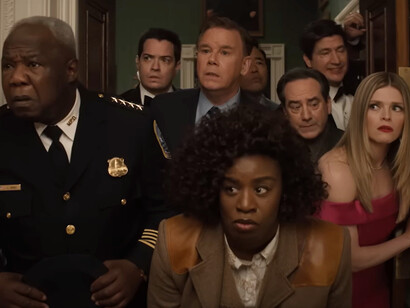
The characters, all of whom are either of interest or information or both, represent factions of people in the real world and their varied responses to tragedy in the wake of destabilizing power struggles. There are the compliant subordinates who play the game, aware that they are just a card in hand. Then there are the passionate ones for whom working in the White House is a dream, and they will not quietly endure any development that sours or dampens their work environment. There are those who wash their pain down with alcohol, for realized dreams bring just as much sorrow as joy; and then there are those who repress their emotions till they harden like a diamond within, threatening to cut through the surface any time.
Circling the solitaire is the halo of characters housed in the Senate and in the neighborhood of the White House, all of whom are seeking answers to questions right and wrong, and some of whom are seeking evidence to confirm their own theories. Their sightlines so often threaten to break the fourth wall as they promise to represent you, the viewer, in this fictional world.
Narrative delights
The choice of using a dollhouse to depict not only the layout of the residence that our investigator traipses about but also outlining the hierarchy within the house that dictates every member’s position and extent of permissible mobility is an elegant one. The crowning delight that also offers comic relief at tension points is the use of ornithology for analogous play. “Birding” as everyone in this story world calls it, serves as a medium through which the detective – the protagonist and the viewer’s guide to sleuthing out this mystery – implores her companions to comprehend the various strategies, strengths, and skills that not only shape the investigation but also the motive for many of the characters to engage in betrayal, malice, tomfoolery, or plain old imprudence.
Movements and colors and cutaways
The show employs the finest of visual engagement – turning its audience into the protagonist’s muse. The sweeping camera movements that draw the detective’s lines of sight and thought tug the viewer into a flighty trip not unlike a circling bird that she might spot through her binoculars and strike off on her birding list. With so many characters moving through a multi-storied building on the night of a social event at the White House, the use of color association throughout the story helps paint a distinctive picture of who-what-where-when. With a short timeframe set for the incident and tighter deadlines popping up to find the answers, the use of cutaways to help build recall for every character’s backstory (and true story) is a cognitive super-hack in visual storytelling. The editing feels like a choreography, set design bold and decisive, along with cinematography that hypnotizes - all of which combine to render a wholesome kaleidoscopic experience for a whodunit.
There is a message here
As the story of this series hurtles towards its resolution, our detective seeks “the context” to determine the truth amidst a delectable spread of strong, compelling possibilities. And it is this–context–that truly makes The Residence worthy of being exalted into a Broadway adaptation. Immigrants build societies and keep them functioning. It is not just endemic to North America, Europe, or Australia. Every society across all occupied continents has those who have been inside a while and those who come new from the outside. The outsiders bring with them the pressure to integrate and assimilate so they can meld into the fabric of their destination and be home. They are often the ones willing to work harder to prove that they bring value, seeking to blend in, longing to belong. Nations and regions around the world have been built and maintained by these outsiders who become immigrants (if they are lucky) who then become the immanent.
The residence staff of the White House in this story are immanent. They work their jobs with the singular aim of serving the incumbent family who represent what their nation stands for–thus working to serve the nation. But the threat of security, stability, and possible social mobility for a class of people who are–by visible or invisible markers–seen as inferior prompts those with an oppressive mindset towards destructive actions. The deeply embedded “us versus them” thinking sets into motion a wave of callous disregard for those who have earned their belonging. An attack on one of them is an attack on all of them.
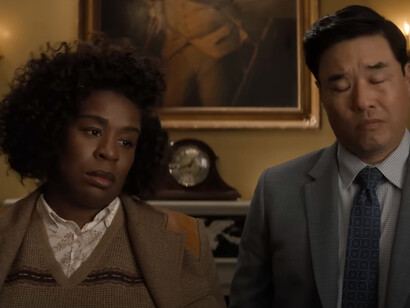
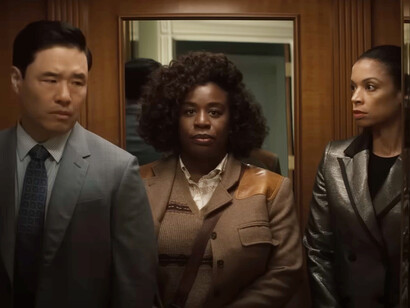
Detective Cordelia Cupp determines the context and unravels the hideous bigotry hiding in plain sight, almost getting away with it as sympathy. The program one-liner describes her as eccentric, which is how self-realized, high-achieving women look like to the patriarchal gaze. But in a genre where protagonists are often sketched like caricatures, the writers of this show have breathed a real human in the character of Cordelia Cupp. Thank goodness for Uzo Aduba, who embodies and owns that unwavering realness in an inimitable fashion.
The Residence is a response to the quest: crash course on current affairs but make it binge-worthy.