English
 Español
 Français
 Deutsch
 Italiano
 Português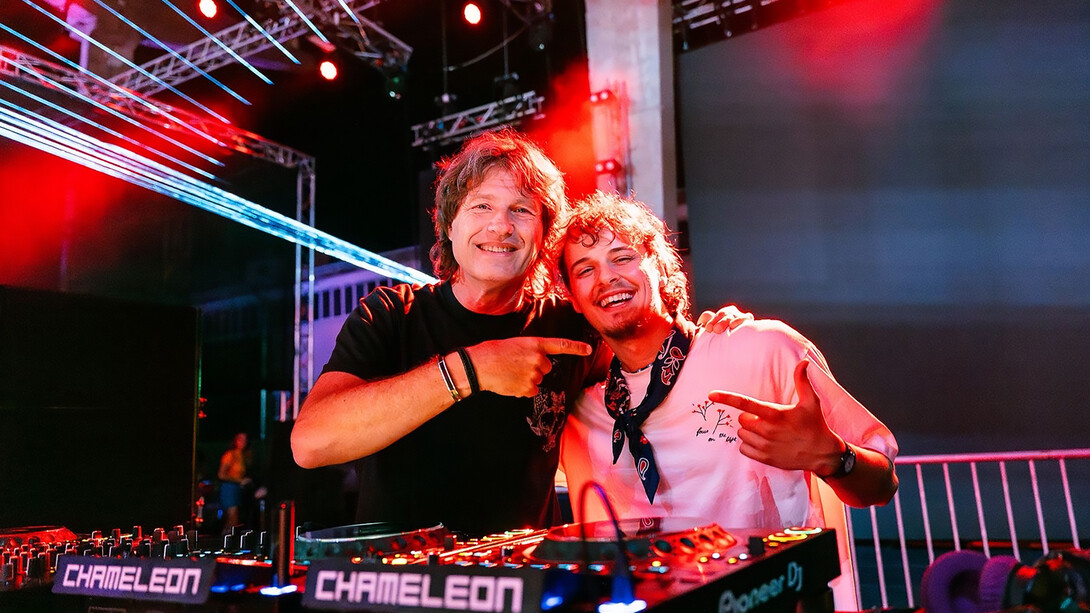
There are moments when the beat doesn't just play in the background—it enters you, becomes you, and suddenly your entire mind begins to dance. The rhythm pumps through your veins, the adrenaline rises in a wave you cannot control, and something bright and alive fills your heart and soul. Your whole body, your thoughts, your energy—all of it moves together, as if the music is speaking a language only you can hear.
That is the underground. The real underground, baby.
Not the kind wrapped in gimmicky, neon-pink trends. Not something fake or watered down for clicks or hype. The underground is eclectic. It's unapologetic. It's the uncut, unpolished truth of sound. The heartbeat that lives beneath the surface of commercial noise. The pulse that keeps the world spinning—at least, it has kept my world spinning for more than a decade.
From the very first event I stumbled into in my hometown, when everything felt new and electrifying, to Miami Music Week and its legendary chaos; from hidden off-location parties played by the best of the best to the unmistakable energy of London’s sound; from Mykonos shores to Ibiza lights, Tulum’s beach & jungle stages to Parisian nights that felt like scenes from films, to festivals spread across Croatia, Italy, Montenegro, and well beyond—these dancing feet have carried me through countless places, countless crowds, and countless unforgettable moments.
And still, the journey continues. Because music isn't defined by age, or trend, or era. It lives in the guts—in instinct, in curiosity, in that internal spark only real music people understand.
Let's clear up the biggest misconception:
The underground does not mean ‘after hours.’ Underground is not about how late you play—it's about what you play.
Raw. Unfiltered. Honest.
Music that speaks to minds, not algorithms.
When the sound becomes too mainstream-driven, it stops building culture and starts chasing numbers. Underground music isn't created to blend in or follow charts—it's designed to stand apart, to push boundaries instead of repeating formulas.
Underground = risk + soul.
It's DJs digging deep for the unheard and the overlooked.
Its producers create from emotion rather than expectation.
Its crowds are showing up because they love the music—not because they want to brag about the lineup.
You can play until the sun rises and still be commercial.
You can play at noon and be deeper underground than a warehouse rave. It's not the time that defines the scene.
It's the intention, the choices, and the identity behind the sound.
When the music stays underground—when it stays true—the scene stays alive. Keep it raw. Keep it real.
No gimmicks. No artificial hype. Just groove, honesty, and heart.
As someone who has spent years living inside this culture—dancing in its crowds, helping build its communities, working behind the scenes to create spaces where people can come together—I have witnessed incredible shifts unfold. The scene that once felt secret, almost sacred, has grown louder, bigger, and more visible. Some of that growth has been beautiful; some of it has been challenging. But all of it shows how powerful the culture truly is.
And because these changes are worth discussing from more than one angle, I want to bring in the voice of someone I deeply admire. Someone with greater experience, wider knowledge, and a perspective shaped by many more years within this world.
Please allow me to introduce you to Novak Radulovic—a young producer with so many additional talents and a good friend.
‘Sometimes I feel that today’s music moves like a distant train at night—always approaching, always leaving, carrying stories I can sense but not fully grasp. The world is louder than ever, yet the essence of sound seems to hide in smaller and smaller corners, the way cats retreat to warm, shadowed places when the house becomes too busy.
I spend a lot of my life between night and morning—DJ booths, half-lit studios, and festival fields just before dawn. From these places, music looks different. It feels less like an industry and more like a pulse under the floorboards. Something that waits for those patient enough to listen.
Technology has thrown open every door. Anyone can make a fragment of melody, release it into the world, and watch it drift across continents in seconds. It's beautiful, in a way—this democracy of creation. But like everything that becomes easy, it loses a little of its mystery. The air becomes crowded with sounds that resemble each other, like strangers walking with the same rhythm down a long, neon-lit street.
Still, beneath that surface noise, I hear something else.
In warehouses where phones are tucked away and people forget the shape of their own reflections, music becomes human again. A single imperfect kick drum can speak more truth than a hundred polished charted drops. A strange synth note can open a door in your memory you didn’t know existed. A moment between strangers on the dance floor can feel like a scene from a dream you once had.
I meet young producers who remind me that sound is still an undiscovered country. They arrive with offbeat ideas, unpolished loops, and the kind of courage that only comes from not knowing the rules. They bring back the feeling of wandering through a city at dawn, unsure of where you’re going, but moving anyway because something inside you wants to see how the story unfolds.
And that—that quiet, persistent curiosity—is what keeps today’s music alive.
Even in a world of algorithms and predictable patterns, there are still people searching for the invisible thread between emotion and frequency. People trying to express something they don't have words for. People willing to dive into the depths instead of staying in the shallow comfort of trends.
When I think about the future of music, I picture a small room with soft yellow light. A turntable spinning. Someone experimenting with a melody that doesn't quite fit yet, but someday might. Outside, the city hums, unaware, while inside, something fragile and new takes shape.
Through sound I can see, feel, and hear.