English
 Español
 Français
 Deutsch
 Italiano
 Português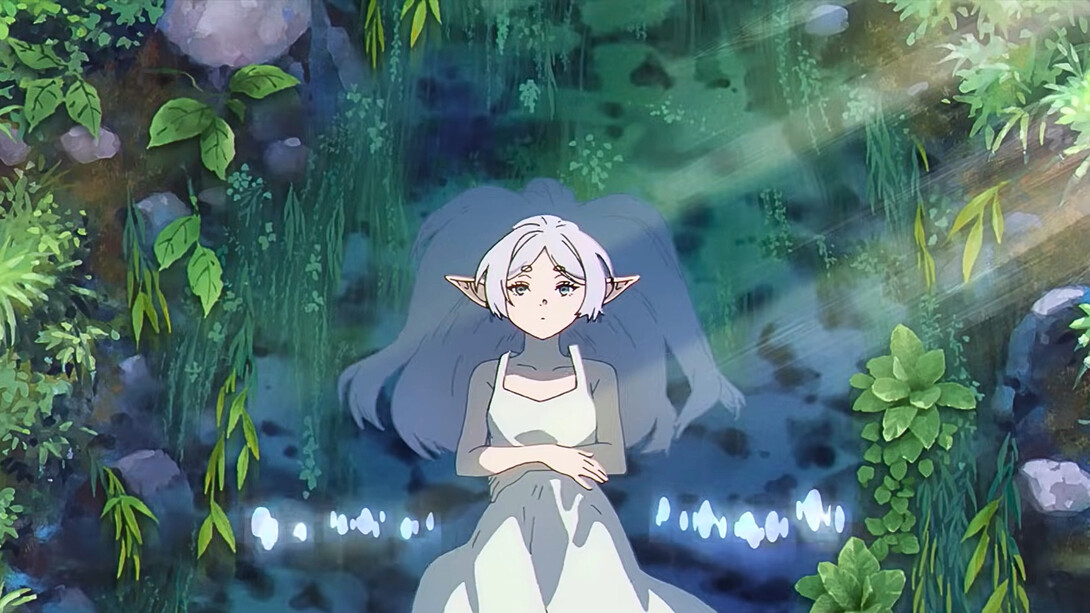
If you’re someone who loves anime and manga and stays up-to-date with developments in the medium and the community, you might be aware of the current moment in which scores of classic anime titles are being revived. While I refer to it as a time of “reboots”, it is also an interesting period in which classic anime titles, or those that we colloquially say “the streets will remember” (because they had an understated, less mainstream but undeniable reach or impact), have been revived. So not only are we seeing the return of titles from 20, 30, 40 and even 50 years ago, but we are also getting continuations of titles that had been condemned to a “one-season purgatory".
This “reboot era” has reached what I believe is its fever pitch, as the return of titles from way back when turned into the return of recent titles we thought would forever be condemned to be “adverts for the manga”.
In the most recent permutation of this phenomenon, the adaptation of manga titles that saw an untimely end due to low ratings or were popular but were believed to never see the vibrant light of an animated adaptation is the focus. This fever pitch in this interesting period is what I believe to be the industry’s attempt to capitalise on a never-before-seen ubiquity of anime and manga and also comes at a time of great change in the mainstream shōnen demographic at the concurrent end of Shōnen Jump’s “Post-Big Three” and “Dark Trio” eras.
I think that as it stands, 2026 is going to be the biggest year for anime in the 21st century, maybe even ever, and I believe it is the nexus between reboots, new titles and the adaptations of “dead” media that will make next year so important for the industry. The decades and eras I describe in this article are loose terms meant to help differentiate points in time and give a snapshot or an at-a-glance summary of a particular era’s defining characteristics.
The age of reboots
The return of the classic
Anime reboots are by no means a new phenomenon, as there are a number of long-running anime titles that have had a major hold over the industry since their inception. For example, Mizuki Shigeru’s GeGeGe no Kitarō was first published in 1960 and has seen a major adaptation into anime in almost every decade since, almost in the same vein as Doraemon, which was first adapted in 19731.
What separates the Reboot Era from the usual readaptation of cultural phenomena like the aforementioned is the sheer volume of these shows coming out all at the same time – at the greatest point of anime’s permeation into the cultural zeitgeist in history. The reboot era gets into full swing in the latter parts of the 2010s, but the light jog before the proverbial sprint can be seen shortly before that, with Casshern Sins, the reboot of the 1973 anime Casshan, an influential title some believe to have been the inspiration behind Capcom’s legendary Mega Man video game franchise, blasting onto the scene in 20082.
The very next year saw the release of a re-adaptation considered by the majority of the anime community, at least on aggregator site MyAnimeList, to be the single greatest work of fiction the medium has ever seen. Fullmetal Alchemist: Brotherhood is a masterpiece that brings into motion the vision of legendary manga artist Arakawa Hiromu (who I will mention again) and is an upgrade on its brilliant predecessor in almost every way. Almost.
The only time FMA:B’s reign as the number 1 anime series was thwarted was in 2023 when Frieren: Beyond Journey’s End usurped the position, where it remains today. I am under no illusions about the frivolity and overall pointlessness of these placements, as they are ultimately privy to a number of factors that affect their veracity as an actual indicator of quality, but I think it’s an interesting indicator nonetheless because in Fullmetal Alchemist: Brotherhood’s case, the number 1 spot was so heavily agreed upon by so many fans I’ve encountered in the wild.
The brunt of my analysis begins in the year 2015 for no reason other than the fact that it is relevant to me as the year that saw the return of the Dragon Ball anime series after nearly two decades. Dragon Ball Super is the continuation of the story after the end in 19963. This time, the series was penned by mangaka Toyotarō, who was one of many pioneering artists behind “Dragon Ball AF”, a fan made continuation of the franchise that dominated forums and the fandom’s imagination in the late ‘90s and 2000s4. Toyotarō’s work was overseen by original author Toriyama Akira until his death in 2024. For the longest time, the official Dragon Ball story ended after the defeat of Majin Buu, but the release of the Battle of Gods movie in 2013 opened up the franchise to a continuation few saw coming.
That same year, the adventures of the master thief Arsene Lupin were brought back to the big screen for the first time in almost 20 years when Lupin the Third crossed over with Detective Conan (Case Closed)5. In 2015, Takeuchi Naoko’s Sailor Moon was given a new coat of paint by Toei Animation in the form of Sailor Moon Crystal, which unfortunately was not very well received. Berserk finally got a continuation in 2016, but it was a horribly animated 3D mess that most fans of the series look back on with immense contempt6. Manga legend Nagai Go’s Devilman was revived in 2018 in the form of Devilman: Crybaby, an intense, highly acclaimed gorefest that leaves everyone who watches it with a serious case of the thousand-yard stare6.
In 2019, we were blessed with the TMS Entertainment-produced reboot of the classic 2001 romantic slice-of-life drama series, Fruits Basket, with the series going on to be one of the best titles of 2019 and one of the most acclaimed anime series of the decade 7.
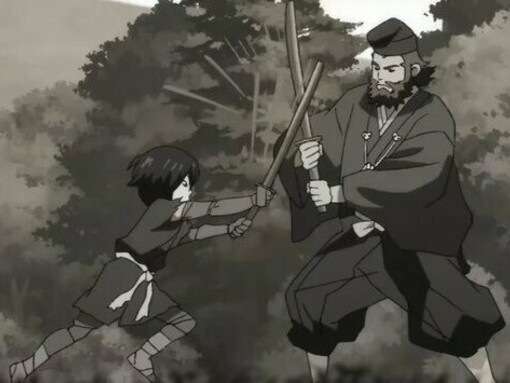
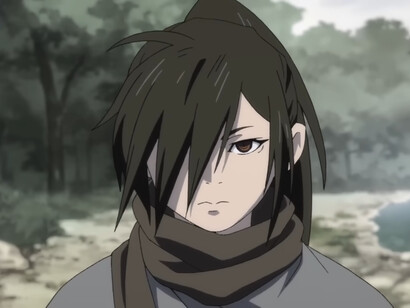
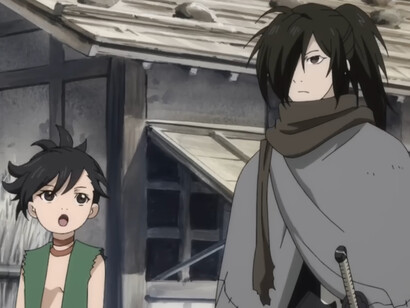
2019 also saw the return of the eerie, critically acclaimed 2000 psychological thriller anime series* Boogiepop wa Warawanai (Boogiepop Phantom), as well as the 50th-anniversary Studio MAPPA adaptation of *Dororo, originally created by the 'godfather of anime', Tezuka Osamu, which was an absolute phenomenon when it first dropped and comes highly recommended, especially for fans of darker stories8. By the 2020s, the Reboot Era is in full effect, and more returns and revivals are announced, creating one of the most exciting times for anime, perhaps ever.
The roaring 20s
The reboot era’s final form?
The pandemic caused a lot of issues in the anime industry, as one would imagine, and several shows were delayed due to issues in production and various other factors. However, the 2020s would be the ultimate showcase of this reboot era, as some of the medium’s greatest-ever titles would find new life in an age where anime is one of the most popular media in the world.
The cultural zeitgeist, which had been growing readily accepting of anime in the latter parts of the 2010s, blew up into a culture in which a ridiculous stat like “50% of Gen-Zers are anime fans” can be utterly unsurprising9. Almost as if to herald this ubiquity, the 2020s saw the revival, return or continuation of several classic anime titles at a much more accelerated pace, many of which came as a shock to the community for various reasons.
The Takahashi Rumiko reboots
Takahashi Rumiko is one of the most successful mangaka of all time. Her career has spanned over five decades, in which the 80s, 90s and 2000s saw the runs of four of her most critically acclaimed works, each of which was adapted into anime: Urusei Yatsura (1981), Maison Ikkoku (1986), Ranma ½ (1989), and of course, Inuyasha (2000). All four of these were commercially successful, with three of these being considered among the best-selling manga of all time10.
To describe Takahashi as a legend would be an understatement of her impact on the medium, which is why it was exciting for me to learn that Ranma ½, Urusei Yatsura and Inuyasha would have new life in the 2020s. In 2020, the Inuyasha animated universe saw continuation in the form of Yashahime, a spin-off that followed the children of Rin and Sesshomaru and Inuyasha and Kagome. While it was an Inuyasha continuation, Yashahime was not penned by Takahashi but rather by Shiina Takashi.
Urusei Yatsura (2022) was adapted by JoJo’s Bizarre Adventure studio David Production, while Ranma ½ (2024) was produced by MAPPA (JUJUTSU KAISEN; Yuri!!! On ICE; Banana Fish). The revival of Takahashi Rumiko’s works at a point where anime has reached full cultural penetration is significant because one of the medium’s greatest ever authors is able to reach whole new audiences and breathe new life into works that came out in a much, much simpler time.
To me, this feels like the establishment of a kind of “anime literary canon” for anime, in which Takahashi Rumiko’s works are almost synonymous with the medium and thus follow it as it grows and changes. Takahashi has a wonderful ability to create humorous, cheeky works with lovable characters and is bolstered by the way she is able to weave interesting, significant relationships between them.
Golden age… again?
The period from the mid-1980s to mid-1990s is seen as the “Golden Age” of Shōnen Jump magazine, given that this was the time when the magazine reached its highest ever circulation at around 6 million copies weekly. This was a time defined by incredible manga series like Araki Hirohiko’s 8Jojo’s Bizarre Adventure* (1987, ongoing); Toriyama Akira’s Dr. Slump (1980-1984) and Dragon Ball (1984-1996), Togashi Yoshihiro’s Yu Yu Hakusho (1990-1994), Inoue Takehiko’s Slam Dunk (1990-1996), Hojo Tsukasa’s City Hunter (1985-1991), and Hara Tetsuo and Buronson’s Fist of the North Star (1983-1988), all of which went on to be some of the best-selling manga of all time and major cultural touchstones in the world of anime, at least from a shōnen perspective11.
Several titles from this era have been getting unexpected adaptations, including the 2023 film reboot of Slam Dunk titled The First Slam Dunk, which came with a whole new cast and a delightfully fluid 3D aesthetic to bring Slam Dunk into the 21st century, to resounding acclaim. City Hunter has seen two film releases, one in 2019 and the other in 2023, the same year that Fist of the North Star was revealed to be getting a brand-new adaptation which we know now is set to drop sometime next year12.
2023 also saw the return of Yasuhiro Nightow’s Trigun, this time in the form of a brilliantly animated 3D series called Trigun: Stampede, produced by pioneering Japanese animation studio, Orange (Land of the Lustrous). Stampede attempts to breathe life into the author’s vision for the series 25 years after the iconic original and stands out to me as one of the few titles that actually makes a case for 3D animation in anime. As much as I would prefer not to mention the works of this author due to his heinous crimes, the return of Watsuki Nobuhiro’s Rurouni Kenshin, one of the biggest titles of Shōnen Jump’s Golden Age and yet another series considered to be among the best-selling of all time, is also a major development in this “Reboot Age” I keep talking about.
While I mentioned the return of Sailor Moon in 2015, my favourite magical girl series, Tokyo Mew Mew (known to English audiences as Mew Mew Power), was revived in 2021, shortly before the passing of the series’ illustrator, Mia Ikumi, in 2022. At this point, I realised that the reboot era would not only be about the revival of the most popular, mainstream classics, but also of lesser-known titles.
This brings me to this year’s WIT Studio reboot of Detective Conan author Aoyama Goshō’s Yaiba: Samurai Legend, which was first animated in 1993, making this the first time the series has been animated in 30 years. This went on to be one of the best anime titles of the spring 2025 season, boasting gorgeous animation and a nostalgic atmosphere that fans who grew up in the '90s would absolutely love.
2025 also saw a brand-new Devil May Cry anime adaptation by Adi Shankar, the showrunner behind Netflix’s highly successful animated adaptation of the 1986 Castlevania video game franchise. Many people don’t know this, but in 2007, we actually got a Devil May Cry anime by Madhouse, the legendary studio behind classics like Death Note, Death Parade, that first season of One Punch Man and of course, the current 1st ranked anime on MyAnimeList, Frieren: Beyond Journey’s End. The last weeks of December 2025 saw many more amazing announcements, including a potential 2026 20th anniversary celebratory reboot of the 2000s sleeper hit Katekyō Hitman Reborn, a series that fans have been dreaming about a reboot for for a long time.
The most important reboot
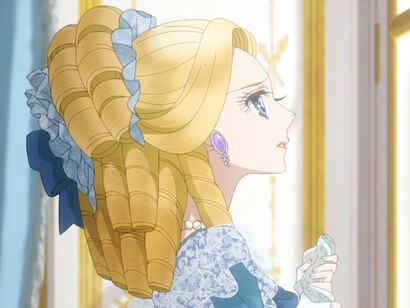
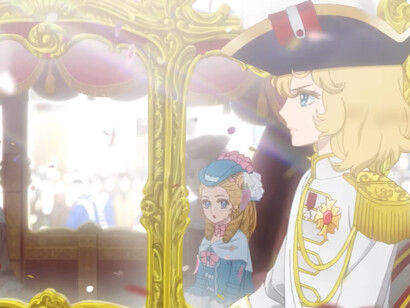
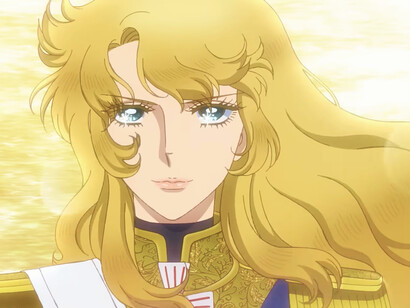
Potentially the most important revival of this current movement in anime to date for me has to be the 50th anniversary MAPPA adaptation of Ikeda Riyoko’s highly influential 1972 shōjo manga, The Rose of Versailles, which was released in early 2025 as an animated film. The reason I find this to be so important is because of the impact of The Rose of Versailles on the trajectory of not only shōjo manga but manga in general as a dramatic, maybe even cinematic, storytelling medium.
The story presents an immaculate exploration of complex themes regarding sexuality, politics and gender, and the character of Oscar François de Jarjayes is considered foundational to the development of the “woman who plays the role of a man” archetype that has been commonplace in anime and manga ever since, while the series itself fundamentally changed the portrayal of shōjo manga protagonists and caused a shift in the target demographic of shōjo manga as a whole from children to adolescents13.
The Rose of Versailles is also the manga fundamentally responsible for codifying the release of manga in tankobon or volume, format, which is standard practice today14. Dr. Susan Napier, Professor of Japanese Literature and Culture at the University of Texas at Austin and a very prominent scholar of the cultural elements of anime and manga, describes The Rose of Versailles as “one of the most important manga series ever made,” and “one of the first major manga written by a woman”, describing author Ikeda as part of an influential group of female mangaka who rose to prominence in the late 60s and early 70s whose works changed shōjo manga from dealing merely with issues of romance to also being able to grapple with social issues as well15.
The next step
The adaptations that got away
Next year, the Reboot Era will continue with an adaptation of Ghost in the Shell, this time produced by Science SARU, the studio creating quite a name for itself after the immensely successful production of titles like Devilman: Crybaby, Keep Your Hands Off Eizouken! (2020), a series seen by many as a love-letter to animation; Scott Pilgrim Takes Off (2023), Dandadan (2024) and the adaptation of Beastars author Itagaki Paru’s Sanda (2025).
In 2025, I had the honour of interviewing Dandadan co-director Abel Gongora, but due to technical issues, the interview recording was lost. Anyway, what I find interesting about this point in the Reboot Era is the fact that it seems to be evolving beyond merely revisiting the successes of the past, but the apparent failures as well. Earlier this year, VIZ Media announced the upcoming anime adaptation of Takai Tsuyoshi’s Black Torch, a supernatural shōnen manga that was cancelled after only five volumes. When this news dropped, I thought it was a sign of things to come, and it appears that I was right: since then, the anime adaptations of Kaitani Shinobu’s Liar Game and Toshiaki Iwashiro’s Psyren have been announced.
Liar Game is a psychological thriller about a naive girl and a conman working together to overcome a high-stakes, high-reward game of deception, while Psyren follows a mysterious urban legend that leads the protagonist to a dangerous alternate world overrun with monsters where he is made part of a battle royale against other “players”. Psyren is often seen as one of the best shōnen you’ll never get to see animated16, but a 2026 release for an anime adaptation was one of several exciting announcements about next year’s anime slate. Many anime announcements have had me going “What?!”, but the Psyren adaptation is probably the single most surprising development I’ve heard of in a long time.
There are so many awesome manga, especially of the shōjo and josei persuasion, that are only ever partially adapted, if at all, and this growing uptick in manga that were once axed being revived in anime form indicates to me that the wellspring of reboots is drying up and that the industry is beginning to identify titles that didn’t get to live up to their potential for various reasons as a new way forward. I find this exciting, because some of my favourite manga of all time are titles that, at least up until recently, looked to be titles that would forever go without an anime adaptation.
This includes a continuation of the heavily acclaimed 2014 adaptation of Yona of the Dawn, a series that had to wait 12 years for an anime continuation, as a recent announcement has revealed a 2026 release17.
Titles like Adachitoka’s Noragami, which only got two brilliant seasons from Studio BONES (Eureka Seven, Bungo Stray Dogs, My Hero Academia, Gachiakuta); Yazawa Ai’s highly influential, smash-hit Nana, which is celebrating a 25th anniversary re-release collaboration with Vivienne Westwood18 (I’m working on a feature about the cultural impact of this incredible series); and Ōtaka Shinobu’s Magi are all very popular titles released in the early to mid-2010s that seemingly fell off the face of the Earth with no hope of ever being continued. Yona of the Dawn’s continuation creates a hopeful situation for fans of such titles.
Why 2026 will be the best year for anime
The most exciting catalogue in years
All of this talk about the Reboot Era in anime has been to forewarn my excitement for next year and how 2026’s promise is not something happening in isolation but is the combination of the alignment of various factors. The Reboot Era’s current stage takes it beyond the reimagining of classic titles and ventures into riskier territory with the adaptation of titles that didn’t get fully explored before their cancellation. On top of all of this happening this year, the range of exciting returning shows and unexpected adaptations makes the 2026 anime slate one of the most anticipated in a very long time.
Some of the titles returning to our screens in 2026 include the final cours of the climactic Thousand-Year Blood War arc of Bleach, Jujutsu Kaisen, Fire Force, Oshi no Ko, Hell’s Paradise: Jigokuraku, Frieren: Beyond Journey’s End, My Hero Academia: Vigilantes (after the end of the main series in December 2025), Golden Kamuy, Trigun, Medalist, Re:Zero, The Illusive Samurai and many others.
Some of the new shows coming out this year include Yomi no Tsugai (Daemons of the Shadow Realm), a series penned by the genius behind Fullmetal Alchemist, Arakawa Hiromu; the adaptation of one of my favourite contemporary shōnen series, Akane-Banashi; the adaptation of Kaitani Shinobu’s psychological thriller, Liar Game; Marriagetoxin, a series in the same vein as Spy x Family and Sakamoto Days featuring a comical “marriage of convenience” kind of setting for someone part of a criminal underworld, which also brings me to the upcoming Kill Blue adaptation; Rooster Fighter (enough said); the currently airing josei drama, Journal With Witch and the horror series, Kaya-chan wa Kowakunai (Kaya-chan is Not Afraid/Scary, it’s a well-placed ambiguity).
This is going to be a very good year for exploring anime of different genres, and I highly recommend giving some of the titles mentioned a look. I also recommend jumping into a new series without any context, as there is such a wealth of amazing shows both already airing and yet to come that I haven’t even touched the surface of yet, especially some of the less mainstream titles.
References
1 Doraemon. Information on Works (Series).
2 Casshern Sins. Anime News Network.
3 Dragon Ball Super TV Anime Debuts on July 5. Anime News Network.
4 How an accidental fan art hoax transformed the Dragon Ball franchise. Polygon.
5 Lupin III vs. Detective Conan The Movie Opens in December. Anime News Network.
6 Why Berserk’s 2016 Anime Flopped. Comicbook.
7 Devilman Crybaby Wins Anime of the Year at Crunchyroll's Third Annual Anime Awards. IGN.
8 Is the Reboot of Osamu Tezuka's Dororo Worth Watching?. Anime News Network.
9 How Anime Became a Worldwide Cultural Force.
10 April 15th was the broadcast start date for the anime "Ranma 1/2". Looking back now, the voice cast was "too perfect". Magmix.
11 Top 50 Best Selling Manga Of All Time. The Review Geek.
12 Buronson, Tetsuo Hara's Fist of the North Star Manga Gets New Anime. Anime News Network.
13 Making History: The Rose of Versailles. Anime News Network.
14 Making History: The Rose of Versailles. Anime News Network.
15 Making History: The Rose of Versailles. Anime News Network.
16 Nearly 20 Years Later, a New Report Suggests a Cult Classic Manga Is Finally Getting the Anime It Deserves. ScreenRant.
17 Yona of the Dawn Anime Sequel Officially Announced. Crunchyroll News.
18 NANA x Vivienne Westwood Collab Celebrates Manga’s 25th Anniversary. Crunchyroll News.