English
 Español
 Français
 Deutsch
 Italiano
 Português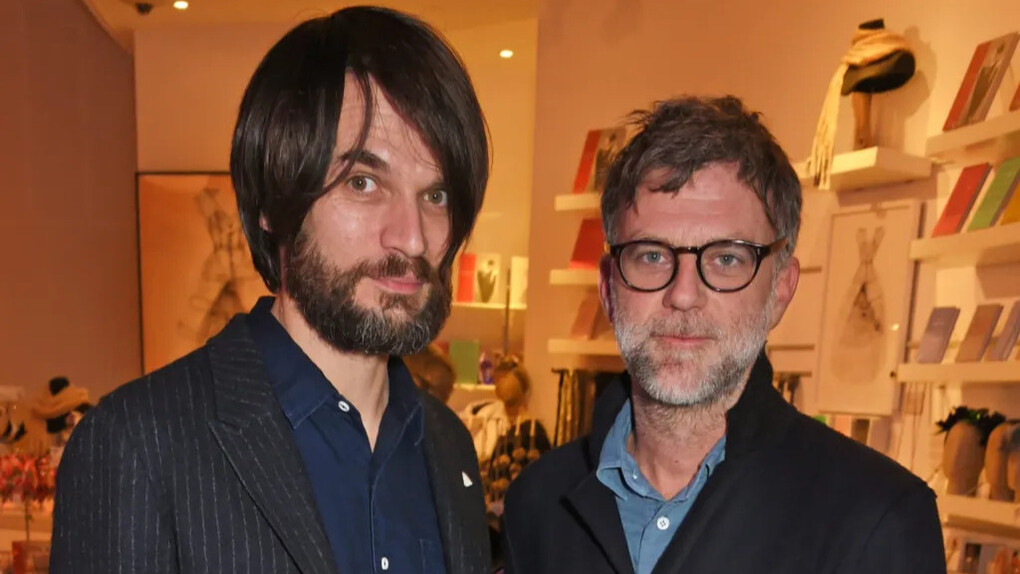
In 2007, as a camera drifted across the desolate landscapes of There Will Be Blood, the score hissed and clawed, jolting with string clusters that sounded like they were tearing themselves apart and pulsing with percussion that felt stolen from a nightmare. It wasn’t comfort, nor was it the atmosphere. It was intrusion – Jonny Greenwood’s intrusion into the cinema of Paul Thomas Anderson.
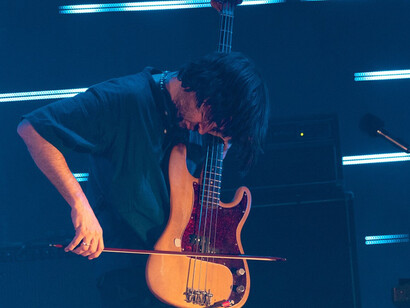
Before he ever scored a frame of film, Greenwood had already built a reputation as the restless experimenter guitarist within Radiohead. He expanded the band’s discography by studying Messiaen, Stockhausen, and Penderecki, smuggling orchestral dissonance into rock records. His string arrangements on OK Computer and Kid A didn’t sound like embellishments, but transmissions from another world.
Anderson, a devoted fan, recognized a kinship, going on to direct several Radiohead music videos and even collaborating with frontman Thom Yorke on Anima, a short film that married choreography, dystopian imagery, and electronic anxiety. These smaller projects weren’t side quests, but stepping stones, part of the same dialogue that would explode into Anderson’s cinema.
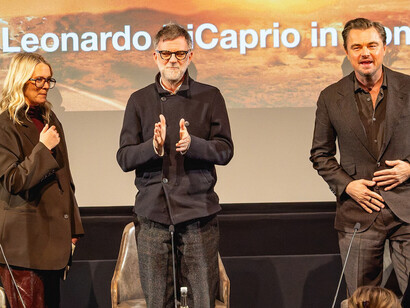
Once Greenwood entered the frame with There Will Be Blood, the two would never let the door close again. Today, with the release of One Battle After Another, Anderson and Greenwood’s partnership spans three different decades and has produced some of the most indelible intersections of image and sound in modern cinema. This is a collaboration that doesn’t simply accompany, it redefines. The films would be unrecognizable without Greenwood’s music, and the music would have no home without Anderson’s films. Together, they’ve built a shared nervous system—an erratic yet deeply human heartbeat of cinema.
The electric shock of “There will be blood”
When Anderson first approached Greenwood for There Will Be Blood, it wasn’t an obvious choice. He wasn’t a traditional composer, which, of course, is exactly why Anderson wanted him. The result was seismic. There Will Be Blood is widely regarded as one of the greatest films of the 21st century, and Greenwood’s score is inseparable from that reputation.
The screeching violins and pounding percussion don’t simply mimic Daniel Plainview’s descent into greed and paranoia; they ARE that descent. It was music that sounded like oil itself: viscous, toxic, and dark as night. Even in the moments of silence, the threat of sound was always looming, like pressure building under the earth. When the orchestra finally erupts, it feels like a geyser. Greenwood had rewritten the rules for the American epic, replacing grandeur with corrosion.
The restless seas of “The master”
While There Will Be Blood thrived on blunt force, The Master drifted into something slipperier. The opening piece starts fractured: shrieking strings, atonal percussion, even a spoken word snippet borrowed from Joaquin Phoenix’s drunken Freddie Quell. It’s a restless sea, unmoored and unpredictable.
Yet, halfway through the sequence, Greenwood introduces something unprecedented— rhythm. The score begins to settle into a hypnotic, almost monotonous pulse, as if echoing the sermons of Lancaster Dodd (Philip Seymour Hoffman). That steady beat suggests authority, order, and control; exactly what Freddie craves and exactly what he can never fully embrace.
The music becomes a kind of indoctrination tool. By the film’s end, you realize Greenwood hasn’t been following the characters so much as embodying the push-and-pull between chaos and control, belief and doubt. It’s a score that never resolves, because the film never resolves. The sea remains restless.
The lush poison of “Phantom thread”
After the abrasive experiments of The Master, Greenwood pivoted to something far more classic with Phantom Thread. Here, the score is lush, sweeping, and unapologetically romantic. He goes toe-to-toe with the likes Brahms, Debussy, and Ravel, cloaking the film in elegance and sophistication.
However, that elegance is a trap. Phantom Thread is a love story built around manipulation and control, and Greenwood’s strings mirror that contradiction. The music seduces you into Reynolds Woodcock’s world, even as it underscores the cruelty beneath the surface. Romantic themes recur, but always with a faint edge of menace, like lace that cuts skin.
It’s one of the great scores of this generation—not because of its beauty, but because that beauty is dangerous. Greenwood proves he isn’t confined to dissonance; that he can weaponize harmony just as effectively.
The monumental scope of “One battle after another”
Which finally brings us to One Battle After Another, the longest and most ambitious Anderson-Greenwood collaboration yet. At almost three hours, the film is nearly wall-to-wall music, a score that seems to stretch across the entire narrative like a net.
At the center lies a chiming piano motif— a steady, relentless tap, like a chisel against rock. It’s simple, but Greenwood uses it like a metronome: always present, pushing forward, shaping the rhythm of the film itself. In moments of chaos, the motif grounds us, and in moments of quiet, its absence haunts us.
The effect is overwhelming. At times, the film feels like a three-hour music video, but in Anderson’s hands, it isn’t a reduction—it’s liberation. Cinema becomes rhythm and image, pure audiovisual poetry. Greenwood isn’t merely scoring scenes; he’s sculpting time itself.
Why they work together
Part of what makes Anderson and Greenwood such an enduring duo is that they speak in rhythm. Anderson has always been obsessed with tempo—whether it’s the dizzying Steadicam of Boogie Nights, the staccato bursts of dialogue in Magnolia, or the tightly wound long takes in Punch-Drunk Love. Meanwhile, Greenwood treats music not as background, but as a physical presence, something that presses against you. When the two forces meet, the films gain a kind of pulse. They don’t simply play out—they throb, vibrating like a tuning fork.
Their partnership also thrives on contradiction. Anderson is a maximalist, drawn to sprawling ensembles and grand emotional gestures. Greenwood is a minimalist, fascinated by repetition, dissonance, and silence. Together, they strike a balance: sound amplifies image, image amplifies sound.
History is filled with iconic director-composer pairings: Hitchcock and Herrmann, Leone and Morricone, Spielberg and Williams. Anderson and Greenwood belong to that lineage, but with a crucial difference; they’ve defined their own era by resisting the very conventions those past duos have established. Where Herrmann sharpened suspense and Williams heightened wonder, Greenwood destabilizes, making you uncomfortable, forcing you to watch differently.
Anderson gives him the canvas to do so, trusting that discomfort can be as cinematic as beauty. Together, they’ve reoriented the expectations of film scoring for a generation raised on Hollywood bombast. Eighteen years after There Will Be Blood, it’s hard to imagine Anderson’s cinema without Greenwood’s sound. What began as an experiment has hardened into a necessity. The films and scores are no longer separable—they are different organs in the same body.
That’s the best way to describe their partnership: a shared nervous system. The shrieking strings of There Will Be Blood, the hypnotic rhythms of The Master, the smooth elegance of Phantom Thread, the relentless piano of One Battle After Another—all of it amounts to a continuous heartbeat. Erratic, symphonic, terrifying, alive, the sound of modern cinema breathing.