English
 Español
 Français
 Deutsch
 Italiano
 Português
People often want international events to follow some moral arc—right vs. wrong, good vs. evil—so that crises unfolding around us have meaning. As a result, when we see injustice, we often feel powerful nations (especially our own) should intervene on moral grounds. The problem is that the international system doesn’t easily allow countries to interfere in the internal affairs of others simply because they see those affairs as unjust.
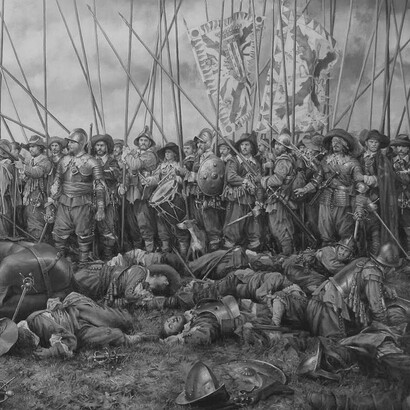
Why is that? To understand, we have to go back at least four centuries to 1648 CE, when a major religious conflict in Europe—the Thirty Years’ War—ended thanks to a series of peace treaties signed in what is now Germany. These treaties, collectively known as the Peace of Westphalia, ended the last great religious war in Europe and fundamentally altered our understanding of how states function concerning one another on the international stage.
Before Westphalia, states had existed in one form or another for centuries. Still, one principle we take for granted today—sovereignty—was not formally enshrined in international law until then. At the time, European states were often drawn into conflict over religion because it was seen as a moral cause or justifying force of political legitimacy.
Westphalia changed this by introducing the principle of cuius regio, eius religio—"whose realm, his religion." This meant that a state’s official faith was to be determined by its ruler rather than presumed on the grounds of religious universality and, more importantly, that religious differences were no longer legitimate grounds for war. This marked the beginning of state sovereignty, the idea that a nation’s internal affairs are its own concern and not subject to external interference.
Sovereignty and non-intervention
As previously stated, prior to the Peace of Westphalia, external powers routinely used religious differences or dogma as justification for war—religion, after all, provided the basis for political legitimacy, and so it was common for rulers to couch their casus belli (reasons for war) in religious terms. After the end of the Thirty Years’ War, however, religious disputes became internal matters—and war now became a more secular, material concern where reasons for war had to be determined on grounds other than differences of faith or interpretations of dogma.
To be clear: there was never any intention by the signatories of Westphalia to achieve this state of affairs. There was no grand plan to remove religion from war, society, or politics. That Westphalia, over time, expanded this principle beyond religion, evolving into the modern concept of sovereignty, was, on a meta-historical level, a purely coincidental accident and the logical, but unintended, evolution of what Westphalia had unknowingly established.
This principle profoundly affects how the world responds—or fails to respond—to crises. Citizens often demand military intervention when they see moral wrongs, but in virtually all cases, the principle of sovereignty prevents it—the reasoning being that once you allow one state to break another’s sovereignty over a moral disagreement, you open the door for the same thing to happen everywhere, thereby potentially establishing a horrendously low threshold for military conflict.
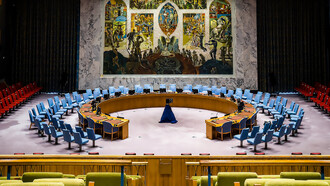
To that end, while diplomatic pressure, economic sanctions, and expressions of outrage are permitted, using force to impose another country’s moral or political preferences is to this day discouraged in political circles as a means of redressing moral objections to the internal policies of foreign states.
Does it still happen? Certainly, but not with the ubiquity that it would have before Westphalia.
This is why, for instance, during global protests over the Gaza conflict in 2023, many called for Western nations to intervene—yet, those same governments could not legally do so without violating international norms. Moreover, the uncomfortable question would subsequently be asked: if intervention to save the Palestinian people is permitted, what qualifies as the threshold for determining which people are “worthy” of saving?
Sovereignty as a shield…and a leash
The problem only grows more complex, moreover, once you consider that sovereignty is the reason many countries still exist to this day. It is easy to frame sovereignty as a means for “evil” countries to shield themselves from regime change interventions, but the fact of the matter is that sovereignty also ensures that smaller countries can exist without the fear of annexation or overt colonialism.
In fact, for countries that make up what is disparagingly referred to as the “Third World,” sovereignty acts as the leash around the necks of the more powerful states in the world, preventing them from overtly invading, annexing, and colonializing their lands and people. Thus, you will find that most medium and small states worldwide are champions of the principle of sovereignty in international relations—if only to ensure that they do not themselves fall prey one day to the depredations of colonial powers.
An example of this includes the Republic of Panama, which leveraged the principle of sovereignty to carry out a major diplomatic offensive against the United States from 1903 all the way to 1977 to redress the question of the Panama Canal Zone—a foreign enclave and colony that had long plagued the Panamanian people. Those efforts culminated in the Torrijos-Carter Treaties, which returned the Panama Canal and Panama Canal Zone to Panama.
In a lower-stakes sense, the principle of sovereignty is also the reason why African states in the 20th and 21st centuries have been able to chart their own course in terms of which states to trade and cooperate with. Despite the objections of Western powers, many have chosen to sign up with China’s Belt and Road Initiative super-project in what is simply the rightful exercise of their right to sovereignty.
And yet, while it protects smaller states from being dominated by more powerful neighbors, it also limits international responses to crises such as ethnic cleansing and genocide.
History provides grim examples:
In 1993, the ethnic conflict in Burundi spilled into Rwanda, culminating in the infamous 1994 genocide. The international response was minimal, as a unilateral intervention would have violated both countries’ sovereignty in what was legally an internal matter.
The 1995 Srebrenica massacre during the Bosnian War saw limited intervention.
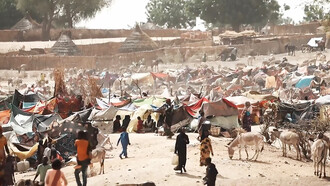
The Darfur crisis in 2003 and the Yazidi genocide in Iraq in 2014 similarly saw little or belated outside military involvement.
Even in cases where intervention has occurred, such as NATO’s bombing campaign in Kosovo in 1999, it happened after mass killings had already taken place and was limited in scope. In all of these cases, the guiding principle remained: direct interference in another country’s internal affairs is a violation of sovereignty—and unilateral interference was not permissible.
To illustrate this complicated situation more clearly:
Assume that there are two countries: country A and country B.
Country A, regardless of internal government composition (dictatorship, democracy, monarchy, etc.), decides to politically repress an ideological minority over its political beliefs.
The minority in Country A is allied to ideological sympathizers in Country B, where they are the majority.
When Country A begins its political persecution, Country B is outraged, and the majority there demands intervention in Country A to save their ideological allies.
However, due to the principle of sovereignty, just because Country B’s citizens and government are outraged by the persecution, as long as Country A is not attacking Country B specifically, the persecution is deemed an “internal affair.”
As such, Country B cannot legitimately intervene to stop Country A’s persecution of the minority, as doing so would imply that any other country watching can use the same excuse against Country B.
The realities of sovereignty
Ultimately, the quiet part needs to be said aloud: sovereignty is not a perfect system beyond reproach.
As shown previously, for smaller countries, sovereignty offers vital protection: it legally guards against invasion or domination by more powerful neighbors. For larger countries, it limits the possibility of expanding influence through force, true, yet incentivizes economic development by allowing them to leverage their significant economic and material potential to carry out their foreign interests at no cost to their people’s lives.
The overall result? Fewer deaths by military conflict and more economic activity.
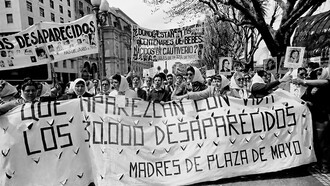
And yet, sovereignty has its darker edge: it can be used to shelter oppressive regimes, enabling them to commit atrocities behind the shield of “non-interference.” It couches all internal malfeasance as isolated incidents, beyond the actionable reproach of the world.
Even so, the call to dismantle the principle of sovereignty is also fraught with complexity: doing so would mean the return of moral absolutism as a legitimate cause for war. It would mean that any differences in opinion over internal policies can lead to regime change for a smaller state.
It would mean a world constantly teetering on the edge of catastrophe for the weak, and a world ripe for the return of the great empires of old for the strong.
As you follow global events, remember that calls for foreign intervention aren’t just about solving a single crisis—they also risk rewriting the fundamental rules of international relations. Demanding intervention can mean permitting it in your own country someday, should someone else’s moral lens see your government’s actions as intolerable.
Whether sovereignty is good or bad isn’t a simple question. For many states, it’s essential for survival. For others, it prevents them from stopping terrible injustices. Understanding this tension is key to grappling with international issues. There is no universal answer here, only an appreciation that our global order is the product of centuries of compromise. When we ask for change, we should think carefully about the consequences, not just for those who might be saved by intervention but for everyone else—including ourselves.