English
 Español
 Français
 Deutsch
 Italiano
 Português
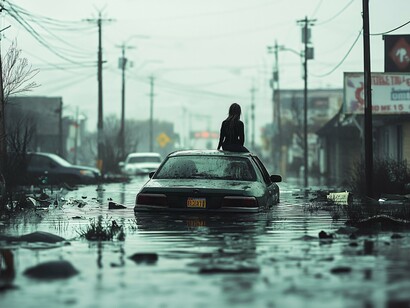
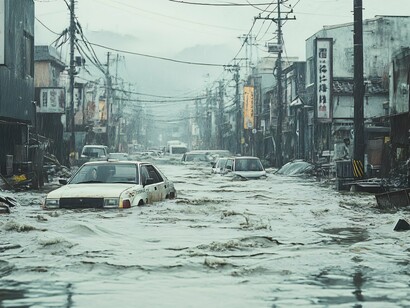
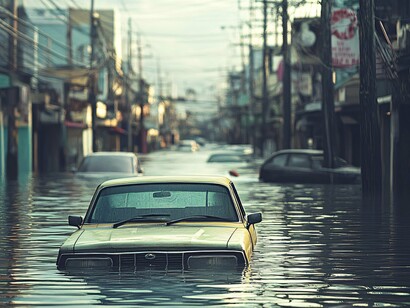
Last spring, one of the driest places on the planet experienced its largest rain on record. Floods swept through Dubai’s subway, shut down the second-busiest airport in the world, and caused a burst of green vegetation seen in the desert from space. Now, the United Arab Emirates, 80 percent of which is desert, is trying to figure out how to deal with rain.
In the United States, the mountain communities of North Carolina believed floods could not reach them. But heavy rains wiped out towns last September and killed at least 78 people. Now they, like the rest of the world, are trying to adapt to a new reality.
Meanwhile, 40 percent of the world’s lands are in drought or arid conditions. In several U.S. states, fresh water is so scarce that people are drinking toilet water. Cities are processing it for human consumption, and families are learning a valuable lesson: Water is precious, and people will do whatever it takes to have it.
Climate change underscores that lesson the hard way. It is changing the water cycle so some places get too much rain, others get none, and many get both in extremes, alternating between dry spells and deluges.
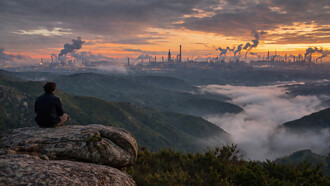
Water issues share another link with climate change, and it has received too little attention. Fossil fuels are the principal human cause of global warming and a significant factor in water consumption and waste.
Before exploring that link, let’s go back to the basics of water. There are some things we humans cannot do without. For that reason, people argue convincingly that access to those things is a fundamental human right. Clean air is one. Nutritious food is another. Safe drinking water is a third. Water comprises 60 percent of the human body. Without it, organ failure can start in a few days. Death follows within a week. Without water, cities, agriculture, ecosystems, and entire civilizations collapse.
Several factors are stressing global water supplies, including the growing world population (water consumption worldwide grew at twice the rate of population growth during the last century), the need for more food production, and the reckless contamination of drinkable water.
Unfortunately, the planet can’t make more. The Earth has a fixed amount, never more and never less. It merely changes form as it cycles through the biosphere, shifting from liquid to gas (water vapor) to solid (ice). The total amount remains the same.
Little is available for drinking. About 97 percent is saltwater, leaving only 2.5 percent that’s potable. Less than one percent of that is accessible. The rest is deep underground or frozen in ice caps and glaciers. Where clean water exists, people are drawn to it, and that can lead to pollution. A global study five years ago found that over 40 percent of the 75,000 freshwater resources it surveyed were severely polluted.
Competition for water can produce conflicts. There are hundreds of active freshwater treaties worldwide aimed at minimizing competition for the resource. Nevertheless, cities and countries sue one another over water. Farms compete with towns for supplies. Neighbors compete for water rights. The Water Conflict Chronology (WCC), a database, shows a record-setting 420 violent events over water resources in 2024, an increase of nearly 80 percent since 2022.
If an army wants to defeat a country, it can weaponize water by cutting off the enemy’s supply. “Almost a third of (the events where water was weaponized) in 2024 occurred in the conflicts between the Israelis and Palestinians and in the Russia-Ukraine war, where civilian water systems, dams, treatment plants, and energy supplies critical for providing safe water have been repeatedly attacked,” the WCC reports.
“There has also been a substantial increase in conflicts between farmers and pastoralists in sub-Saharan Africa, between cities and rural areas over diversions of rivers and over-pumping of groundwater, and between clans and even families over access to scarce water resources.”
In the United States, cities and farms have withdrawn so much water from underground reservoirs that land is sinking. Subsidence is an issue on 17,000 square miles of land across 45 of America’s 50 states. In California’s principal farming region, water withdrawals have caused the land to sink over 30 feet.
Subsidence is also occurring in 28 of the nation’s major cities, including Los Angeles, New York, and Houston. One study found that 29,000 buildings and 34 million people are affected by this “slow-motion crisis” as it damages infrastructure, strains urban budgets, and increases flooding, especially in coastal areas affected by rising sea levels.
However, scarcity is the most critical problem. Some 2.2 billion people lack access to safe drinking water. Per capita water supplies have dropped 70 percent since 1950, and water-related conflicts have reached record levels. The UN calls this one of the century’s most significant challenges. Now, the Earth’s warmer surface increases evaporation, contributing to drought. The moisture accumulates in clouds and eventually falls in larger precipitation events. When rains come in deluges, soils become saturated, and the water runs off as floods.
So, what role do fossil fuels play in all this? They have dominated the global energy mix for 150 years and still provide more than 80 percent of the world’s energy. The energy sector accounts for about 10 percent of the world’s freshwater withdrawals, mainly for extracting, processing, transporting, and burning oil, coal, and natural gas.
As oil and gas producers exhausted the easily accessible reserves, they turned to hydraulic fracturing, injecting water and chemicals under pressure into rock formations. The solution fractures the rock, releasing trapped gas and oil. A typical fracked well uses over 5 million gallons of water during its lifetime. Wells that extract oil from shale formations use as many as 5 barrels of water for each barrel of oil.
Oil refineries in the United States require up to 8 million cubic meters of water daily, comparable to what several million American households consume. Power plants that generate electricity from coal or natural gas (as well as nuclear power plants and the many data centers that support artificial intelligence) withdraw substantial amounts of water for cooling.
Some renewable energy technologies use water, for example, to grow bioenergy crops or to cool solar power plants that concentrate sunlight to produce steam for turbines. But the least expensive, most rapidly deployable, and most common technologies – solar panels and wind turbines – generate electricity without water consumption and waste.
The International Energy Agency (IEA) says that replacing coal-fired power plants with solar and wind generation can quickly reduce the energy sector’s water consumption by 15 percent. “Water availability is an increasingly important measure for assessing the physical, economic, and environmental viability of energy projects,” the IEA says.
Renewable energy can, and should, also contribute to the energy-intensive process of desalinating seawater and purifying wastewater.
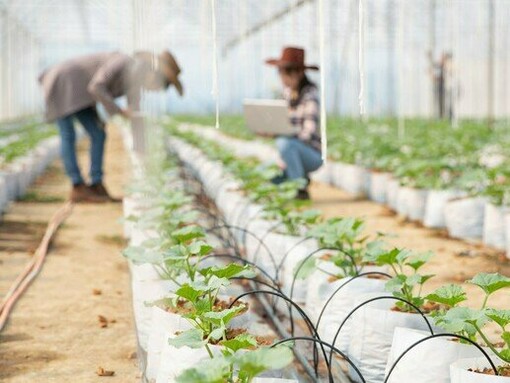
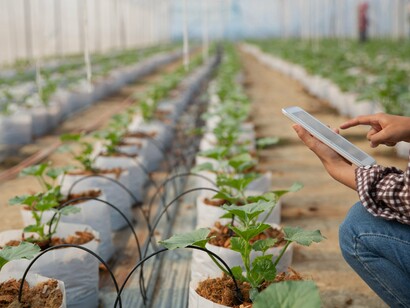
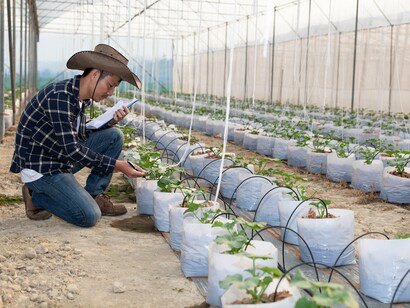
As countries, communities, industries, and households adapt to global warming, they can help the water crisis in several ways. Rooftop and community-scale solar systems reduce the need for fossil fuels. Agriculture consumes 70 percent of the world’s freshwater, so farms should use drip irrigation and add organic matter to soils to help retain moisture. Buildings should use water-saving appliances. Communities should repair leaking water infrastructure. (One estimate is that household water leaks in the U.S. waste nearly 1 trillion gallons of water annually.)
We should restore and protect ecosystems that help purify and store fresh water, including wetlands, peatlands, lakes, rivers, and aquifers. Cities can reduce floodwater and stormwater control expenses by creating more green spaces and converting asphalt and concrete to permeable materials. They allow soil to absorb stormwater, reducing infrastructure costs and flooding.
Cities can encourage xeriscaping, the use of native drought-resistant plants and non-vegetative materials in landscaping. In rural areas, reforestation and vegetative plantings on hillsides catch and absorb rain where it falls. Trees and forests help absorb and filter water while preventing erosion and runoff that contaminate surface waters.
However, much of the solution to the water and climate crises involves changes in economics and attitudes. Both are factors in the world’s ongoing addiction to fossil fuels.
Science determined five years ago that most of the world’s proven fossil-fuel reserves—nearly 60 percent of oil and gas and 90 percent of coal—must remain unburned to meet the preferred goal of the Paris climate agreement, holding warming to 1.5 degrees Celsius above preindustrial temperatures.
But those underground reserves are worth many trillions of dollars and most of the economic valuation of the fossil-energy industry. The industry, its shareholders, and its investors are loath to leave that money in the ground. Yet we must weigh the value of those stranded assets against the costs of continuing to dump pollution into the atmosphere. Unmitigated climate change is expected to cost the world nearly $40 trillion annually by mid-century. One estimate is that the cumulative costs will reach hundreds of trillions of dollars in the next 75 years, the lifetime of a child born today.
Economic forces would expedite the world’s shift to nonpolluting and less-expensive energy if markets charged consumers the real costs of fossil fuels – not only the costs of making them, but also the social and environmental costs of using them. Too many governments still artificially lower the price of oil, gas, and coal with taxpayer subsidies. Too few governments require market prices to reflect the costs to society of fossil fuel pollution and or climate change.
The International Monetary Fund calculates that society, nature, and governments subsidize and artificially lower the cost of fossil fuels by more than $7 trillion annually. By comparison, unsubsidized solar and wind energy are less expensive than any fossil fuel or nuclear power. For one thing, their “fuel” is free and readily available. That fact alone saved the world nearly $470 billion in avoided fuel costs in 2024. They can also begin producing electricity much faster than building new power plants. And while fossil fuel supplies eventually will disappear, the sun will be around for another 5 billion years, delivering clean energy in eight minutes from 93 million miles away. It’s the best power plan we never built.
Finally, just as we need to pay more attention to the energy-water-climate nexus, the world must renew and accelerate its commitment to helping developing nations meet their energy needs with nonpolluting and renewable energy. Since climate negotiations began more than 30 years ago, the hope has been that developing countries would grow their economies with modern clean energy technologies rather than fossil fuels. Despite the powerful lobbying of the fossil fuel sector, that should still be the plan.
There is no prestige in growing economies today with the same energy resources the world has been using for the last 150 years – not when cleaner, better, cheaper energy is available. The International Institute for Applied System Analysis reports that the wealthiest 10 percent of people have caused two-thirds of global warming since 1990, but rapid industrialization in developing countries is responsible for 95 percent of global emissions over the last decade.
It indicates that developing nations are missing one of the great opportunities of the 21st century: The ability to meet people’s needs and improve their lives without depriving them of their fundamental rights to clean air and water.