English
 Español
 Français
 Deutsch
 Italiano
 Português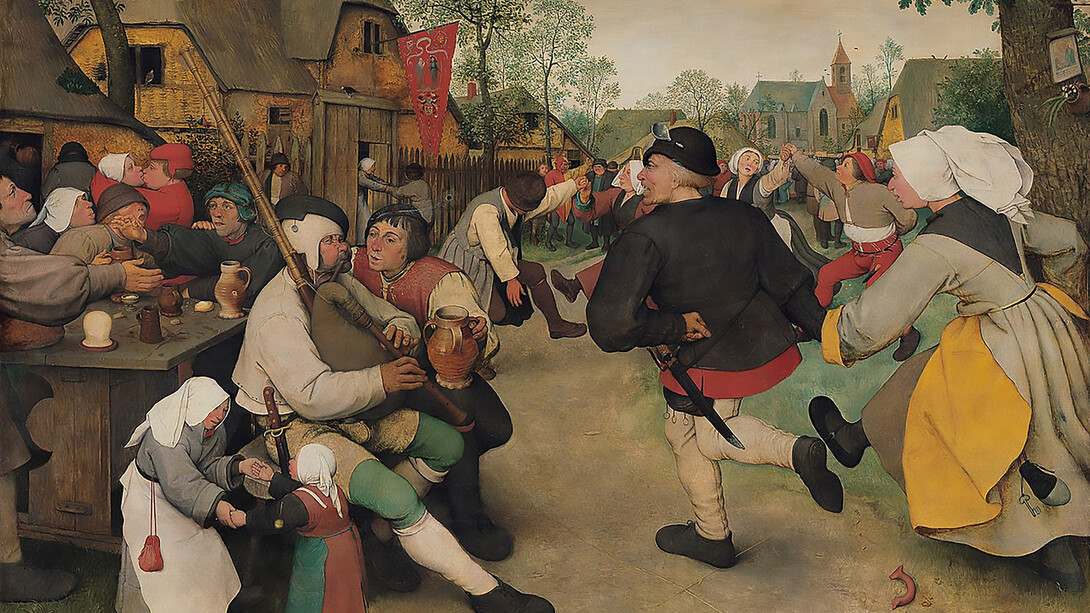
At the start of this year, it is clearer than ever that joy and hope are drifting apart. There is joy, but, without hope, joy lasts only as long as a lit match. When night falls, joy has to take sleeping pills to get to sleep. If we look hard enough, we can also find hope, but, without joy, hope seems like a member of the homeless population, wrapped in sad, old rags. Who caused the divorce between joy and hope? I don't know, but I am certain of two things. First, the progressive transformation of the world must be a product of the complementarity of joy and hope. Second, the progressive transformation of the world will never be the product of hatred or despair.
Joy without hope can only be the sadistic rejoicing of hatred. And hope without joy is nothing more than the embarrassed despair of being who you are.
On joy and hope
Previous theories have always postulated the ideal figure of the revolutionary. They postulated his joy and hope without asking him anything. They took him for granted, even if he had to be completely rebuilt. The idea of the “New Man” was touted as much by the Russian revolutionaries as by the Nazis. The truth is that any social transformation must be carried out with the people and the realities that exist at a given historical moment. Even discounting sexist prejudice, the idea of the new man is an old idea that accompanies the narcissism typical of new regimes. Progressive social transformation is achieved with real people who are joyful and hopeful.
At the beginning of any liberating action is joy. Without joy, human beings cannot expand to the point of going beyond themselves. Joy does not presuppose excitement. It presupposes the serenity of coinciding with what has to be done. Passivity is the result of non-coincidence. Joy is the colorful perception of life and the world. Joy is not possible in black and white. The reason why without joy one does not fight is because only joy makes the ephemeral last until eternity. A stream of opportunity looks like a river, and a river looks like the sea. In short, only joy is creative and expansive to the point of being able to take risks that are not included in insurance contracts. Joy is the opposite of monotony. It is being in the fullness of being. In joy, freedom is liberation. In joy, the past supports the future so that the future may be different from it. Joy recognizes failures, but it is the denial of failure as a human destiny.
Joy is distinct from pleasure. Pleasure, unlike joy, presupposes appropriation: being appropriated as an object or appropriating an object. Its duration is that of the enjoyment of appropriation. It is dominated by its temporary nature. Joy may be ephemeral, but because it is unconditional, it is eternal while it lasts. Joy is always fullness, even in its ephemerality.
The joy I am concerned with here is the lifeblood and driving force of hope. It is the necessary condition of hope, though not the sufficient condition. Joy is maximum immanence, while hope is transcendence: being taken to its maximum power. Joy is unrestrained presence as emotion, hope is emergence as the reason for that emotion. Emergence is always a birth, a struggle against the status quo in the sense of expanding it, an invention that transcends it. Without joy, invention easily slips into repetition.
Using a meteorological metaphor, joy is clear skies, while hope is fog – atmospheric currents that point to different forecasts. Joy is what allows us to hope for good weather without neglecting the possibility of a storm. In joy, freedom is not afraid of failure. In hope, emergence resides in the freedom conditioned to shape the conditions that allow failure to be avoided, that is, the counter-conditions that lead to despair. That is why despair tends to be more lasting than sadness.
In the times we live in, hope presupposes a fragile theory and difficult practice. Joy gives strength to theory and makes practice easier. Because it moves from absence to emergence, from “never” or “no longer” to “not yet,” hope is always, ultimately, a ruin-seed.
Joy is idealistic and imagines ruin-seeds as if they were natural parks. Hope is more realistic and knows that, in this day and age, it was necessary to denature many parks before making them natural.
Both joy and hope are born of disquietude. But joy ignores it and hope transforms it into transformative energy. Joy does not recognize problems. Hope needs joy so as not to know unsolvable problems or insurmountable difficulties. Joy asks no questions. Thanks to joy, hope lives on questions it is capable of to answering. Joy is reconciliation, while hope is born of dispute and struggle and only accepts a more just reconciliation. Joy needs nothing to be joyful, while hope needs joy to continue hoping. That is why joy is easier than hope. Separated from hope, joy quickly fades; without joy, hope is a warehouse of embalmed dreams. Joy dispenses with wisdom; hope presupposes it. But without joy, hope conceives of wisdom as a taciturn exercise that justifies the greater probability of defeat, which can lead to passivity, despair, the impossibility of hope.
Joy has a greater breadth than hope. Hope is peculiar to humans, while joy is given to animals, mountains, rivers, trees, ants. Joy is not laughter; it can be experienced in the deepest contemplation. In hope, contemplation is the necessary moment to gather strength and continue the struggle.
Joy is benevolent simplicity; hope is encouraging complexity. There is no joy if there are doubts. Conversely, there is no hope if there are no doubts. Hope must go to the root of the status quo. Joy ignores it. It is not irresponsible, but it also does not feel responsible for the reasons to be joyful. Unlike hope, the reasons for joy are not imperative. Joy knows no hesitation; hope cannot exist without it. But without joy, hesitation leads to giving up, while with joy, it redoubles the effort of resistance. Both joy and hope are optimistic, but while the optimism of joy can be a fantasy, the optimism of hope is based on emerging reality. Therefore, while joy is an available right, hope is an unavailable right.
Without joy, there is no impulse to walk, without hope that impulse lacks a path. But it is the impulse that creates the need for the path, not the other way around. Joy is the ultimate source of freedom. The joy of freedom is the moment when questions are suspended. Therefore, the freedom of joy must be constantly nourished. Joy is the only positive version of blindness. Because it does not know the path, it is always on the verge of collapse. To avoid this, hope must always be within joy.
On joy and hope of the oppressed
I am not concerned in this text with joy in general. I restrict myself to the joy of the oppressed who resist and fight against oppression. Therein lies the indestructible link between joy and hope. Just think of the joy of the peasants in contrast to the sadness of their landowner, Levin, in Leo Tolstoy's Anna Karenina. Exhausted under bales of hay and fresh grain, the peasants sang, just as the peasants of Alentejo would later sing. The joy to resist oppression and fatigue becomes revolutionary potential when the path of hope is seen. And as suggested in Anna Karenina, joy can be contagious.
The transformation of the world must be driven by joy and hope, not by hatred or despair, although both are always present, even if under control, if the struggle is confident of success. Paul's problem was that he had accumulated too much hatred for Christians before his conversion. He was a fanatic who “hunted” Christians to hand them over to the authorities. Let us remember that the purpose of the journey from Jerusalem to Damascus (more than 300 km) was to arrest Christians and bring them to trial for the crime of heresy.
We know that it was on the road to Damascus that the conversion took place – the most dramatic conversion ever – but Paul's original hatred forever contaminated Christianity, as evidenced by the vandalism of Greek and Roman temples, the so-called Reconquista of Al-Andaluz, the forced evangelization of colonized peoples, religious wars, the Inquisition, and excommunications. It was of no use that Paul dedicated his life after his conversion to the message of forgiveness, mercy, and divine love. In fact, it is significant to remember that this change of attitude ended up becoming the reason for the persecution of which he himself would become a victim.
Success and failure are the two ghosts that haunt any meaningful struggle for progressive social transformation that dares to challenge the unjust status quo for the vast majority. Joy is possible when the dialectic of failure and success is suspended. The suspension must be total, since it is not possible to think of success without thinking of failure, and vice versa. Joy thrives on this suspension, which would be irresponsible if it were not also the radically positive moment of hope.
Hope is Ernst Bloch's “not yet” in the Principle of Hope, but it would be a hope always on the verge of despair if it demanded certainty of success against failure when the outcome of the struggle is “not yet” known, even though we know that the outcome is always provisional. But hope has a unique characteristic: it is capable of imagining success before it happens. It is this imagination that gives meaning to joy. Hope is the force of maladjustment to what exists. It is maladjustment because we know that what exists only exists because it prevents another reality from existing.
To paraphrase Bachelard, personality is not only adaptation, but it is also reorientation in a universe of possibilities. The function of what does not exist is to relativize everything that exists. It is to replace determinism with contingency. This function creates the distance that makes joy possible. It takes the weight off reality and, by making it lighter, even allows us to have fun with it. Hope creates distance through yet another mechanism: it temporalizes what presents itself as perpetual, making the permanent provisional.
Discouragement is never eliminated, and it would be dangerous if it were. As Sun Tzu says in The Art of War, “if you cannot be strong, but neither can you be weak, you will be defeated.” Knowing how to be weak is knowing how to be humble in the face of the difficulty of the task at hand. The mythical idea we have of revolutionaries makes us forget that they always experience many more moments of discouragement and despair than of courage and hope. Joy is the expansion of openness to others (the other side of humility), but this openness has the meaning that hope gives it, because the not-yet is either concrete or a mere embryo of disappointment. If hope requires humility, it also requires complementarity, the acceptance of the other, the fight against pride. In fact, pride is the antithesis of struggle, because it is sufficient unto itself. Now, to struggle is to be-with-in-struggle; to struggle is always to struggle-with. Not even Don Quixote fought alone.
Pride never makes the proud truly joyful because their joy only exists to the extent of the sadness of those who are humiliated to make pride possible. Nor does it have hope because hope presupposes a willingness to be discouraged, to despair. Joy, on the other hand, is contagious because it stems from humility. Etymologically, humility, humilitas in Latin, comes from humus, from the earth, from being close to the ground. Social transformation must be humble in order to be close to the ground. The ground is always the place where the oppressed are thrown. Therefore, the social transformation that I advocate here must also be based on a humble epistemology, close to the ground. This is what I call the epistemologies of the South.
The principle of hope and the principle of joy are the spiritual forces that mobilize the epistemologies of the South. Knowledge does nothing on its own. To know is to put the unknown to the test. Once again, it is a maladjustment, a disquietude, a need for reorientation, a relativization of the status quo, a nonconformity. None of this is easy, either individually or collectively, because joy and hope are always more concerned with failure than with success. Failure is always at the door, while success is always on the horizon. Hence, joy and hope also presuppose a willingness to sacrifice.
Transforming the status quo always involves identifying and overcoming contradictions. Sacrifice consists of the determination not to transfer failure to others. Hence, the principle of responsibility, which adds to the principle of joy and hope. Responsibility means the obligation to overcome contradictions, to take responsibility for mistakes, to rethink strategies, and to rethink oneself as a revolutionary. Taking responsibility means keeping hope intact and anticipating the future joys that may come from correcting the course of revolutionary action.
The possibility of future joy has extraordinary mobilizing power, especially for those populations on whom sadness has been imposed as a way of life and joy as the only instrument of resistance. For the oppressed, the loss of joy is giving up. The loss of hope is the awareness of the harshness and permanence of defeat that results from giving up or the simple impossibility of resisting. The struggle against oppression always begins with joy and hope and does not end as long as both endure. That is the only name for a future worthy of the struggle for it.
Heraclitus (fragment 18) said that “without hope, the unexpected will never be found.” He added that the unexpected is inaccessible, which in no way affects the realism of hope. Because hope is beyond successes and failures. Hope is in the way the individual and collective personality of the struggle for a better world is oriented and constructed. It can even be said that hope is indifferent to the empirical succession of successes and failures as long as joy keeps the horizon open for the struggle. If this were not the case, how could we understand that peoples who have been humiliated, exploited, and oppressed for centuries have kept their struggles, their hope, and their joy alive? Only those who have never lived or worked alongside them find it strange that the body that suffers and dies is also the body that rejoices, sings, and dances.