English
 Español
 Français
 Deutsch
 Italiano
 Português
Donald Trump is proving two things with his relentless campaign to win the Nobel Peace Prize. First, the current U.S. president is obsessed with awards and trophies, including those he doesn’t deserve. Second, few, if any, are as prestigious as the Nobel Prize. People have many reasons to strive for greatness. The recognition conferred by the Nobel Committee is one.
However, in a world beset by challenges, some of them existential, we should ask respectfully whether the Nobel committee could do more to motivate and recognize genuine leadership. The award currently recognizes achievements in the arts and sciences, as well as human rights, conflict resolution, diplomacy, and fraternity between nations.
Perhaps some new categories could be more specific. Three come to mind because of their urgency: nuclear disarmament, global climate change, and restoring the health of people and nature. The quality of life, and even its existence, depend on progress in these areas, but progress is faltering.
Nuclear disarmament
It is remarkable that in a world populated by more than 12,300 nuclear warheads, none have been used since World War II. The international community has survived multiple crises over the past 80 years and multiple leaders with bad intentions.
The questions now are how long that good fortune will last, and what will happen if it doesn’t. The danger of a nuclear exchange, not to mention an all-out nuclear war, is greater today than in the past as more countries acquire the weapons, arms-control treaties fail or expire, space becomes a staging area, and artificial rather than human intelligence develops the ability to order nuclear strikes.
The Voice of America reports that Russia has made 135 threats to use nuclear weapons between its invasion of Ukraine in 2022 and the end of 2024. Last year, the border conflict between two nuclear nations – India and Pakistan – raised the risk of nuclear conflict. China and North Korea are expanding their arsenals. Trump has told his military officials to resume weapons tests. Misinformation and disinformation, and the means to spread both, have become ubiquitous. And climate change (see below) is already underway and expected to increase global tensions.
Nine countries are confirmed nuclear powers, while up to 30 have attempted to develop arms. China, North Korea, and others are expanding their arsenals as the U.S. and Russia modernize theirs. Analysts warn more nations may join due to rising tensions.
Several additional European nations have considered acquiring nuclear capabilities in the past, but they, along with Japan, South Korea, and Australia, have been deterred by assurances that the U.S. nuclear “umbrella” will protect them. Now, with Trump weakening NATO and alienating its members, it’s unclear whether they will remain confident of that protection.
Over the last 80 years, nations have signed treaties aimed at preventing nuclear proliferation and advancing disarmament. Russia and the U.S., possessing around 5,000 nuclear weapons each, have signed bilateral treaties to control their arsenals. The last treaty between them expired on February 5, with negotiations on extension now stalled.
Nobel Laureate Mohamed Elbaradei notes, “For the first time since the end of the Cold War, nuclear arsenals are growing, and the weapons themselves are becoming more lethal, more diverse, and more vulnerable. Arms-control talks have stalled, and most agreements have expired or been hollowed out, losing all credibility. Worse, nuclear rhetoric is becoming ever more threatening, and nuclear-armed states are more brazenly confrontational.”
As I write this, the Bulletin of Atomic Scientists has updated its Doomsday Clock. It has been reset to 85 seconds before “midnight,” four seconds closer to Doom than last year.
We seem to be headed to one of three futures: the status quo of ongoing nuclear standoff threatened by errors or leaders with bad intentions; a world in which all nations and non-state actors have acquired nuclear capabilities; and all nations have destroyed their weapons and agreed to transparency.
The Nobel Peace Prize cannot disarm the world, but perhaps a special prize could recognize heroic efforts to move us past mutual assured destruction.
Global climate change
We know what global warming is, what’s causing it, and how to keep it from becoming irreversible and catastrophic. Yet, after decades of jawboning, good science, and advances in the most obvious solution – clean energy – we have yet to stop it.
Let’s step back for a moment and review the problem. Fossil fuels have powered industrialization for nearly 200 years. However, they release “greenhouse gases” when we burn them. These gases, especially carbon dioxide (CO2), cycle through the environment. Soils, oceans, plants, and forests absorb and sequester them temporarily. When plants die or soils are disturbed, they release the carbon again.
This carbon cycle is essential to life. When it is in balance, nature and human activity emit no more carbon than nature and human technology can sequester. But fossil fuel consumption has overwhelmed the cycle with too much carbon. The excess lingers in the lower atmosphere like a wool blanket covering the Earth. It traps too much of the sun’s heat near Earth’s surface, warming the planet and changing the climate.
The most direct solution is to stop burning fossil fuels and power civilization with clean energy sources like solar and wind. But the powerful fossil energy industry opposes the transition.
From the time scientists first understood this, it took 132 years for nations to agree to address global warming by signing the UN Framework Convention on Climate Change (UNFCCC) in 1992. They have met annually since then to negotiate what to do and who would do it.
It took another 23 years for these negotiations to produce the Paris Climate Agreement in 2015. Countries agreed to take voluntary steps to stop the Earth from getting warmer. The Paris Pact contains two principal objectives. The first is to limit the Earth’s average surface temperature to 1.5°C above preindustrial temperatures, if possible. Failing that, the goal is to keep warming well below 2°C.
The second objective is to keep the blanket from getting thicker. Countries agreed to achieve net-zero carbon emissions by mid-century. In other words, civilization would emit no more CO2 than the ecosystems and new technologies can sequester. Then, in the second half of this century, the goal will shift to “net-negative” carbon, where we remove some of the CO2 already in the atmosphere.
The mission will be to reduce the thickness of the blanket (the atmospheric concentration of CO2) from 430 parts per million (ppm) today to a safe level of about 350 ppm.
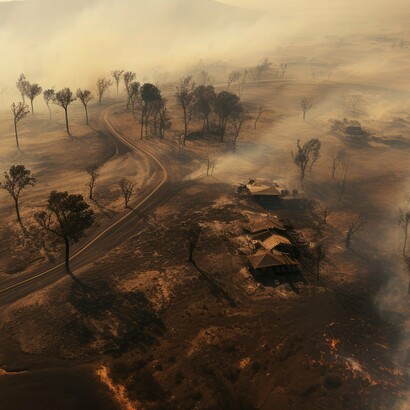
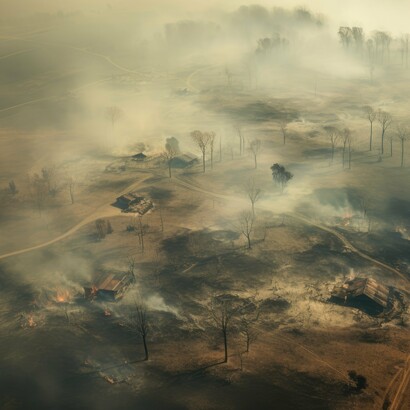
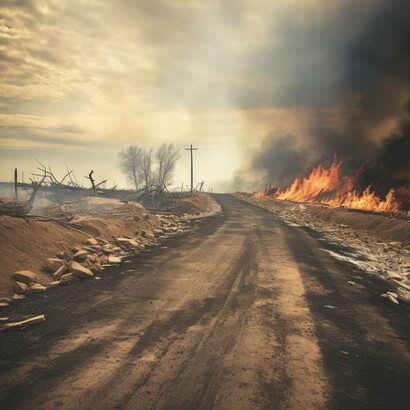
Unfortunately, countries are not making enough progress. Average warming over the past three years has been between 1.48 °C and 1.5 °C. The last 11 years have been the warmest on record. Scientists say that on our current trajectory, the 1.5 °C goal is unattainable, the 2 °C goal will be surpassed before mid-century, and warming will reach 3 °C or higher by the end of the century. Climate models show that the adverse effects of warming – including floods, hurricanes, droughts, deadly heat, wildfires, biodiversity loss, and rising ocean levels- will be much greater above 2 °C than with 1.5 °C of warming.
These disasters will affect world peace and stability. They will result in mass migrations, difficulty in meeting the world’s food needs, shortages of fresh water, the inundation of coastal cities, a decline in ocean life, and rising damages to people and property.
The solutions are obvious. First, countries must stop subsidizing fossil fuels. In 2022, the most recent year analyzed by the International Monetary Fund, worldwide subsidies totaled a staggering $7 trillion. Some were tax incentives for fossil fuel production and consumption, but most were society’s costs for damage to human health and ecosystem services.
Second, countries should use the money to help fossil-fuel workers through the transition, help low-income populations adapt to climate change, and adopt solar, wind, and other clean energy resources.
Third, countries must assign a gradually rising “carbon price” to fossil fuels to reflect their true costs to society and the environment. That way, market forces will drive the transition away from fossil fuels. Thirty countries and subnational governments already do this.
Fourth, the public and private sectors must help people adapt to the climate changes that are already inevitable because of past and ongoing emissions.
The Nobel committee could bring attention to those whose leadership and innovations are breaking through the inertia to help solve the climate problem.
International cooperation on sustainable development
On January 7, Trump directed the U.S. government to withdraw from 66 international organizations that he claims “undermine America’s independence.” It was one of the most myopic and ignorant developments in U.S. presidential history. The world cannot let Trump’s isolationism sabotage or slow down action on issues like these.
The distressing fact is that there are more than 3,500 international environmental agreements in existence today, but most are underperforming. Notable examples include the United Nations' 17 Sustainable Development Goals, adopted by UN members in 2015 to address challenges ranging from hunger and poverty to human health and education.
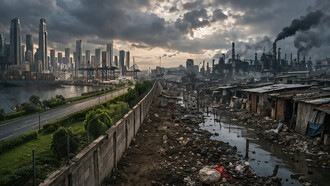
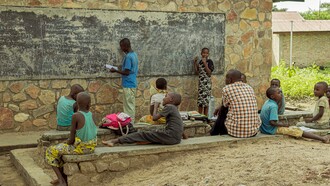
Many years ago, a UN official predicted that the “aspiration bomb” -- the unfulfilled aspirations of billions of people -- would be one of the most explosive forces in world affairs. Today, 40 percent of the world’s people live in poverty, 3.5 billion lack access to decent sanitation, one in four don’t have access to safe drinking water, 150 nations legally discriminate against women, as many as 60 military conflicts are underway, 92 nations are engaged in wars beyond their own borders, and civilization faces the crises I’ve mentioned, and more.
The world will fail to defuse the aspiration bomb if it doesn’t beat more of its swords into plowshares. Again, the United States sets a bad example. The Trump administration has shut down one of its most successful peace programs, U.S. AID. U.S. defense spending now totals about $1 trillion annually, more than any other national priority and more than the next nine countries combined. Trump’s “Secretary of War” hopes to increase defense spending to $1.5 trillion next year, to develop America’s “warrior ethos,” end “utopian idealism” and “woke moralizing,” and ignore national security threats like climate change.
At the same time that Trump has created his own version of the United Nations – a so-called Board of Peace whose powers are all vested in him and he charges other countries $1 billion to join – he is engaging, as one analyst notes, “in military actions that are not as central to its national interest, with lower odds of winning.”
However, as disruptive and misdirected as they are, we cannot let Trump’s America distract us. The world needs more heroes and more hope. The Nobel Prize can’t solve these problems, but it can motivate and bring our attention to those who can.