English
 Español
 Français
 Deutsch
 Italiano
 Português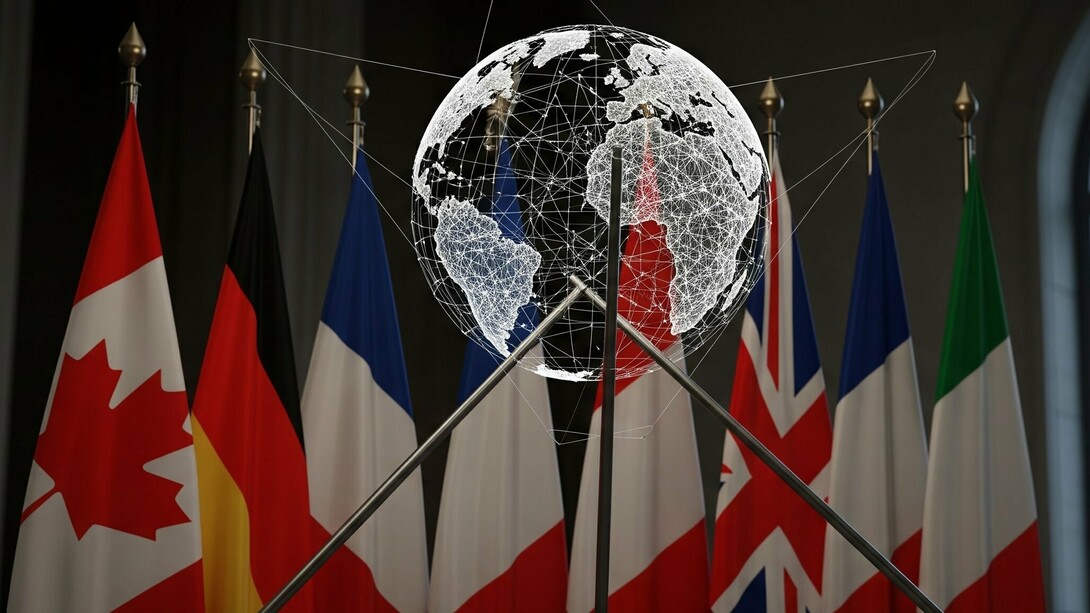
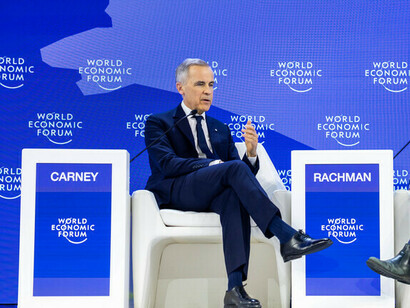
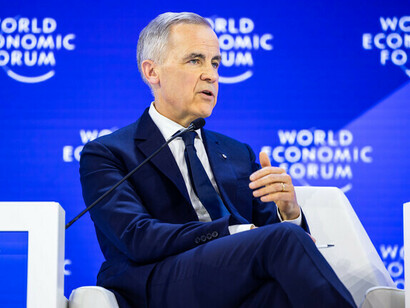
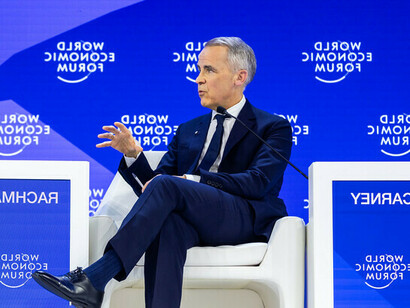
The words of Canadian Prime Minister Mark Carney's speech at the World Economic Forum in Davos on 20 January, entitled 'Principles and Pragmatism: Canada's Path', still resonate. In his calm and clear speech from the realism, he called on the major European countries, which, like Canada, are middle powers, to raise a common voice to prevent the complete breakdown of the international order, and to unite to maintain the legitimacy of the rules we have known for 80 years. The alternative is to forge a third way, avoiding total subordination to the logic of force and power.
With great elegance and without naming President Donald Trump or the United States, the Prime Minister used the term 'American hegemony' only once to describe its past leadership role. He began his speech in French to demonstrate his country's linguistic diversity, indicating that he would speak about the breakdown of the world order that we are witnessing, with threats and measures showing that we have reached 'the end of a pleasant fiction and the beginning of a brutal reality'. He clearly referred to the weaknesses in the responses of countries like his own, pointing out that there was already a clear tendency to move forward without questioning, to get along and accommodate the discourse of the powerful to avoid problems.
In his analysis, Carney spoke of the truths that many countries ignore, namely that the principles-based order is false and that the strongest countries do not respect the rules of the United Nations Charter. Even worse, the powers applied the rigors of international law depending on the identity of the accused or the victim, always favoring their own interests. This results in a lie where supposed integration becomes subordination. In this context, he pointed out that when negotiating bilaterally with the great powers, one is negotiating from a position of weakness. “We accept whatever is offered to us; we compete to be the most accommodating. That is not sovereignty; it is subordination.”
Carney's criticism of the international system imposed by the great powers is well known and has been mentioned many times by countries such as India, Brazil, and Japan, who would like to be at the table with the big players. They therefore insist on the need to reform the United Nations, especially the Security Council. What is new is his direct message to similar countries: medium-sized European powers such as Germany, France, the United Kingdom, and Italy. Together with others, they could establish a unity of purpose to save international law and the norms and rules of a civilized global community. Carney ruled out a return to an idealized old order, pointing out that nostalgia cannot be a strategy because the great powers are not subject to any restrictions. Therefore, he said, unity and firmness of purpose are the only ways to maintain established norms and rules or create new ones. Otherwise, he said, “countries will not be at the table, but on the menu”.
While the Canadian Prime Minister's speech resonated with global public opinion, the reactions of European leaders have been minimal. This contrasts with the widespread coverage in the world press and the standing ovation from the economic leaders present in Davos. President Trump was succinct and harsh in his reaction, noting, “Canada should be grateful because it lives and exists thanks to the United States. Remember that, Mark.” The European response has avoided openly supporting Carney's words, instead shifting focus to defending Denmark's sovereignty against Washington's claims to take Greenland 'by hook or by crook'. In other words, it reiterates Carney's stance of avoiding confrontation and accommodating the discourse of the powerful to avoid problems.
The Canadian Prime Minister demonstrated independence from the Trump administration by becoming the first G7 country to recognize Palestine at the United Nations General Assembly last September. France and the United Kingdom followed suit, a move that was undoubtedly unpopular in the White House. The same happened with the desire to annex Canada to the United States, as well as with the current undefined situation in Greenland. These small gestures of autonomy in foreign policy are immediately met with threats of tariffs on exports — Washington's weapon of choice for subordinating countries — as they are aware of the economic and political consequences this has for the sanctioned states. Nevertheless, Carney's speech offers a glimmer of hope, providing encouragement for middle powers to seek greater autonomy and counter the hegemonic ambitions of the great powers.
Since the Congress of Vienna in 1815, we know that the world order has been imposed by the victorious powers and has brought long periods of relative peace. This was the case in the 20th century after the Great War and the Second World War. Today, however, we are witnessing another endless conflict in Europe following Russia's invasion of Ukraine. A few decades ago, NATO bombed Serbia, and Kosovo seceded, creating a country that is not recognized by the United Nations or all members of the European Union. We have witnessed the massacre of the Palestinian people in Gaza, indiscriminate bombings in the Middle East that continue unabated, and struggles in Africa. There have been calls for military service in Europe, and the arms industry has grown exponentially, with the richest countries increasing their defense budgets and ultimately dragging everyone into arming themselves.
Will a new world conflagration be necessary for a new international order to emerge? The call from the Canadian Prime Minister comes from a leader who is fully aware that his share of power is insufficient to confront the current great hegemonic powers. That is why he is calling for unity — together, their voice will carry more weight, and the danger of a new war that will affect all countries can be averted.