English
 Español
 Français
 Deutsch
 Italiano
 Português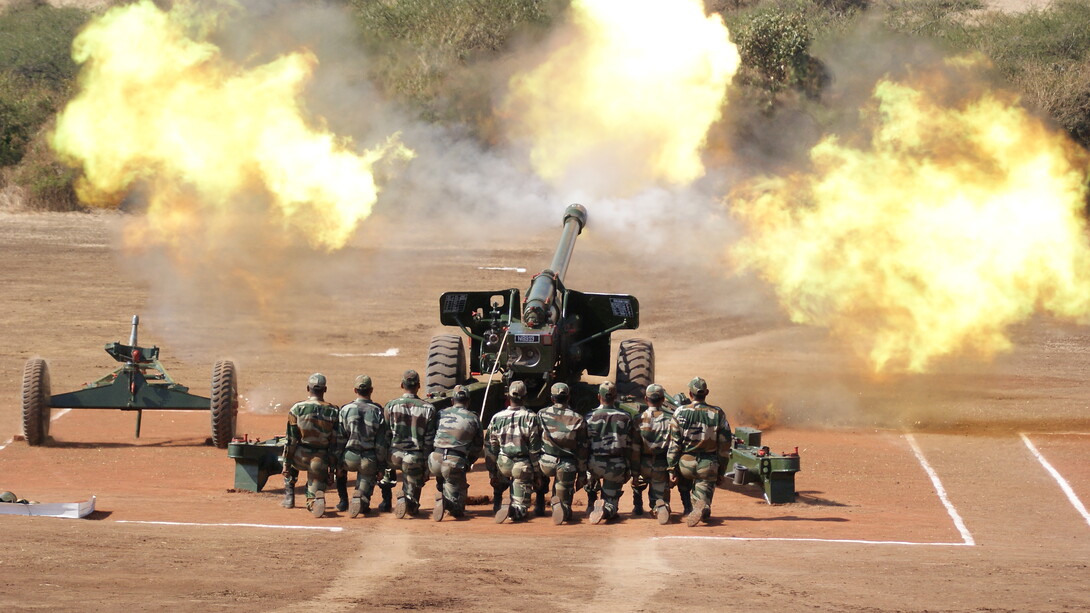
I hear the rumble again. Not figuratively, the noise of tank treads on dust, the crack of fighter jets ripping open the sky. Thirty thousand boots. Metal and throttle. India calls it Exercise Trishul, and I call it drills before the war. If we listen closely, drills don’t sound like rehearsals for the last war. Drills don’t smell like payback. I’ve never seen such casual brinkmanship. This time maybe a full-fledged war? And if this happens again. They are sleepwalking toward a cliff.
A war built from a lie
Remember May 2025. Don’t let anyone shrink it to a “clash.” From May 6 to May 10, this spun into war. A brutal attack in Pahalgam killed 26 civilians and tourists. Instant blame, instant rage. India pointed at Pakistan. Pakistan denied it and asked for an investigation. Someone claimed responsibility. Then they denied it. Chaos masked as certainty.
What followed was surgical language: “precision strike,” “calibrated response,” and “terror infrastructure.” Those are words that make bombing sound tidy. India launched a missile attack on Pakistan. India claimed that they hit the terror camps inside Pakistan. What happened next was predicted. Pakistan answered precisely: Indian airbases were hit, and Pakistan claimed to destroy the Russian S400 anti-missile system. Which story is true matters less than this: both sides walked away claiming justification. That justification is the fuel that feeds the next fire.
From “practice” to provocation
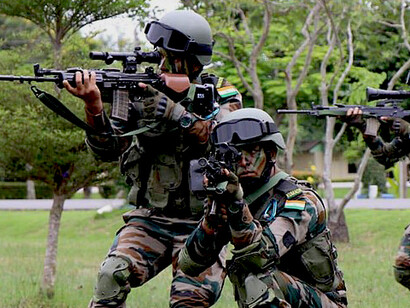
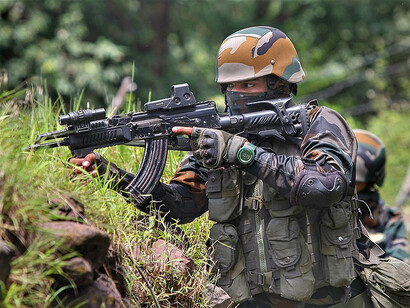
Now it’s happening again. Exercise Trishul is massive, with 30,000 troops from the Army, Navy, and Air Force practicing “multi-domain warfare” and “deep strikes.” These aren’t ordinary defensive drills. They are offensive plans painted with euphemisms. They’re taking place in flashpoints: Sir Creek and the Rajasthan frontier. Pakistan is watching closely and this time a little jittery. The NOTAM is issued from both sides. One side calls it a drill. The other calls it a threat. This is a clear signal that another short- or long-term war is coming.
This is a choice. India is choosing to flex. To parade force. Six months after bodies on both sides and a disputed story about who did what, someone is running a rehearsal for the next conflict. Do they expect the other side to shrug and sleep? That is how more wars start.
What happens if India attacks again in November?
If India strikes Pakistan again this November, it won’t just be about national security. It will be about political survival. The timing is too perfect—or too predictable. Bihar elections are coming. Elections in India are normally threatened just before the elections, and the issue of national security usually takes center stage. What a coincidence.
Economic tremors. Joblessness. Uprisings in the fields. Recurring scandals often resurface in the public eye, and nationalistic messaging frequently follows—not always to unify, but sometimes to redirect attention. A crisis at the border. A blame game. A reminder that only the ruling party can “protect the nation.” Sound familiar? It should.
The political playbook that never dies
Remember the Pulwama attack? Forty coffins draped in the tricolor in 2019 claimed by India. Grief turned to fury. Headlines turned to war cries. And just like that, jets roared across the border, not just with payloads, but with political capital. The headlines screamed victory. The election results did too. Every missile then wasn’t just aimed at Pakistan; it was aimed at India’s voter base.
Now look at November 2025. Bihar—one of India’s most politically charged states. Preparing to vote. The BJP’s support has thinned in places it once dominated. Inflation bites. Jobs vanish. Discontent simmers. What better way to shift the narrative than to light a fire at the border again?
The formula is brutally simple:
Stoke fear of the enemy.
Launch a “decisive” military action.
Flood the airwaves with nationalist pride.
Win the vote.
The fallout
But this time, it is more serious. Pakistan is not the powerless enemy that it was painted to be a few years ago. The May conflict proved both sides can inflict deep damage. Another strike won’t just rattle border towns; it could spiral into something irreversible.
Think about what happens when two nuclear-armed neighbors fight while their leaders chase political optics. Think about what happens when “surgical strikes” become campaign slogans. Think about what happens when soldiers become election pawns. This isn’t called a strategy. It’s madness disguised as patriotism.
Every war story sounds glorious until it comes home. Until prices rise. Until your son’s regiment moves to the border. Until the internet goes dark in the name of “national security.” The truth is harsh: the BJP doesn’t need peace to win elections—it needs tension. And every “attack,” every “response,” every “breaking news alert” before the ballots drop keeps that tension alive.
If November brings another strike, it won’t just be about Pakistan. It will be about Bihar. About optics. About one man’s image. The question is, will the people see through the script this time?
The blind spot
We get distracted by tanks and jets and forget the one thing that makes all this existential: nuclear weapons. The May crisis almost crossed into a nuclear nightmare. India falsely claimed the strikes on sensitive sites. And now both sides are building better missiles and newer warheads—an arms race with fewer rules and even fewer guardrails.
When leaders in capitals see nukes, they call them tools. They are not. They are an irreversible punctuation mark. The people in the valleys, the farmers by the border, and the civilians on both sides know this by heart. War is not a solution between two nuclear-armed countries.
Before the rumble becomes a roar
Pakistan already demands an independent accounting of what happened in Pehalgam. Without transparency, misstatements and pride will write the next headline, and that one could be the last one many read.
The sound in the desert is not background noise. It is a warning horn. The players in uniforms treat it like theater. The people living under the shadow treat it like doom. Who will listen? Who will demand facts? Who will refuse to be gaslit into war?
If you care at all about the people living along that jagged line between two proud nations, speak up. Ask for truth. Insist on restraint. Because when states sleepwalk, it’s always the civilians who pay the bill.