English
 Español
 Français
 Deutsch
 Italiano
 Português
Night transforms our perception of time. Forms lose their sharpness, and memory occupies the space left by immediate vision. This is when Jerónimo Elespe (Madrid, 1975) works. Gardens in the half-light and domestic spaces emerge from a darkness that belongs both to the moment of painting and to the images that return to it. Night is a working condition, but also a state of perception.
Ash belongs to another time: it is the matter that remains after a transformation, the trace of something that has taken place, retaining the memory of fire. Night and ash brings these two states together: the darkness in which forms begin to appear, and what persists once a transformation has occurred. Between them unfolds a body of painting in which images oscillate between appearance and disappearance, recognition and indeterminacy.
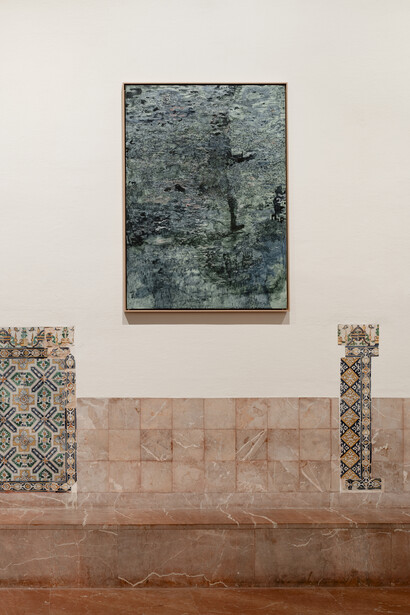
In the works brought together in this exhibition, the viewer discovers images that contain other images and, with them, more than one temporality. Beneath what is visible lie traces of earlier states, fragments that have lost their definition yet continue to shape what we see. Each layer preserves the memory of the one before it. This coexistence finds an echo in the transparencies of Francis Picabia, where different figures intersect on a single surface. In Elespe’s work, transparency becomes opaque and sedimentary: the earlier image survives as a trace that silently alters the one that follows.
Superimposition allows us to conceive of the image as a place where different temporalities remain simultaneously active. The art historian and philosopher Georges Didi-Huberman explores this coexistence of heterogeneous temporalities in Before time (2000). In Elespe’s painting, the past continues to act upon the present; each transformation incorporates something of what seemed to have been left behind.
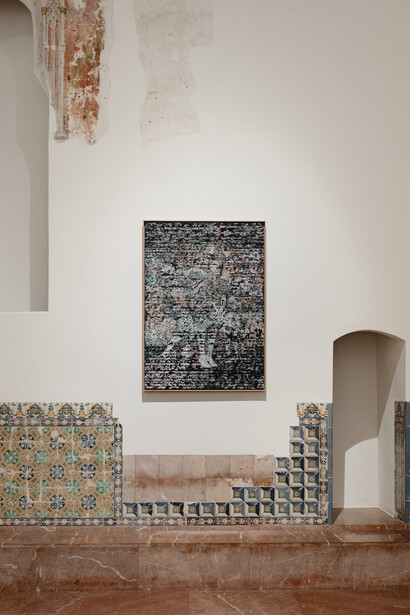
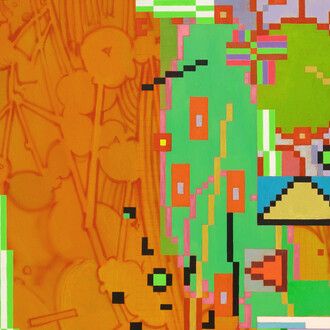
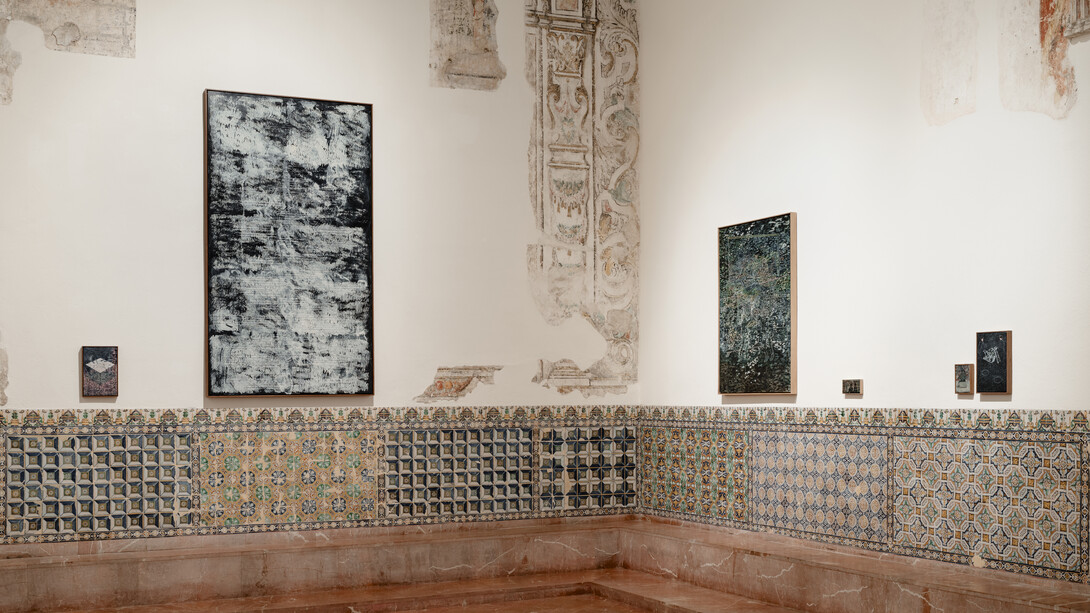
This temporality emerges from the very process of making. Elespe returns to his panels over extended periods of time. Ink, enamel, acrylic and oil coexist without following a fixed sequence. Minimal brushstrokes build up density, while other interventions cover or scrape away the surface. Layers of sedimentation and translucent glazes give the image its depth. A figure may trigger the creation of a painting, only to become so transformed that it is barely recognisable. To cover it is also to preserve it: it remains within the painting as a latent presence.
Repetition becomes a form of return. Each intervention encounters a surface bearing the traces of what came before. Marks accumulate, generate differences and progressively transform the image. The time invested in making the work remains inscribed within it. In some paintings, horizontal lines cut across this accumulation, articulating the tension between concentration and expansion. In others, verticality guides the eye through interruptions and areas of greater density. The layers seem to rise and sink into an uncertain depth, where sedimentation and movement coexist.
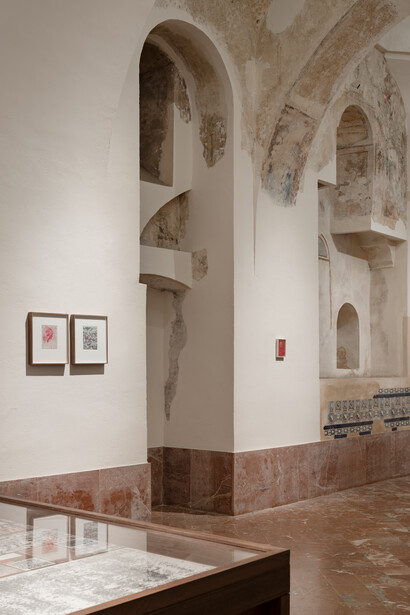
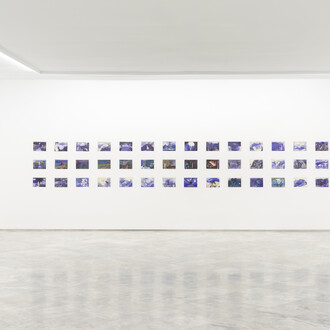
In the works on paper displayed in the Magdalena´s Chapel, the relationship between time, matter and light takes on a more intimate character. Ink seeps into Amalfi paper as scraping returns to its surface, removing material and leaving new traces. Shades of grey open up transitional areas in which light and darkness remain intertwined. Each mark records the duration of the gesture, turning the support into a material memory of the work.
Inside the display cases, drawings in sumi ink and photographic prints form a microcosm in which each fragment alters the perception of the others. The proximity of writing and drawing recalls the territory explored by Henri Michaux. The mark seems to precede the image, giving rise to associations as it is made. These groupings suggest a form of visual thinking in which relationships emerge through encounters, shifts and correspondences.
The house and the garden continually return within this network. They are spaces connected to everyday experience that memory transforms until they become uncertain. An interior retains the presence of those who once inhabited it; a garden brings together impressions from different moments. The domestic acquires an intimate strangeness: the familiar reappears, traversed by distance and time. Painting receives these fragments and incorporates them into a reality whose appearance remains open.
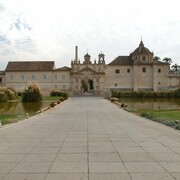
The Refectory and the Magdalena´s Chapel at the Monastery of Santa María de las Cuevas extend this experience of contemplation and concentration. Their Carthusian past finds an echo in the sustained attention required by the works. The small-scale pieces invite the viewer to come closer; the large panels, to linger over their density. The surface slowly reveals its own time. This disposition recalls Simone Weil, for whom attention entails a form of waiting.
To look is to remain before an image long enough to allow what it contains to begin to emerge. Proximity thus becomes a temporal experience: each detail alters the whole, and each return reveals relationships that had previously gone unnoticed. Between night and ash, painting preserves in the half-light what it transforms. Within its surfaces persist earlier images, accumulated gestures and fragments of experience: what remains hidden continues to act upon what is visible.