English
 Español
 Français
 Deutsch
 Italiano
 Português
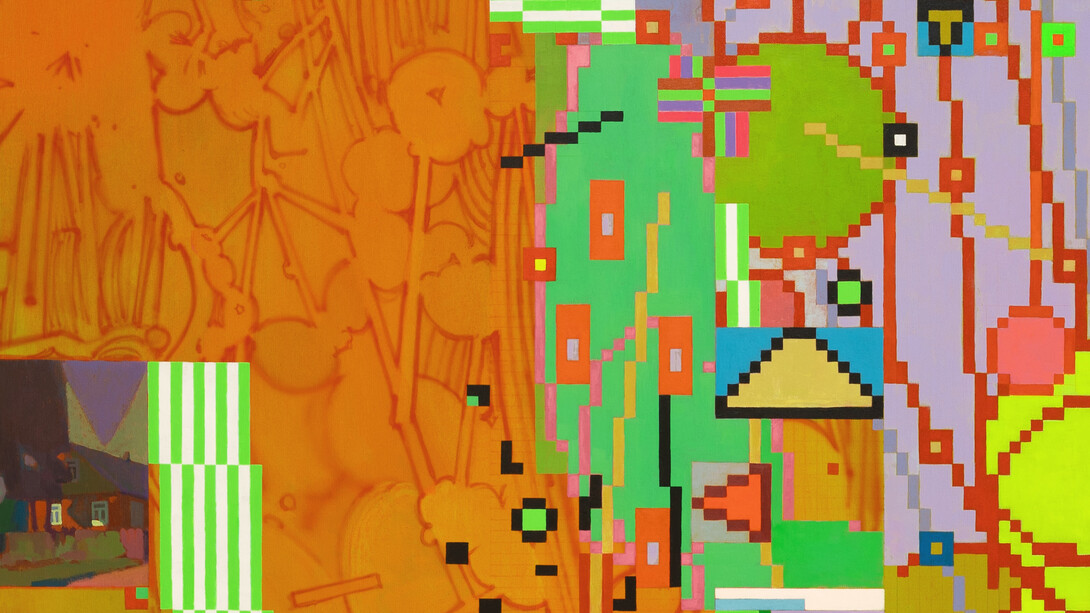
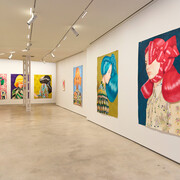
Strange, stranger, strangers is a group exhibition that brings together seven artists from Europe, the United States and the Middle East around a shared idea: strangeness as a starting point for learning to see again.
Curated by Saša Bogojev, the show brings together works by Davor Gromilović, Sara Nickleson, Elliott Pittam, Nastaran Shahbazi, Santiago Martínez Peral, Przemyslaw Blejzyk Sainer and Jakub Michalak. It opens on 27 November at Yusto / Giner’s Marbella.
The project starts from a simple observation: strangeness is how we first encounter almost everything, from objects and places to the people who eventually become part of our lives. At some point, we have all been a stranger to someone. Building on this idea, the exhibition explores how painting can give us back that first gaze, the one that comes before habit. To do so, Bogojev’s text draws on two classic references: Plato’s Theaetetus, in which Socrates describes wonder as the beginning of philosophy, and the theory of defamiliarization (ostranenie) formulated by the Russian critic Viktor Shklovsky in 1917. According to Shklovsky, once we know something too well we stop seeing it and merely recognize it, and art has the power to reverse that process.
Painting has been exploring this territory for centuries. Hieronymus Bosch estranged reality, Giorgio de Chirico space, and René Magritte logic. The artists gathered here take up that tradition through contemporary visual languages. Although none of them paints entirely unfamiliar scenes, they all start from something recognizable and set it off balance, however slightly. “By taking something familiar, ordinary, or well-known and presenting it as unusual, odd, or alien, these artists slow perception and restore sensation,” says Bogojev.
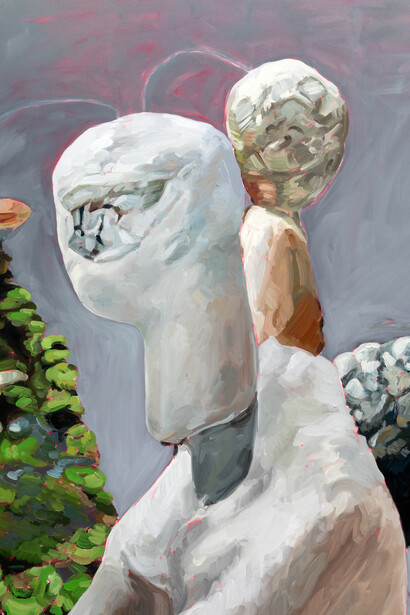
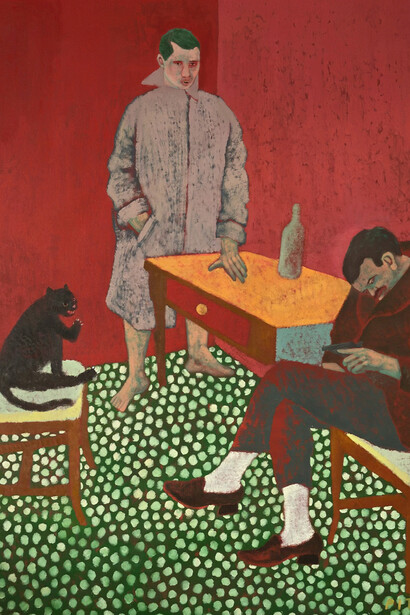
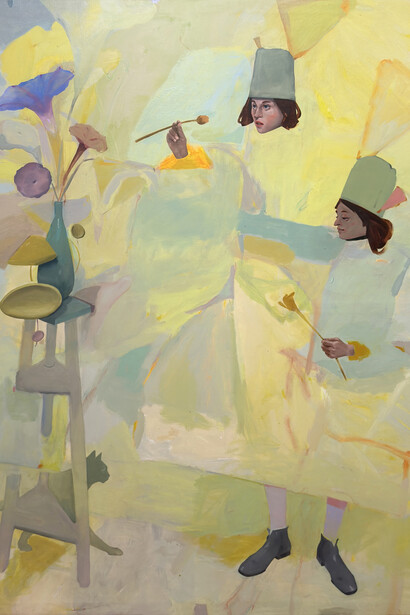
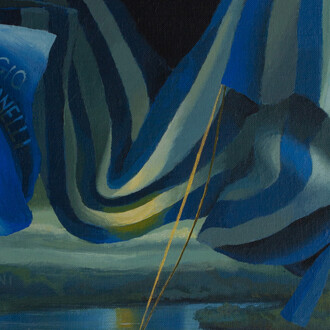
Davor Gromilović introduces imaginary strangers through romantic portraits of heroes and heroines with a neo-gothic, robot-knight aesthetic, while Sara Nickleson turns her characters into clay, plaster and papier-mâché maquettes brought to life by bold, expressive brushwork. Elliott Pittam builds flat images with raw, intuitive mark making, charged with an uneasy tension that never resolves. Nastaran Shahbazi creates suspended, anachronistic scenes in which everyday figures take on a ghostly, almost mythical presence, shaped by her life in different parts of the world. Santiago Martínez Peral works on the threshold between the painterly and the real, alternating realistically painted fragments with deliberately rough planes of colour. Blejzyk Sainer pushes collage and recombination to the limit, clashing illustrative linework, painterly gesture and the grid of the digital pixel, and Jakub Michalak approaches estrangement from a more conceptual angle, with paintings that delay recognition by revealing, like a technical blueprint, how they were made.