English
 Español
 Français
 Deutsch
 Italiano
 Português
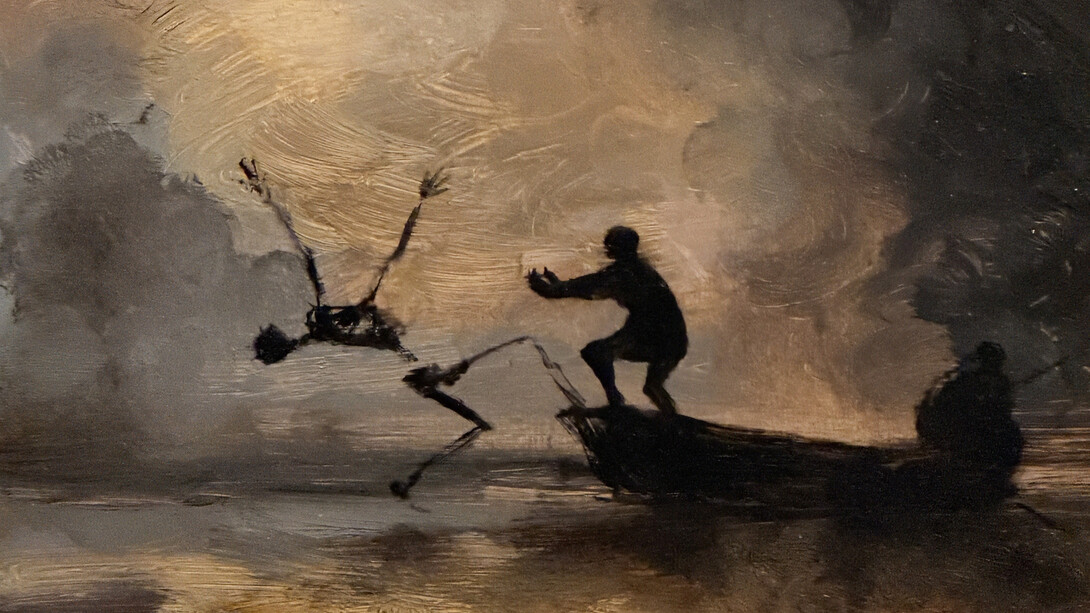
Yusto/Giner is pleased to present Totter, the first solo exhibition in Spain by British artist Lisa Ivory.
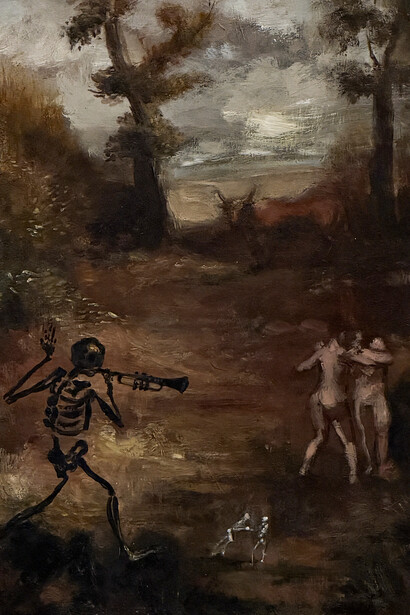
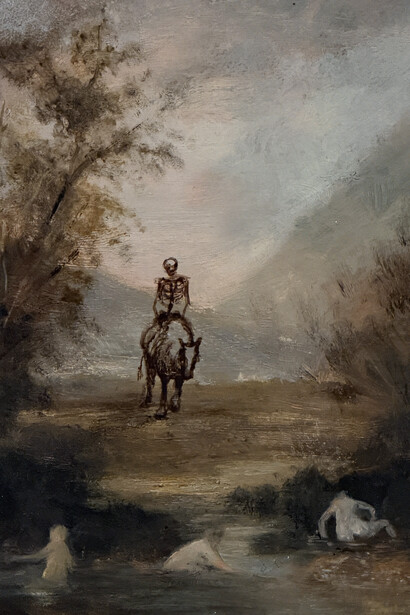
“In the mornings Totter sits with his Flock. They never seem to mind his flute playing. In the evenings, he rides out as a self-appointed Torch bearer of this half-forgotten landscape.
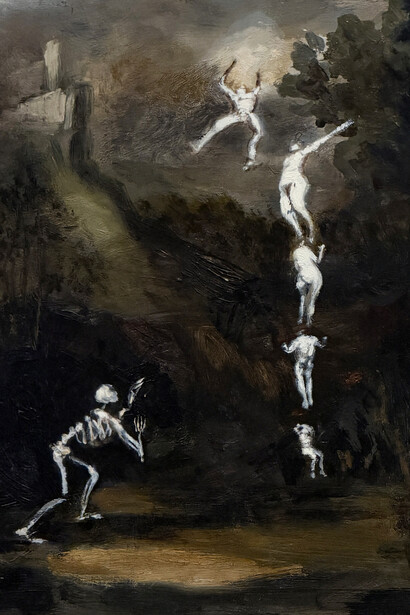
Totter has lived in this place for longer than he can remember, which, having no brain to speak of, isn’t saying much. He loves to row in the canal, play his trumpet among the trees, and climb up the steps under the old arches to look at the Cities and the sky, both crumbling a little more each year.
Life in the shadowland could have been desolate and perfect, but even the shadowland has neighbours, and his are noisy. They frighten him a little. They tumble up the Steep ascent of the hillside, which shouldn’t be possible, and they swim in his river and wind up the dog. When Totter rides past with his flag he finds himself in a full Temporality drama before lunch. Once they felt rowdy and Malcontent, and knocked him down and sent his trumpet flying. Other days they seem harmless, dancing in rings with a large black cat. He tips his hat and picks up his violin for the Cat dance.
Somehow, he can never bring himself to be too far away.”
This is life in the paintings of Lisa Ivory. Lisa Ivory creates oil paintings and works on paper depicting fantastical creatures often playfully entwined with women. She is inspired by myth and folklore, and like these narratives, Ivory’s works allegorize the fear and attraction to otherness. Ivory’s landscapes are archaic in tone and her archetypal subjects present a paradoxical discourse which includes the feral and tamed; the worshipped and abandoned; the empowered and the subjugated.
It draws directly from the influence of the artist Francisco de Goya, with imagery that recalls his Black paintings, his Caprichos, or his covens. Triads of women reminiscent of Rubens' Three graces or three nymphs disrupt the everyday life of the cadaverous characters in Lisa Ivory’s iconography. Witches, covens, and rituals are motifs the artist repeatedly revisits and reinvents in her works, featuring demons and shadows that appear to be what they are not, alongside bucolic settings that soften the darker scenes.
These are landscapes enclosed in the semi-darkness of the threshold between two worlds. They frame scenes where, at times, glimpses of a classical architectural past can be seen beyond the wastelands and forests, as though the journey of the figures, despite its apparent randomness, held an ultimate destination.