English
 Español
 Français
 Deutsch
 Italiano
 Português
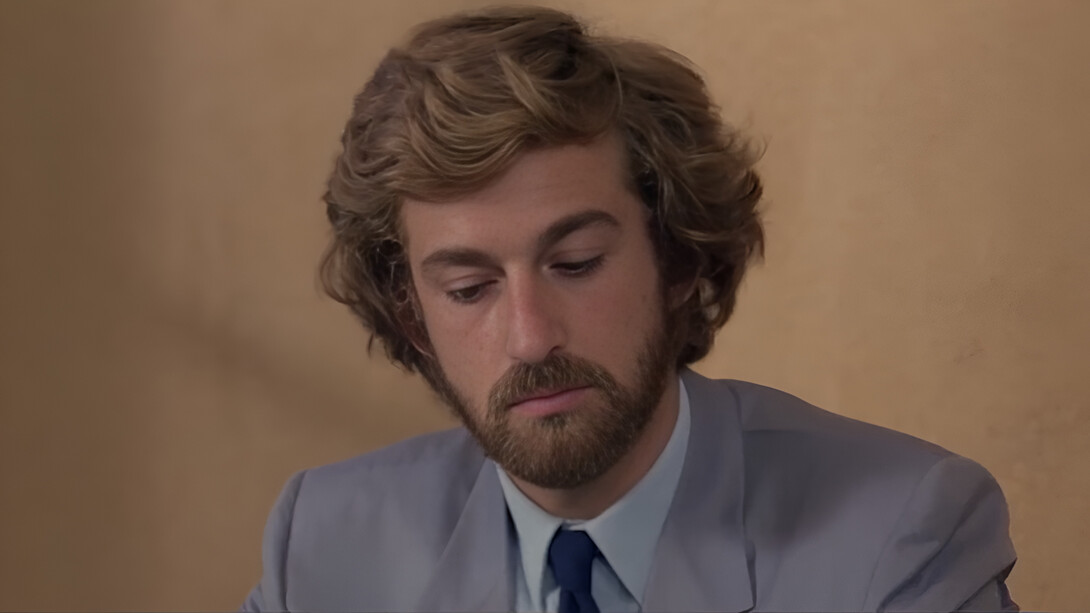
Franco Battiato's "Voglio vederti danzare" plays on the red carpet at the 2023 Cannes Film Festival. He starts dancing in circles, and the entire cast follows. Nanni Moretti is like that: we all orbit him. The undisputed sun at the center of his system is himself.
And I am completely in love with him.
When I watched Il sol dell'avvenire, something happened to me that never had before: I finally understood what it means to love cinema. That was the beginning of this obsession I want to write about today, as his new film is set to open in December.
Giovanni Moretti was born in 1953. In 1973, he premiered his first short film, La sconfitta. In its opening scene, a friend asks him, "Why did you become a communist?" His first words ever immortalized on Super 8 are: "Because I think it's right."
That same year, he made his second short, Paté de bourgeois, in which one of the characters declares that "all the films they make nowadays are the same. Only the title changes."
From my point of view, these first two works already contain the ideas Moretti would develop throughout his career: a reflection on what it means to be on the left, and the search for an original point of view in opposition to a cinema he himself describes as photocopied.
Like any filmmaker with a long career and a clearly defined authorial voice, Moretti's work can be divided into four major periods. The first is this experimental phase, encompassing his first two shorts and a medium-length film, Come parla fratelli? Moretti would make other short films later in his career, but by then he was no longer a beginner.
The second period begins in 1978, with his first feature film, Io sono un autarchico. Here he introduces Michele Appicella, a character he himself would play until the late 1980s. Appicella, Moretti's mother's maiden name, would become a filmmaker in Ecce Bombo and Sogni d'oro, a math teacher in Bianca, a Communist member of Parliament in Palombella rossa, and, finally, a priest in La messa è finita. Different as these films may be, they all explore social contradictions and, with particular humor, portray Rome's upper-middle class.
A third period marks the transition toward the recognition that would arrive in 1993 with Caro Diario, followed in 1998 by Aprile. Both films are deeply personal: Moretti plays himself, portraying his private life and his creative process, which he describes as slow and chaotic. In Aprile, the second narrative thread follows Italian politics at the time, particularly Berlusconi's rise. In a sense, this period had begun in 1990 with La cosa, a documentary about the Italian Communist Party's decision to change its name.
If I had to spend the rest of my life with just one film, it would undoubtedly be Caro Diario. Its three episodes are sublime. Moretti portrays his city, his obsessions, his neuroses, and his experience with cancer treatment. The film earned him the Best Director award at Cannes in 1994.
The three episodes could easily stand alone as individual shorts. In fact, that was how the project began. But it is Moretti himself who binds them together, speaking to us in the first person about things that are simple, though hardly trivial: doctors who refuse to listen and his generation's disillusionment with politics. Not his own disillusionment, however. As he says in the first episode, addressing Vespa: "You shouted terrible things. I shouted the right things, and now I'm a splendid forty-year-old."
And finally, consecration itself.
At this stage, Moretti said he was no longer making films about what he disliked, but about what he loved. In 2001, he won the Palme d'Or at Cannes for The Son's Room, a deeply dramatic film in which he also stars, portraying a family in the aftermath of one of their children's death in an accident. Films such as The Caiman, My Mother, and Three Floors would follow, all of them intense dramas. The only exception is We Have a Pope, although, by this point, making jokes about Catholic priests is practically a subgenre of Italian comedy, one that shocks absolutely no one.
In 2018, he made the documentary Santiago, Italia, about the role of the Italian embassy in Santiago, Chile, during the military dictatorship. In the film, Moretti tells a former repressor to his face, in prison, that he is anything but neutral about the work he is doing. I wouldn't call this a political detour, though. Aprile and La cosa had already established that tone.
In 2023, as I mentioned at the beginning, he released Il sol dell'avvenire, a love letter to cinema in which he plays a director named Giovanni whose personal and professional life is falling apart while the film he is making begins to crumble around him. And this year he premiered Sucederá esta noche, starring Louis Garrel and adapted from a book by the Israeli author Eshkol Nevo, who must be one of Moretti's favorites, since Three Floors was also based on one of his novels.
Beyond his filmography, Moretti has his own production company, Sacher Film; his own movie theater, the Nuovo Sacher, where he often screens films himself; and a short film festival, the Sacher Festival. The name is a tribute to his favorite dessert: Sachertorte.
I find it fascinating that this 73-year-old man continues to make films exactly as he wants, ignoring the industry's commandments, working with his longtime collaborators and a group of actors who have been by his side for decades, including Silvio Orlando.
As I finish writing this article, Flavio Bolsonaro, a former presidential candidate from an important South American country, is asking for asylum in the United States and proclaiming himself the country's legitimate president, despite acknowledging his electoral defeat. Bolsonaro has had a very Groucho Marx moment: these are my principles; if you don't like them, I have others.
Against that backdrop, returning to Nanni Moretti feels necessary. Not only because his new film has just premiered in Venice and will reach theaters in a few months, but because his way of making cinema and his pursuit of coherence remind us that not everything is lost. There are still people who stand by their ideals and live by them.