English
 Español
 Français
 Deutsch
 Italiano
 Português
I didn’t think turning 32 would hit me this hard. One of the first signs that I’m officially an aging, cringey millennial was realizing just how much of the art I loved as a child and teenager is now being recirculated under a new lens—scrutinized in ways I never subjected it to myself. Back then, I mostly liked things because they made me feel something. Creating entire subcultures around a piece of art was normal, not performative or political. Tumblr, the early internet, fandoms—these spaces let us revel in art without overanalysing every line or lyric.
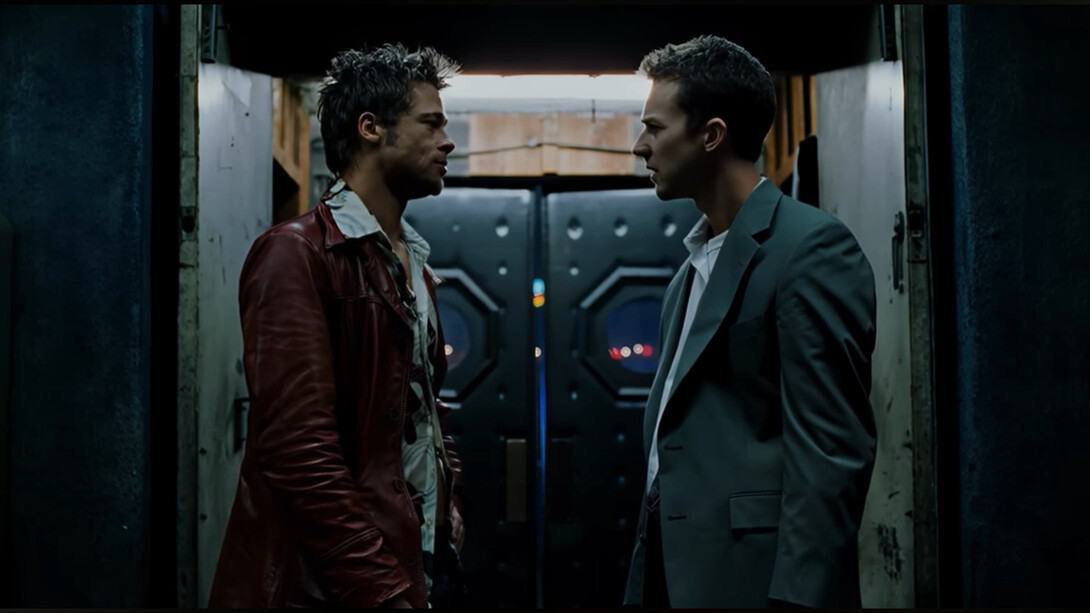
Take Fight Club, for example. I recently revisited it after a conversation with my teenage sister, who saw it as a total homoerotic smut film, and realized how differently I experience it now. As a teen, I loved the film for its style: fractured editing, dark humour, and the sense of danger and cool. I admired it purely as a blueprint for tension and visual storytelling, as a young filmmaker obsessed with craft. I didn’t interrogate the ideas it was putting forward, and I certainly didn’t notice how it had been mined by communities I’d later read about online—the Red Pill forums, manosphere commentators, meme culture—all claiming it as a manifesto.
Watching it now, with the hindsight of adulthood and internet amplification, I can see it. Tyler Durden’s charisma and rebellion still thrill me; the critique of consumerism and emptiness is timeless. But it’s impossible to ignore how the film’s narrative can be co-opted, misread, or weaponized by audiences to justify violence or self-destructive behaviour. No matter how brilliant or subversive the art, the audience can twist its meaning completely.
Rereading Fight Club in this way doesn’t diminish my appreciation—it deepens it. Understanding how its themes resonate differently with various viewers, including those with radically different interpretations, adds layers to the experience. Art isn’t static; the way it’s interpreted—and misinterpreted—can become part of its life, challenging us to wrestle with discomfort, contradiction, and nuance.
Liking a piece of art doesn’t automatically make you someone, endorse a worldview, or define your morality—but somewhere along the way, it started to feel like it might. Art is increasingly judged not for what it is, but for how it’s consumed and by whom. Far too often, those judgments come from people least equipped to understand it.
Misreading isn’t new—but the scale is
Revisiting Fight Club reminded me how long art has been misunderstood. I’ve written before about my complicated love-hate relationship with the antihero archetype and how audiences often misread complexity as moral justification.
Characters like BoJack Horseman or Rick Sanchez are celebrated for traits their narratives are meant to critique. As the line between good and evil blurs, we increasingly glorify villains who are deeply flawed yet well-explored. I understand the appeal—they feel relatable in their struggles—but part of that relatability is precisely what the narratives are interrogating. Admiring the art is one thing; treating it as moral permission is another.
Consider the Joker. Heath Ledger’s Joker in The Dark Knight—his slow clap at the crime scene, his chilling, chaotic smile while challenging Batman—reshaped our understanding of villains, destabilizing rigid moral binaries. Todd Phillips’ Joker (2019) gives us Arthur Fleck dancing on the stairs, the Murray Franklin confrontation, and moments of intimate vulnerability in his apartment, showing a man driven to violence by structural neglect, mental illness, and self-directed anger.
Joaquin Phoenix’s performance is intensely human, and the film makes clear that his actions are symptomatic, not heroic. Yet audience reactions split: some hailed Arthur as a “sigma” anti-establishment figure, while others read the film as a cautionary tale about neglect and social failure. Phillips’ sequel, a darker and more satirical version, explicitly responded to Red Pill co-optation, illustrating how artists wrestle with misreadings of their work.
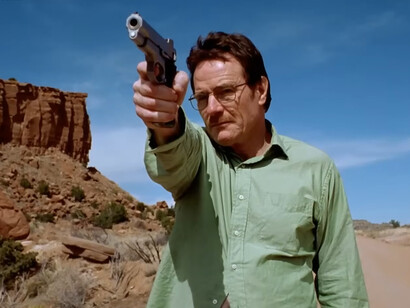
Breaking Bad offers a parallel. Walter White’s transformation from chemistry teacher to drug kingpin is a meticulous study of power, corruption, and consequence. Scenes like the prison massacre or the final confrontation in the desert show the human cost of his ambition. The series documents fallout: Jesse’s trauma, Hank’s death, and families destroyed. Online discourse often flattens this moral weight, celebrating Walter’s cleverness or charisma while ignoring devastation—a pattern echoed in Red Pill culture, which selectively extracts traits to validate ideology.
Even Fight Club has been mined by manosphere communities as a manifesto, despite its explicit critique of toxic masculinity. Tyler Durden’s charisma, the basement fight scenes, and Marla’s exasperated confrontations are intended to provoke reflection on male insecurity and destructive behaviours—but these moments are frequently cited as aspirational. The film’s warning about how men can be hollowed by societal expectations—chasing power, control, and performative toughness—is lost in misreadings.
Another overlooked layer is how young men are depicted and sexualized. While women’s portrayals are scrutinized constantly, cautionary tales about male sexuality are rarely interrogated. Characters like Kelso in That ’70s Show, with his obsession with sex and shallow bravado, model worth tied to sexual conquest. Real-life examples abound: Justin Bieber was sexualized at 13 through the media frenzy around One Time and early public appearances; magazine covers and paparazzi photos emphasized his teen attractiveness, creating premature sexual objectification.
The message for young boys is clear: your value is in your ability to perform sexually, to appear confident, desired, and powerful. Is it any wonder some overidentify with the “alpha” or “sigma” traits popularized in Red Pill culture? Patriarchy doesn’t just hurt women—it fractures boys’ emotional lives, teaches them fear of vulnerability, and demands performance over authenticity. It leaves them simultaneously untouchable and fragile, longing for validation the world will never fully satisfy.
Should artists stop depicting morally ambiguous stories for fear of misinterpretation? Not necessarily. Clear intention can help, but too much guidance risks stifling audience discovery. Todd Phillips’ Joker sequel, made in response to co-optation, illustrates the tension: art can’t be fully controlled, but it shouldn’t be reduced to a weapon in the hands of bad-faith viewers.
Counterculture ≠ morally correct
We often admire countercultural movements in hindsight, associating them with underdogs, visionary outsiders, or righteous rebels challenging the status quo. Punk rock’s raw aggression and DIY ethos pushed against corporate control, but it was also often overtly sexist and sometimes violent toward marginalized groups. Early hip hop challenged systemic racism and gave voice to urban struggles, yet some artists glorified misogyny, homophobia, or materialism.
Avant-garde film disrupted narrative and cinematic norms—think Luis Buñuel’s Un Chien Andalou or Gaspar Noé’s Irreversible—but the shock value and transgressive content often alienated audiences or risked normalizing violence. Even the Beat Generation, praised for literary rebellion and exploring taboo subjects, was criticized for romanticizing substance abuse and maintaining male-centric perspectives that excluded or diminished women’s voices.
Moving into the digital age, counterculture took new forms. Early internet forums like 4chan and Something Awful fostered communities experimenting with radical humor, trolling, and memetic subversion. While some of this creativity pushed boundaries and cultivated niche artistic movements, it also normalized harassment, misogyny, and the amplification of toxic ideologies.
Riot Grrrl feminism, another online-influenced subculture, gave voice to young women’s anger and DIY artistry—but internal debates over inclusivity and racial representation revealed its own limitations and blind spots. Even gamer culture, long celebrated for community-driven creativity and critique, has been critiqued for enabling harassment, gatekeeping, and exclusion.
Red Pill culture functions as its own counterculture in this landscape. In a moment where progressive values feel dominant, it positions itself as a rebellious undercurrent, a reaction to perceived social overreach. Like any countercultural movement, it can offer critique, insight, or challenge, but it can also go too far, weaponizing its original ideology in ways the creators never intended.
Just as punk, hip hop, avant-garde film, Beat literature, and digital-era subcultures contain contradictions and ethical blind spots, Red Pill ideology thrives on cherry-picking cultural material—taking complexity and twisting it into justification for rigid, often harmful belief systems. Ideology, once implemented, leaves much discretion to the enforcers; as history shows, any co-opted system inevitably evolves according to the hierarchies it was meant to support.
Progress doesn’t eliminate pushback, but it reshapes it in ways that demand observation. Every societal correction produces its mirror. Counterculture is rarely morally pure, and no artistic or social movement is immune from co-optation. Understanding this allows us to engage with art and ideas critically, appreciating subversion without mistaking rebellion for righteousness.
Separating art from audience
We’re all familiar with the phenomenon of “Disney adults.” I must admit, as someone who genuinely loves Disney films, I sometimes wondered if I counted as one—and if I did, how to make sure no one ever found out. But being a Disney adult is less about quietly enjoying classics and more about loudly centering yourself in a space designed for children while overlooking the corporation’s many missteps and problematic history. Simply loving Up or The Lion King doesn’t make you part of that subculture—and it certainly doesn’t diminish the art itself.
As a filmmaker, I can say objectively that these films are excellent pieces of craft. Enjoying or critiquing a piece of art should be separate from the audience it attracts. We don’t walk into a grocery store and judge the shelves based on who else shops there; yet when it comes to art, we often let audience perception—sometimes loud, performative, or ideologically skewed—dictate our valuation. Tyler Durden enthusiasts, Red Pill commentators, or obsessive fandoms don’t have the power to redefine the inherent merit of a film, a song, or a comic. Art exists on its own terms, and our engagement with it should be guided by its intention, craft, and impact.
Bill Burr famously said, “I hate dumb people who read because they think they’re smart.” This perfectly captures the phenomenon we see when audiences try to co-opt or overinflate the meaning of a work—or a platform.
Take Joe Rogan, arguably one of the most influential figures in the Red Pill and manosphere landscape. By now, almost everyone has heard of him: the former comedian, MMA commentator, and podcast host whose Joe Rogan Experience draws millions of listeners weekly. What Rogan has mastered, in a sense, is exactly what Burr was talking about: he doesn’t have to be inherently insightful on every topic himself; he knows enough interesting, smart, or provocative people to bring onto his show. We tune in for them—whether it’s someone we admire, like Naval Ravikant, Sam Harris, or Esther Perel, or someone we despise, like alt-right figures and controversial celebrities. Rogan becomes a lens through which we experience the ideas and charisma of others, for better or worse.
The key point: Rogan’s influence, and by extension how we interpret his platform or others like it, shouldn’t redefine the value of the content itself. If we engage intentionally with the material, we can separate the merit of ideas from the personality presenting them—and explore the content on our own terms.
Consider another example from comedy: Shane Gillis and Kill Tony. Gillis, a stand-up comedian, is celebrated for his timing, irreverent humour, and ability to riff on absurdity in everyday life. On Kill Tony, the show’s format—unscreened amateur comics performing live while Tony Hinchcliffe and guests comment—often showcases offensive, misogynistic, or flat-out unfunny material.
Some participants punch down, spout racist or sexist stereotypes, or lean into shock for cheap laughs. Similarly, Gillis has appeared on Andrew Schulz’s Flagrant, where conversations drift into deliberately provocative territory: jokes about sensitive political topics, casual sexism, or exaggerated racial tropes—meant to provoke reaction as much as entertain.
Gillis himself occupies a distinct space within these environments. He frequently critiques material he finds lazy, offensive without wit, or purely performative, highlighting the difference between real craft and shock for shock’s sake. While he may joke about cultural stereotypes in a way that plays with absurdity or self-deprecation, he avoids glorifying harm or reinforcing prejudice. When confronted with backlash for a past joke on a podcast, he accepted that he was fired from SNL as a consequence.
The point is subtle but critical: audiences often conflate the platform with the performer. Just because Gillis shares a space with controversial comedians doesn’t make him identical to them. His craft—his ability to deliver punchlines, read the room, and critique in real time—remains separate from the problematic tendencies of the shows or communities around him. Fans who misread this or treat the broader context as an endorsement of extreme behaviour fail to separate the art from its surrounding audience or co-opted platform.
This principle extends beyond comedy. In Fight Club, Tyler Durden’s charisma and the underground fight scenes are often cited as aspirational by manosphere audiences, despite the film’s explicit critique of toxic masculinity. Similarly, in Joker (2019), the Murray Franklin confrontation and Arthur Fleck’s stair dance scenes are technical and emotional masterstrokes. Phoenix’s performance communicates vulnerability, rage, and societal neglect, layered with intention and craft. Red Pill co-optation or audience obsession with “sigma” traits doesn’t diminish the artistry; it underscores the importance of evaluating art on its own terms, separate from audience interpretation or misappropriation.
By applying this separation consistently, we reclaim the ability to engage with art critically and appreciatively. Recognizing misreadings is not naïve—it is necessary. The audience is neither the author nor the arbiter of a work’s value. We can acknowledge problematic interpretations, understand cultural impact, and still honour the craft, nuance, and intention embedded in the work.
Artists cannot whitewash or self-censor their work based on who might interpret it wrong. Creativity has long been associated with courage for this reason. Art should be complex enough to be open for interpretation.
Art, interpretation, and responsibility
Intention is often the key that separates good art from great art. When it comes through as the artist envisioned—which rarely happens—there is an immediate connection between creator and audience. Artists can guide intention, but they cannot fully control reception. Once a work is released, it takes on a life of its own, interacting with audiences whose experiences, beliefs, and backgrounds inevitably shape interpretation.
Misreadings are unavoidable—sometimes they distort meaning, sometimes they spark dialogue, and occasionally they generate entirely new perspectives the artist never anticipated. This tension between creation and reception has existed throughout history, but the digital age amplifies it, as interpretations are dissected, shared, and debated globally in real time.
Consider Todd Phillips’ Joker sequel. The film was intentionally made in response to online communities misreading the original Joker as aspirational rather than cautionary. Phillips tried to clarify intention without stripping ambiguity, but the tension remained, highlighting the central challenge: creators can communicate vision, but they cannot control how it is received.
This dynamic appears across literature and music as well. Nabokov’s Lolita confronts readers with moral complexity and obsession. The novel cannot dictate whether readers feel revulsion or fascination, and some will inevitably latch onto the story in ways that ignore its nuance. In the digital era, social media and meme culture compress these interpretations into easily shareable, often extreme, reactions. A critique of toxic masculinity can become a manual for the behaviour it condemns; a song about oppression can be reduced to a catchy chorus. Visibility magnifies both impact and misappropriation.
The solution is not self-censorship. Ambiguity and complexity are central to art’s power. Creators must accept that misreadings will occur, while embedding layers of nuance, contradiction, and emotional honesty that allow their work to withstand distortion. Craft, context, and subtle guidance—not moral policing—sustain art’s integrity.
Art’s power lies in its ability to unsettle and challenge us. Works like David Lynch’s Mulholland Drive, Lars von Trier’s Melancholia, or Darren Aronofsky’s Black Swan confront audiences with discomfort, contradiction, and vulnerability. Engaging with challenging art is not masochism—it is growth. It provokes introspection, empathy, and critical thought, reminding us that complexity is essential.
Audience responsibility matters as much as artistic freedom. Creators cannot control interpretation, but audiences must engage critically, resisting the urge to flatten meaning to fit ideology or convenience. Misreadings should not dictate what gets made or how it is valued. Media literacy—watching, reading, and listening critically—is both a skill and a responsibility.
Art exists in the space between creator and audience, shaped by both but owned by neither. Misreadings, co-optations, and ideological distortions are inevitable, but they do not define value. What matters is our willingness to separate craft from audience, intention from misinterpretation, and appreciation from ideology. Only then can we fully engage with the complexity, courage, and beauty that art offers.