English
 Español
 Français
 Deutsch
 Italiano
 Português
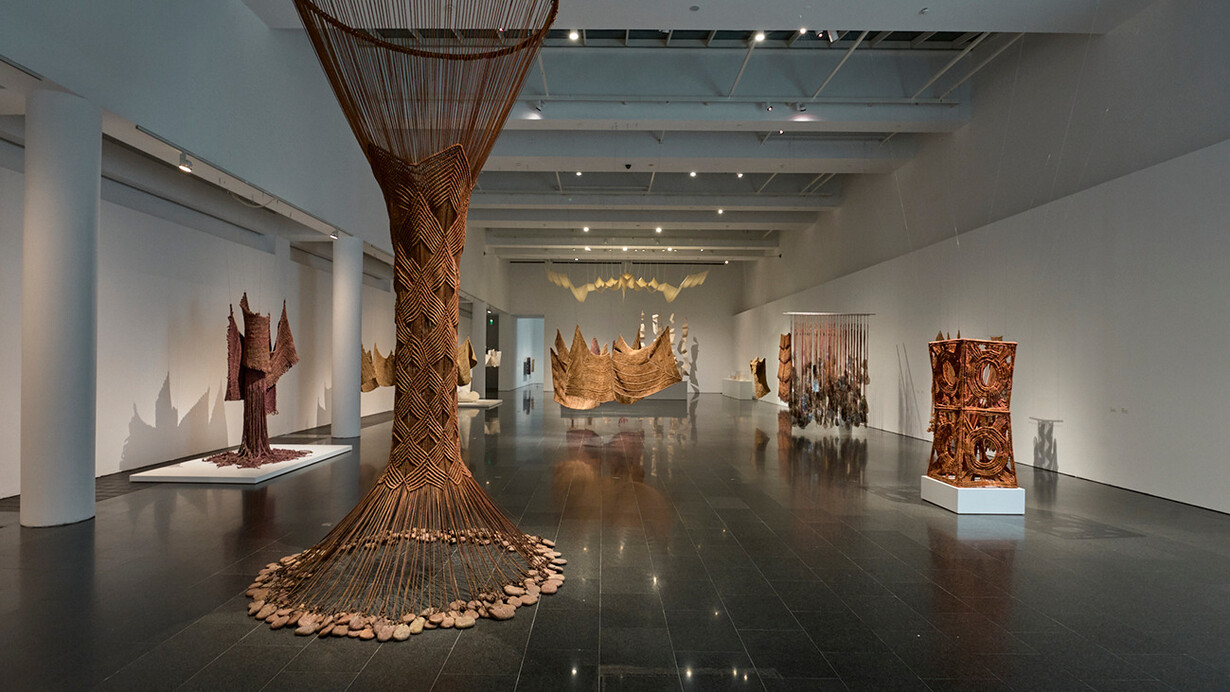
Barcelona, 4 November 2026. Until 2 May 2027, MACBA is hosting the exhibition Aurèlia Muñoz. Beings. Curated by Manuel Cirauqui, Sílvia Ventosa Muñoz and Rosa Lleó, the exhibition is the result of extensive research and a collaboration between MACBA, the Museo Nacional de Arte Reina Sofía, the research platform einaidea and the Aurèlia Muñoz Archive.
This joint effort has produced a retrospective that both honours and expands the legacy of Aurèlia Muñoz (Barcelona, 1926–2011), acknowledging her as one of the most accomplished and innovative international artists of the twentieth century. Following its presentation in Madrid, the exhibition arrives in Barcelona in its definitive and most comprehensive version, with an ambitious exhibition design tailored to the architecture of the Meier Building, along with a significant increase in large-scale works and previously unseen material.
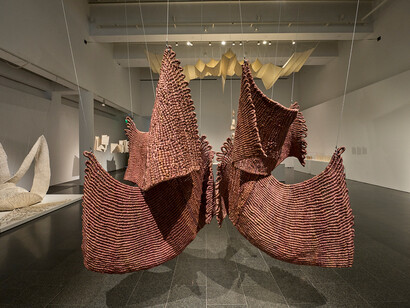
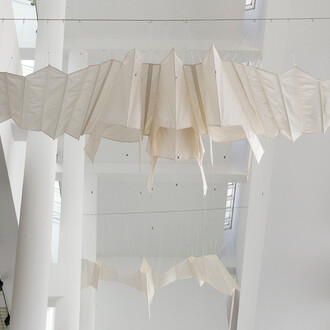
In the exhibition’s main space, over thirty large-scale works create a monumental journey: Homage to Gaudí (1969) is displayed alongside the artist’s early macramé sculptures; Mystic being (1977) and Bird-kite B2 (1982), both from the MACBA Collection, enter into a dialogue with Undulations (1974) and Brown eagle (1977), belonging to the collections of the Museo Nacional Centro de Arte Reina Sofía and the Museum of Modern Art (MoMA), New York, respectively.
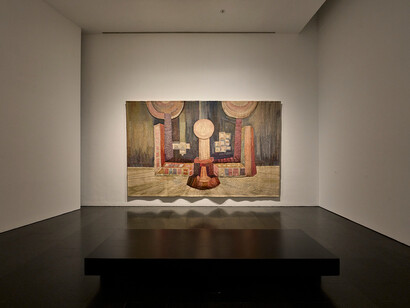
Gallery view with Brown eagle, 1977, at the center. Photograph: MACBA. Beside the artist’s signature pieces, the exhibition includes an extensive selection of large-scale embroideries, some of which have not been seen for over five decades, as well as a section dedicated to her later creative period (1980–2010), which drew inspiration from the Mediterranean seabed.
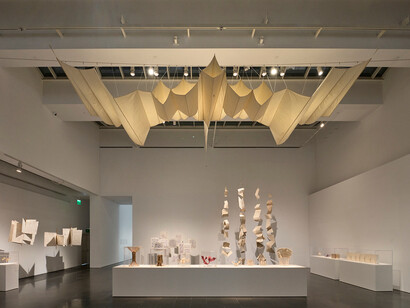
Also featured are more than sixty drawings from the Aurèlia Muñoz Archive and the collection of the Museu Nacional d’Art de Catalunya (MNAC), including several experimental series from the 1970s such as Sensitive Nature, Mobiles and Nets. In these works, the artist explores the interaction between suspension and tension, using diverse materials such as sisal, copper wire and paper. In addition, the exhibition presents sketches and objects from Muñoz’s personal archive, a collection that includes a wealth of documentation never previously exhibited.
Through this approach, the exhibition invites viewers to explore the artist’s universe and discover her radical originality and multifaceted nature, from preparatory materials for her major projects to the reference points that informed her research, thereby providing an unprecedented context for her most iconic and well-known works. This plurality of elements reflects the artist’s way of working, the intensity of her labour and her dedication to mastering techniques, materials and volumes, qualities that enshrined her as pioneer of new artistic forms within her generation.