English
 Español
 Français
 Deutsch
 Italiano
 Português

We read food labels. We worry about what we eat, what we drink, and what we put on our children's bodies. But how often do we stop to think about the clothes touching our skin?
As a fashion designer, this question has fascinated me for years. I first learned about textile fibers and their properties during my fashion design studies, long before sustainability became such a fashionable conversation.
I learned about natural fibers, synthetic fibers, fabric treatments, dyeing processes, and the extraordinary science behind something as ordinary as a T-shirt. But the older I get, the more I realize that this knowledge isn't only about fashion. It's about our bodies.
We're wearing more plastic than we realize
Polyester. Nylon. Acrylic. Elastane. These names are so familiar that we barely notice them anymore. They appear on the labels of our leggings, underwear, sports bras, dresses, pajamas, and even baby clothes.
But here's something many consumers don't fully realize: most conventional synthetic textile fibers are made from polymers derived from fossil-fuel feedstocks. In other words, a significant part of our modern wardrobe begins in the petrochemical industry.
That doesn't mean we're literally wearing crude oil. The manufacturing process transforms those raw materials into entirely different substances. Still, I find it fascinating that an industry associated with oil and plastics has become so deeply connected to something as intimate as the clothes touching our skin.
Synthetic fabrics have undeniable advantages. They're often affordable, durable, lightweight, stretchy, and easy to maintain. As a designer, I understand exactly why manufacturers love them. But convenience and performance shouldn't be the only questions we ask. We should also ask what happens when these materials are worn against our bodies for hours, particularly in hot climates, during exercise, or when our skin is already sensitive.
Our skin is an organ, not just a surface
We often talk about skin as if it were simply the outer wrapping of our bodies. But our skin is our largest organ, and it performs an extraordinary job. It protects us from the outside world, helps regulate temperature, and provides a barrier against many potentially harmful substances. And that barrier matters. Not everything that touches our skin enters our bloodstream. The skin is remarkably good at keeping many substances out.
But certain chemicals can cause irritation or allergic reactions, and some substances can penetrate the skin under particular conditions. Textiles are much more chemically complex than most consumers imagine. The fibers are only the beginning.
What else is in our clothes?
A garment doesn't go directly from fiber to wardrobe. It goes through an entire manufacturing process. Fibers are spun into yarns. They may be bleached, dyed, printed, softened, treated to resist wrinkles, or finished to repel water and stains. Some of these processes use chemicals that deserve careful management. Certain textile dyes and finishing agents can cause allergic contact dermatitis in susceptible people. Formaldehyde-based finishes, for example, have long been recognized as potential skin allergens. And then there are PFAS, a family of persistent chemicals sometimes used to give textiles water- or stain-resistant properties.
How much do we really know about the chemistry of the clothes we buy?
When we purchase a beautifully designed garment, we see the color, the silhouette, the price, and the brand. We rarely see the chemical decisions made along the way.
When my skin started complaining
For most of my life, I've preferred natural fabrics. Cotton has always been one of my favorites, particularly for everyday clothing and for my children. But since entering perimenopause, my relationship with fabrics has become much more personal.
My skin is suddenly incredibly sensitive.
Today, when I wear synthetic sportswear during exercise, I finish my workout feeling as though my skin is burning. It becomes red, irritated, and uncomfortable. It's frustrating because I enjoy being active. I want clothing that moves with my body, supports me, and feels comfortable. Instead, sometimes the garment that was supposedly designed for performance becomes the most uncomfortable part of the experience. Of course, I can't say whether the irritation comes from the fiber itself, a dye, a finishing chemical, sweat, heat, or friction. But I know what my skin is telling me.
Perimenopause changes more than our bodies
We hear plenty about the physical changes associated with perimenopause. But we don't talk nearly enough about the skin. As estrogen levels fluctuate and eventually decline, many women experience changes in skin hydration, elasticity, and sensitivity. Skin can become drier, itchier, and more easily irritated. Suddenly, a waistband that never bothered us feels unbearable. A sports bra leaves angry red marks. Perhaps we need to pay more attention to the clothes we spend our days wearing.
But natural doesn't automatically mean better
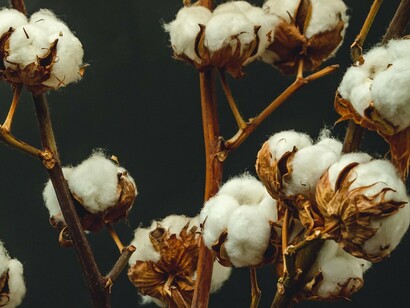
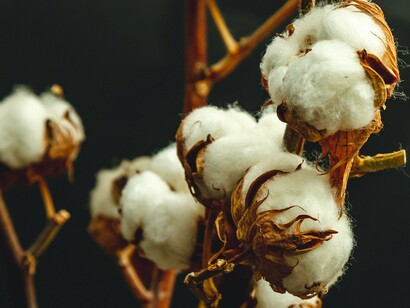
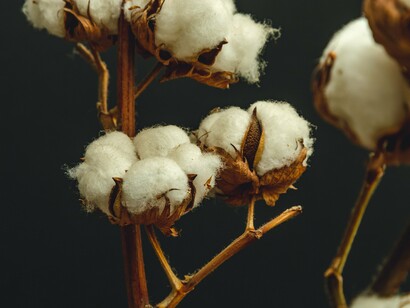
Here's where the conversation becomes more complicated. Cotton is soft, breathable, absorbent, and often comfortable against sensitive skin. But conventional cotton cultivation can involve substantial pesticide use, depending on the region and farming practices. These chemicals can create serious environmental and occupational health risks when poorly controlled. The people who grow our cotton may face exposures that consumers never see. And that's something I think the fashion industry has a responsibility to acknowledge.
The price of a garment isn't only what we pay at the register. It's also what happens to the people and environments involved in producing it. Then there is dyeing, printing, finishing, and wastewater. Even a natural fiber can become part of a harmful production process if the chemicals and waste are not responsibly managed. And organic cotton, while potentially reducing reliance on certain agricultural chemicals, isn't automatically free of all processing chemicals. This is why sustainability and skin comfort require us to look beyond the fiber label.
Cotton, linen, bamboo, and the fine print
I'm happy to see renewed interest in plant-derived textiles. But I also think we need to become smarter consumers. Cotton is often an excellent choice for soft everyday clothing. Linen can be wonderfully breathable in hot weather, although its texture isn't comfortable for everyone.
And bamboo? That one deserves a little explanation. Many garments marketed as bamboo are actually made from bamboo-derived viscose or rayon. The original plant may be bamboo, but the finished fiber is manufactured through a chemical process. That doesn't automatically make it unsafe or uncomfortable. In fact, some regenerated cellulose fabrics can feel beautifully soft. But it's important to understand that “plant-derived” does not necessarily mean minimally processed.
Our children deserve the same attention
As a mother, this subject feels especially important. Babies and young children spend an enormous amount of time in direct contact with textiles. Bodysuits. Pajamas. Bedding. Underwear. School uniforms. Their comfort depends on much more than whether a garment looks adorable. I want soft fabrics, well-considered construction, comfortable seams, and responsibly managed dyes and finishes. I want clothes that allow movement and don't create unnecessary irritation. And I want brands to be transparent about what they're selling. We deserve better information.
The question we should all be asking
I don't think we need to throw away our synthetic clothes tomorrow. Synthetic fibers have legitimate uses, and in some applications, their performance is difficult to replace. But I do think we need to stop treating fabric composition as an irrelevant detail printed on a tiny label. Because clothing is one of the few products that stays in direct contact with our bodies for most of our lives. The next time you buy a garment, look beyond the color and the price. Read the label. And most importantly, listen to your skin.
We spend so much time thinking about what we put into our bodies. Perhaps it's time to give the same attention to what we put on them.