English
 Español
 Français
 Deutsch
 Italiano
 Português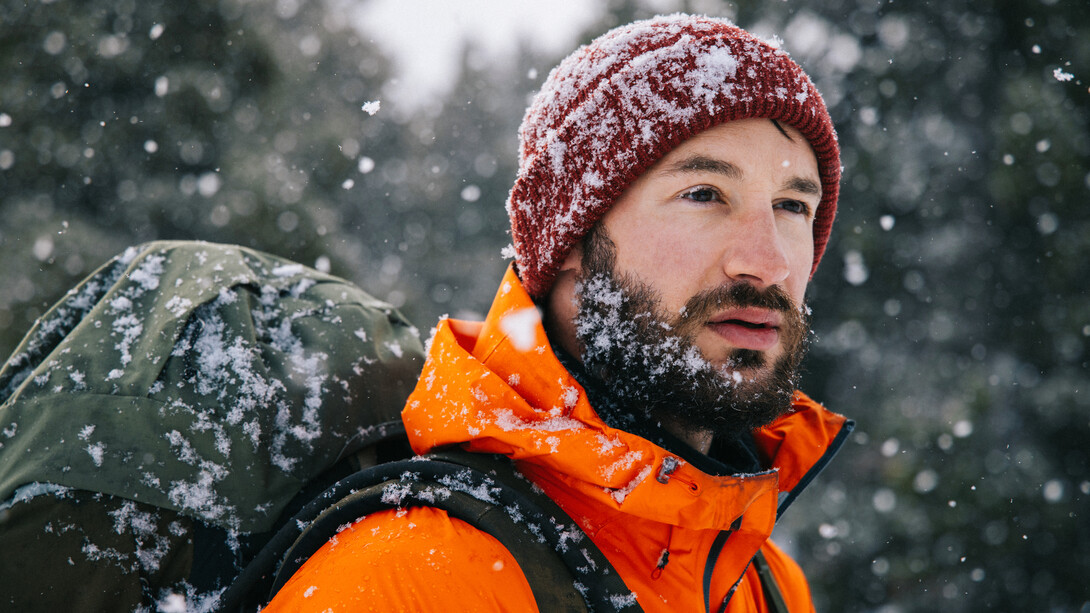
Sometimes, the most unexpected encounters leave the deepest impressions. My path crossed with Anthony Verlaine purely by chance, and hearing that he worked as an adventurer I got interested in his background and stories facing bears, wild beasts, and the impossible. Anthony engages in experiences that are uncommon in most people’s lives and in unexpected ways, he also defies some of my fashion expectations!
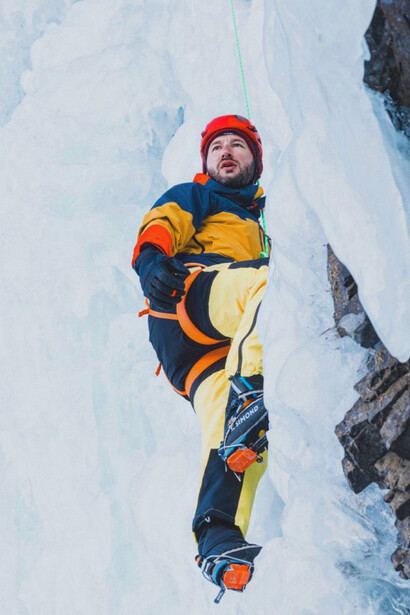
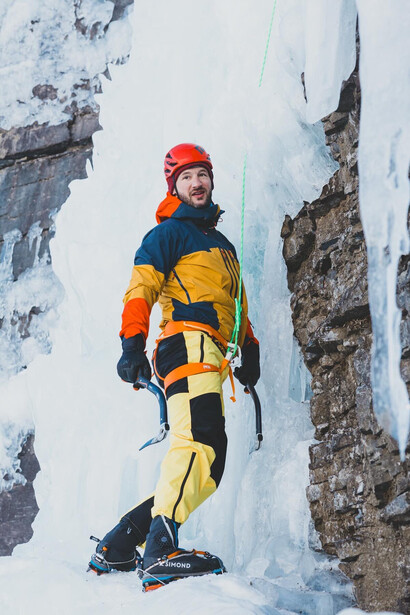
With 100,000 social media followers, a special edition of Lonely Planet dedicated to his adventures, a talk at Forbes Under 40, and a TEDx talk, Anthony started his second life at 25, by spending over five years traveling the world non-motorized, carrying little more than a backpack, a few H&M tees, and a pair of Decathlon shoes. His destinations were not glamorous catwalks but remote locations in different parts of the world.
Yet through rugged landscapes, turquoise lagoons, snowy Arctic expanses, and kaleidoscopic flocks of exotic birds ,Anthony’s experiences in different environments appear to have influenced his interest in visual details and aesthetics in colors, interiors, and clothing. He proves that fashion and adventure can coexist, even when they seem worlds apart. Today, he isn’t just exploring the globe, he’s creating experiences, building a personal brand, and his experiences in different environments appear to have influenced his interest in visual details and aesthetics, all while caring for the planet and being engaged more than ever in his wild mission.
Anthony Verlaine: adventurer and fashion explorer
In 2012, Anthony was already the founder of his own fashion brand made from recycled bottles, as an early participant in the field of sustainability. Alongside his humanitarian and environmental efforts, he has modeled for leading French labels and served as an ambassador for renowned outdoor brands.I would describe him as an adventurer with a distinctive approach to style across urban and outdoor settings, who has developed his taste through experience travelling in varied environments.
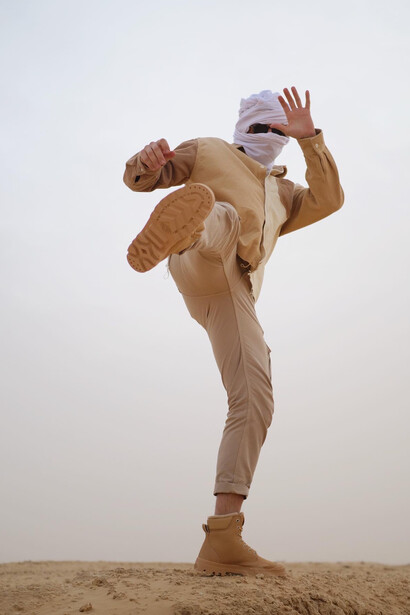
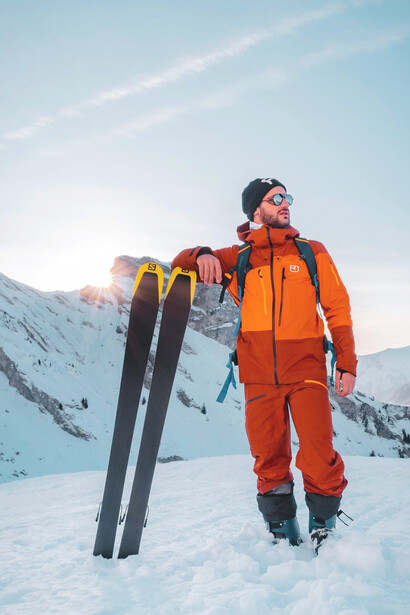
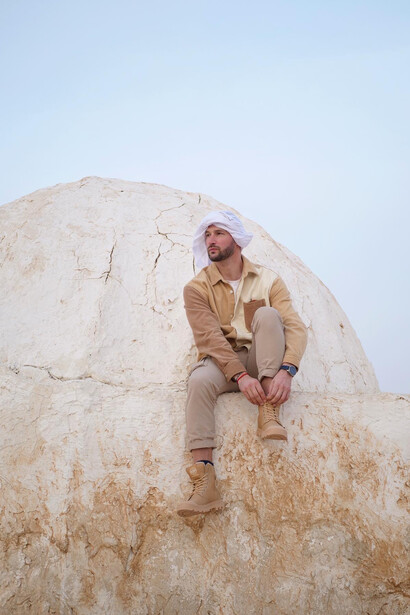
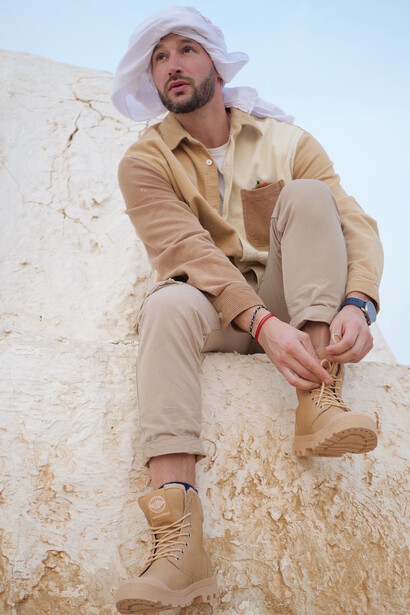
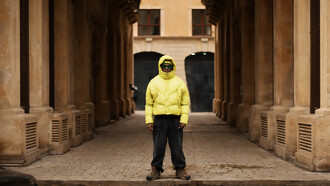
His personal style is an extension of his journeys. In winter, he channels a trapper-inspired rugged silhouette, layered in earthy tones, corduroy, and textured Navajo prints. In summer, he embraces surfer-skater vibes with Hawaiian florals and playful details like SpongeBob socks, revealing a mischievous, youthful and always curious side. His color palette mixes rusted orange, deep brown, sandy beige, navy and forest greens, mirroring nature itself.
To uncover the mind of this unconventional fashion profile, I couldn’t resist asking him a few questions, with the aim of offering readers reflections on identity and personal presentation.
Anthony, you’ve dared the impossible, followed your path, and stayed true to your purpose. How does being connected to your masculine energy influence the way you dress and express yourself?
For me, being connected to my masculine energy has nothing to do with ego or appearance; it’s rather about alignment and knowing who you are when everything around you is uncertain, when you’re alone in the wild, with no audience, no validation, just you and your instincts.
That inner connection to self shapes everything, including the way I dress. I don’t consider style like a "decoration"; I see it more as an extension of my mindset. When I’m out there, in remote or even dangerous places, my focus is raw, instinctive, stripped down to survival and presence. But when I step back into the “regular” world, I enjoy expressing a different facet of that same energy, something more controlled and refined.
To me, elegance can be a form of discipline in a way of remaining sharp and intentional, even in stillness. I enjoy the contrast of going from extreme environments to a clean silhouette, from unpredictability to precision. I am the same man, but I just express myself differently.
At the end of the day, whether I’m crossing a frozen lake or walking into a room, I want to feel grounded, clear, and aligned. That’s what masculine energy actually means to me, and that’s what I try to reflect in the way I carry myself and in the way I dress.
You’ve built a recognisable personal brand followed by thousands and noticed by some of the biggest names in outdoor clothing brands. How has your journey shaped a cohesive personal brand image, and what role does fashion play in it?
Originally I didn’t intend to build a 'brand' in the traditional sense. At the beginning, it was just me, going where I felt called to go, documenting real moments, real risks, real emotions. But over time, I realised that consistency in mindset naturally creates consistency in image.
My journey shaped my personal brand because I’ve always stayed aligned with who I am. I don’t try to fit into trends; I rather try to intentionally stay true to myself. Whether I’m in extreme conditions or in a more urban setting, there’s a common thread of honesty, rawness and discipline. People don’t just follow what I do; they connect with how I do it.
Style plays a key role in that balance. It’s not about showing off but rather about expressing oneself and staying coherent. After being in environments where everything is about function, survival, and simplicity, I find a real pleasure in stepping into something more refined or more intentional. Clean lines, strong masculine silhouettes, pieces that feel like timeless essentials rather than loud.
It creates a contrast, but in reality it is more of a continuity. I keep the same key values of discipline and attention to detail I apply in the wild, but I inject them into the way I present myself. In a way, fashion allows me to translate my inner world into something visible. It completes the story.
Living in remote landscapes and exploring flora and fauna, what has nature taught you about aesthetics?”
Nature has completely reshaped my idea and view of aesthetics. When you spend time in remote places, far from any human influence, you realise that nothing is trying to be beautiful, yet everything is!
There’s a kind of effortless balance in nature, colours that shouldn’t work together but somehow do, and textures shaped by time, not by copying by humans. Harsh environments, extreme conditions, and still, there’s absolute harmony. It taught me that true aesthetics don’t necessarily come from adding more but rather from stripping down the unnecessary to create absolute pure beauty.
In the wild, beauty has an actual function. Every shape, every colour, and every movement has a purpose to attract, hide, defend, meet, etc. That really stayed with me. It changed the way I see style, and that influences me to choose pieces that feel crafted or with an honest touch and feel, that have a reason to exist and that are built to last.
Nature also taught me contrasts, as it can be soft and brutal or minimal and powerful at the same time. In the wild even silence has an intensity. That duality inspires me a lot in how I present myself and mix pieces. I don’t try to overcomplicate things; I just try to stay true to myself and that same principle, simplicity, intention, and a kind of quiet strength within.
At the end of the day, nature doesn’t seek attention or recognition, and that’s exactly why it’s so powerful. That’s probably the definition of 'aesthetic' I connect with the most.
When you’re on extreme expeditions or meeting communities who’ve never received a Shein package, how do you experience the relationship with clothes/image? Do they become purely functional, or is self-expression still part of the equation?”
When you’re that far removed from the modern world, the relationship with clothing shifts immediately to function first, like almost instinctively. You think in terms of protection, adaptability, and durability. What keeps you warm, what keeps you dry, and what allows you to move. There’s no space for unnecessary choices.
But what surprised me is that self-expression never really disappears; it just changes form.
In some of the most remote communities I’ve encountered, people don’t have access to what we would call "fashion", but they still express identity through what they wear. It can be in the way fabrics are layered, the colours they choose, small details that carry meaning, tradition, or status. It’s subtle, but it’s quite powerful.
And for me, even in extreme conditions, there’s always a part of my identity in how I dress. Maybe it’s minimal, maybe no one else notices, but I do. The way I prepare, the gear I choose, how everything fits together – it reflects a mindset. It’s a form of respect too, for the environment, for the people I meet, and for myself.
So yes, clothing becomes highly functional, but it never becomes neutral. There’s always some meaning behind it. And I think that’s something universal; no matter where you are in the world, we all express something through what we wear, even when we’re not trying to.”
You move between extreme expeditions and fancy events. How do you keep your style consistent in such different worlds?”
Consistency doesn’t come from wearing the same things all the time; it comes from carrying the same mindset into different environments.
Whether I’m in the middle of nowhere or at a formal event, I’m still the same person; I am still ME. I don’t switch identities; I just adapt the expression. In extreme conditions, my style is driven by necessity; everything is reduced to what’s essential. In more refined settings, I go more for elegance, but the foundation stays the same, intention, simplicity, and precision.
I’ve never been drawn to anything too loud or overdesigned. I like pieces that feel more timeless, that have a certain quiet strength. And I think that translates well in both worlds. A clean silhouette, well-fitted, with purpose behind it, it works whether you’re facing the elements or walking into a room full of people.
There’s also something about contrast that I like to embrace. Moving between those extremes keeps me grounded and at home with myself. It reminds me that style is not about the environment or the status you acquire, but rather about how you carry yourself within it.
At the end of the day, I don’t try to fit into a specific world. I just stay aligned with who I am and let that naturally create consistency, no matter where I am.
Fashion is one of the most polluting industries in the world today. Looking ahead, what do you wish for the future of fashion in terms of sustainability, as a supporter of Mother Earth?”
Having spent so much time in untouched environments, places that are still raw, fragile, and incredibly pure, it’s impossible not to feel concerned about the impact we have on them. You see firsthand how delicate the balance is and how quickly it can be disrupted. This is why I created my own fashion brand, Verlaine & Rimbaud, 12 years ago: a fashion brand using only recycled bottles of plastic from the ocean!
For me, the future of fashion has to move toward taking responsibility with a true intention. We don’t necessarily need more; we need better. Fewer pieces, but designed to last, to adapt, to evolve with time. Clothing should be something you build a relationship with, not something you consume and discard quickly.
I also think transparency is super important. People should know where things come from, how they’re made, and at what cost – not just financially, but environmentally and socially. When you’ve seen parts of the world where the consequences of overconsumption are real and visible, it changes the way you think.
At a personal level, I try to approach fashion the same way I approach my expeditions, with respect. Respect for the environment, for the materials, for the people behind the process. Supporting brands that are committed to doing things the right way is part of that.
Ultimately, I don’t believe sustainability should be a trend. It should be the foundation. Because if we lose the environments that inspire us, then we lose far more than just aesthetics; we lose a part of ourselves.
Conclusion
In between two world trips, Anthony now lives in extraordinary treehouses with a distinctive cocoon architectural design located in the deep Swedish forest, along a beautiful lake, known as The Haven Islands. Naturally, the houses reflect his authentic taste for craft and natural lifestyle.
Between the icy green tones of winter trees, calm blues of the lake and the iridescent northern lights, he shares his learning and wisdom, making others experience nature, wonder, survival, and immersive adventures.
Anthony describes his lifestyle as centered around freedom and autonomy and curates every outfit and every piece of decoration, keeping his backpack small while perfectly reflecting his story and personality. His work and lifestyle suggest that style can also be expressed outside urban environments; it can subtly flourish even in the wildest landscapes when congruent with who we are.