English
 Español
 Français
 Deutsch
 Italiano
 Português
Fashion has always been a reflection of society’s values. From craftsmanship and cultural identity to technological innovation and social movements, the clothes we wear tell stories about the world around us. Today, as the industry faces one of its greatest challenges—balancing creativity with environmental responsibility—a powerful design philosophy is emerging: zero-waste fashion.
More than a sustainable technique, zero waste represents a new way of seeing fashion itself. It challenges designers to rethink the relationship between fabric, production, and creativity by transforming every centimeter of material into an opportunity for innovation.
In an industry historically connected to excess, where thousands of tons of textiles are discarded every year, zero waste introduces a different perspective: beauty does not need to come from abundance. Instead, it can emerge from intelligence, intention, and respect for resources.
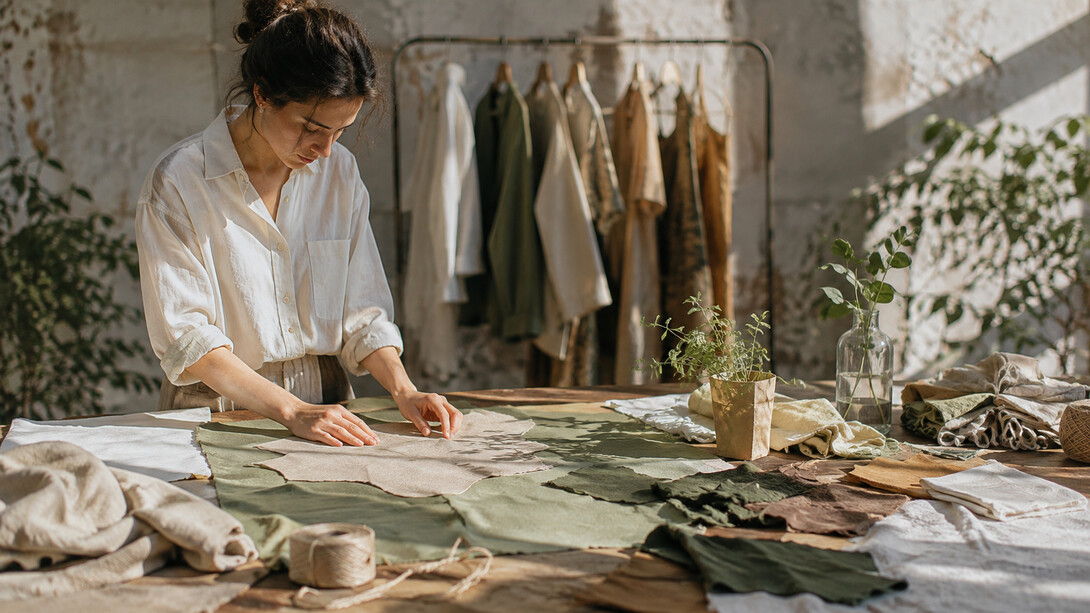
The concept is simple yet revolutionary. Traditional garment production usually begins with a pattern that is placed onto fabric, leaving behind unused sections after cutting. Zero-waste design reverses this logic. The garment is created around the fabric itself, ensuring that almost every part of the textile becomes part of the final piece.
This approach has transformed pattern making into a creative puzzle, where designers must think beyond traditional silhouettes and explore new relationships between shape, construction, and movement.
Ancient wisdom and modern innovation
Although zero waste fashion may seem like a contemporary response to sustainability concerns, its foundations are deeply connected to historical clothing traditions.
For centuries, cultures around the world developed garments that naturally respected materials because textiles were valuable and often handmade. The Japanese kimono is one of the most iconic examples. Constructed from rectangular pieces of fabric, the kimono uses the textile width efficiently, allowing minimal waste while creating a timeless silhouette.
Similar principles can be found in traditional garments from different cultures, where geometric shapes, modular construction, and thoughtful cutting methods were essential parts of clothing creation.
Before industrialization, designers and artisans understood the importance of using materials wisely. However, with the rise of mass production during the Industrial Revolution, fashion systems changed. Speed, quantity, and standardized production became priorities, and textile waste became an accepted part of manufacturing.
Today, zero-waste fashion represents a return to that historical appreciation for materials, combined with contemporary technology and creative experimentation.
When constraints become creativity
One of the most fascinating aspects of zero-waste design is how it challenges the traditional understanding of creativity.
For many designers, creativity has always been associated with unlimited freedom. Zero-waste introduces another idea: limitations can become a source of inspiration.
Instead of starting with a desired silhouette and adapting fabric to fit the idea, designers begin by understanding the possibilities within the material itself. The fabric becomes a collaborator rather than simply a resource.
This process often results in garments with distinctive architectural qualities. Unexpected folds, asymmetrical shapes, modular elements, and innovative constructions become part of the aesthetic language.
The technique requires designers to combine artistic vision with technical knowledge. Pattern making becomes closer to engineering, where every decision influences the final result.
Designers and researchers such as Timo Rissanen have played an important role in bringing academic attention to zero-waste pattern cutting, demonstrating that sustainability can be a powerful creative force rather than a limitation.
Luxury fashion and the value of conscious craftsmanship
In recent years, sustainability has become increasingly relevant within the luxury market. Traditionally associated with exclusivity, craftsmanship, and quality, luxury fashion has found a natural connection with zero-waste principles.
Luxury has always celebrated the relationship between designer and material. Haute couture techniques, artisanal craftsmanship, and meticulous construction already reflect a philosophy of respecting time and resources.
Zero-waste adds another layer to this conversation by introducing environmental consciousness into the creative process.
A garment created through zero-waste techniques carries a unique story. It represents not only a visual expression but also a thoughtful production journey. In a market where consumers increasingly seek authenticity and meaning, these narratives have become valuable.
Luxury consumers today are not only interested in owning beautiful objects; they are also interested in understanding how those objects were created. Transparency, craftsmanship, and responsibility are becoming essential elements of modern luxury.
Technology: the new partner of sustainable design While zero-waste has historical roots, technology is expanding its possibilities.
Digital fashion tools, 3D garment simulation, and advanced pattern-making software allow designers to experiment with complex constructions before creating physical samples. These technologies reduce material consumption during development and make sustainable experimentation more efficient.
Artificial intelligence is also beginning to influence the creative process, helping designers analyze patterns, optimize fabric usage, and discover innovative solutions.
The combination of traditional craftsmanship and digital innovation represents one of the most exciting directions for the future of fashion. It proves that sustainability does not mean looking backward—it means combining the knowledge of the past with the possibilities of the future.
The business opportunity behind zero waste
Sustainability is no longer only an environmental discussion; it has become a major factor in consumer behavior and business strategy.
As awareness around climate change and responsible consumption grows, brands are being challenged to rethink their production systems. Consumers increasingly want products that reflect their values, creating demand for more transparent and responsible fashion.
Zero-waste offers brands the opportunity to reduce material loss, strengthen their sustainability image, and create products with stronger emotional connections.
However, implementing zero-waste on an industrial scale still presents challenges. Large-scale production requires speed, consistency, and cost efficiency, making adaptation more complex. Yet, with advances in technology and changes in consumer expectations, the fashion industry is moving closer to integrating these practices.
For emerging designers, zero-waste also represents a competitive advantage. Understanding sustainable design methods can open new opportunities in a market searching for innovation and responsible creativity.
A new era of fashion thinking
Perhaps the greatest impact of zero-waste fashion is not only the reduction of textile waste but also the transformation of the designer’s mindset.
It encourages a deeper understanding of materials, production processes, and the consequences behind every creative decision.
In the past, fashion was often defined by the idea of constant renewal and consumption. Today, a new generation of designers is exploring a different vision: creating pieces that are meaningful, intelligent, and connected to the world around them.
Zero-waste reminds us that innovation does not always come from adding more. Sometimes, it comes from understanding what already exists and discovering its hidden potential.
Conclusion: designing a future without waste
Zero-waste fashion represents a fascinating intersection between history, technology, sustainability, and creativity. It connects ancient approaches to material usage with the most innovative solutions of contemporary design.
As the fashion industry continues to evolve, the future will belong to those who can balance aesthetics with responsibility. Zero-waste proves that sustainability is not the opposite of creativity—it can be one of its greatest inspirations.
The next generation of fashion will not only ask what we can create but also how we can create it. And in this new era, every piece of fabric has a story, every choice has an impact, and every design has the potential to shape a more conscious future.