English
 Español
 Français
 Deutsch
 Italiano
 Português
Returning to Kerala was not simply another journey. My first visit had introduced me to the state through yoga, spirituality, nature and culture. This second journey offered a different perspective. This time, I was invited to explore Kerala through the lens of Ayurveda. The journey was part of the International Ayurveda Ambassadors’ Tour and B2B Meets, bringing together delegates and service providers from across Kerala.
Over twelve days, we travelled from Kannur and Bekal in the north to Kozhikode, Thrissur, Kochi, Kumarakom and finally Kovalam in the south. Along the way, the programme combined professional meetings and Ayurveda presentations with visits to traditional institutions, cultural landmarks, wellness properties and places that reflect Kerala's distinctive heritage.
From Kannur to Bekal: a different Kerala
The journey began in the northern part of Kerala with our arrival at Kannur International Airport. A special welcome and inaugural reception had been organised for the occasion. It was a moment filled with excitement, made even more special by the reunion with several people I had met during my previous visit.
From the airport, we travelled to Woodgreens Ayurveda and Wellness Resorts in Pariyaram. Set on a hill and surrounded by greenery, the property offered a peaceful introduction to the journey ahead. We spent two nights there, accompanied by two beautiful artistic performances that brought the cultural dimension of Kerala into the programme from the very beginning.
The following morning, we began the day with a yoga session in an open-air hall decorated with murals depicting yoga postures. As a yoga teacher, I naturally felt at home in that setting. We also had a yoga photoshoot before sitting down for breakfast — a simple morning, but one that immediately connected my own world of yoga with the Ayurveda-focused purpose of this second journey.
At The Lalit Resort in Bekal, the professional character of the tour became more apparent. We were introduced to the programme and to the participating delegates before beginning B2B meetings with service providers from Kasaragod and Kannur. These encounters offered an opportunity to discover how different wellness and tourism professionals were presenting Kerala to an international audience and how Ayurveda was increasingly becoming part of that conversation.
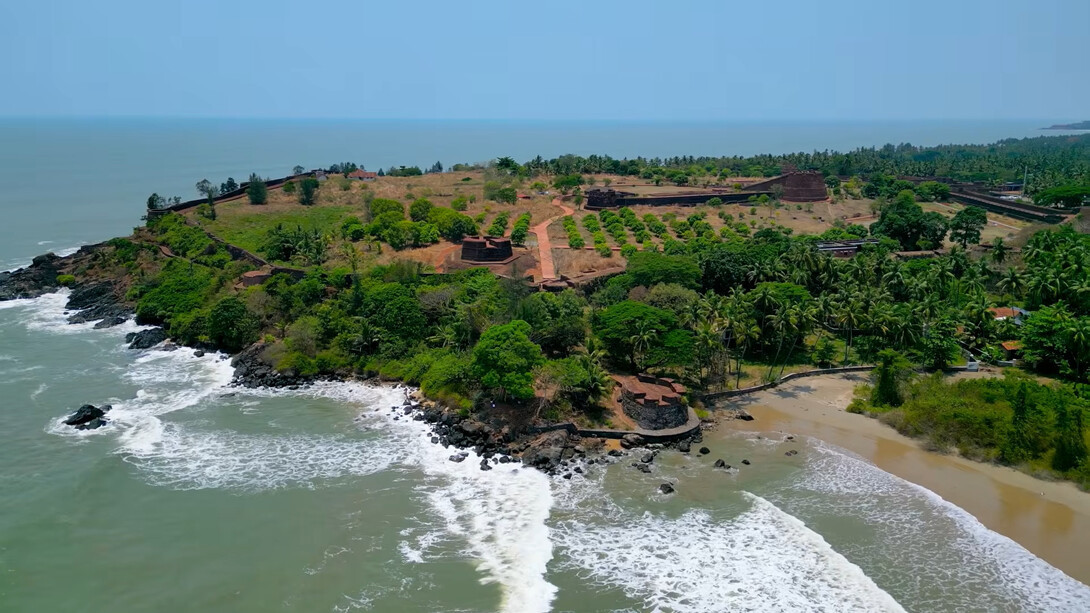
Later, we visited Bekal Fort, one of the most striking historical landmarks of northern Kerala. Rising above the Arabian Sea, the fort is among the largest and best-preserved forts in the state. Its massive laterite walls and distinctive keyhole-shaped design reflect its strategic importance. Over the centuries, the site passed through the hands of different powers, including the Ikkeri Nayakas, the Mysore rulers and eventually the British East India Company.
Standing within the fort and looking towards the Arabian Sea, I found myself thinking about the contrast between the coast as a route of exchange and the coast as a place of defence. The same waters that carried merchants, spices and ideas across the Malabar Coast also made this region strategically important to competing kingdoms and foreign powers. The laterite walls seemed to hold together several layers of Kerala's history — trade, culture, warfare and political change.
The evening continued at Taj Bekal with the inaugural function, bringing together a keynote address, cultural performances and a networking dinner. By then, it was already clear that this journey would be different from my first experience of Kerala. Yoga had brought me closer to the spiritual side of the state during my earlier visit; this time, Ayurveda was opening a door into a much wider world of traditional knowledge, professional exchange and living heritage.
From Kappad to Kozhikode: craft, coast and history
From Bekal, the journey continued south towards Kozhikode. Along the way, we stopped at Sargaalaya Arts and Crafts Village in Iringal, a Kerala Tourism initiative created to preserve and promote the traditional craftsmanship of the state. Spread across a large area along the Moorad River, the village brings artisans and visitors together, allowing traditional crafts to be seen not simply as finished products but as living skills passed from one generation to another. Developed on the principles of responsible tourism, Sargaalaya also reflects an effort to give traditional crafts a place within contemporary tourism while creating opportunities for local artisans.
I was visiting the village for the second time. Walking through it, I was reminded that Kerala's heritage is not confined to monuments or museums. It is also found in the hands of its craftsmen, in techniques that continue to be practised and adapted in the present. This was particularly meaningful during a journey centred on Ayurveda, because both traditions share an important idea: knowledge survives when it remains part of living practice rather than becoming only something to be remembered. The visit was concluded by a group photo. The photo was given to each and everyone with a frame which has artwork inspired by Kerala mural art. In fact, the traditional mural paintings of Kerala are fine art of skill and creative excellence.
We then travelled to Kappad Beach, where the landscape carried a very different kind of historical memory. On these shores, Vasco da Gama's arrival in 1498 opened a new chapter in the relationship between Europe and the Indian subcontinent and transformed the history of maritime trade along the Malabar Coast. Kozhikode had already been an important centre of the spice trade, attracting Arab and Chinese merchants for centuries; the Portuguese arrival introduced a new European dimension to this long-established network.
Kappad therefore felt like more than another beautiful stop along the coast. It was another reminder that Kerala's identity has always been shaped by movement—of people, knowledge, culture and commerce.
Kalari, Ayurveda and the living body
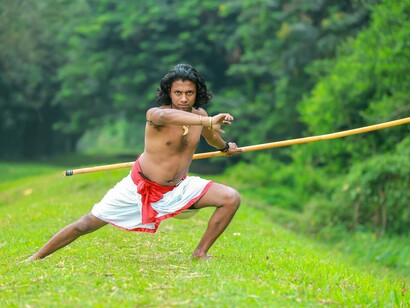
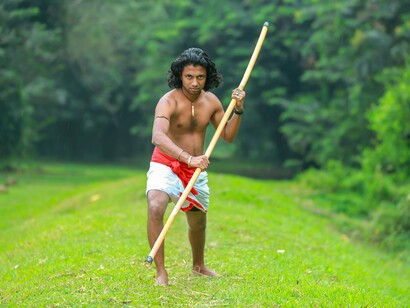
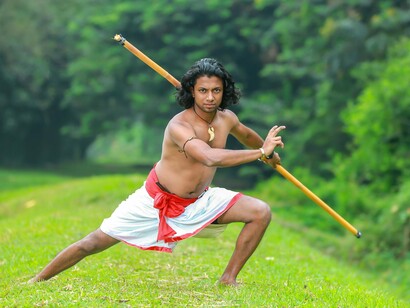
The following day brought us closer to the traditional systems that were central to the tour. This was not my first encounter with Kalaripayattu. During my previous journey, I had already visited a Kalari school and watched a demonstration during a cultural evening. Returning to it this time, however, I was seeing it from a different angle. At CVN Kalari in Kozhikode, we watched a demonstration of Kalaripayattu, one of Kerala's most distinctive martial traditions.
Established in Nadakkavu in 1950, the institution has played an important role in preserving and promoting this ancient art in the Malabar region. What interested me most, however, was not only the precision, agility and physical strength of the performers but also the deeper knowledge of the body behind the practice. Kalaripayattu is traditionally associated with its own methods of physical conditioning and treatment, including a close relationship with Ayurveda.
This made the experience particularly meaningful in the context of an Ayurveda-focused journey. Kerala's traditional knowledge systems have never existed entirely in separate compartments. At CVN Kalari, this connection has an especially interesting history: its founder, K. Narayanan Gurukkal, came from a family in which Ayurveda, Sanskrit and Kalaripayattu were part of the inherited tradition.
The connection became even clearer during an interactive session with Acharya Vasudevan, which explored the relationship between Kalari, Marma, Yoga and Ayurveda within the Kerala tradition. Rather than presenting them as isolated disciplines, the discussion revealed how they can be understood as different approaches to the same fundamental concern: the relationship between the body, mind, movement and health.
This was one of the ideas that stayed with me throughout the journey. Health and wellbeing in the traditional Kerala context cannot always be divided into the categories we use today. Movement, breath, bodywork, energy, lifestyle and healing are interconnected. For someone coming from a yoga background, this perspective felt particularly familiar, yet it also opened a new dimension of understanding.
Harivihar: Ayurveda within a heritage home
The day also took us to Harivihar Ayurveda Home in Kozhikode, a place where Ayurveda was experienced within a very different setting. Rather than a conventional modern wellness resort, Harivihar occupies a traditional heritage homestead with roots going back to around 1850. Originally built by the Kadathanad royal family, the house was later restored and transformed into an Ayurveda retreat while preserving its traditional character.
The setting itself reinforced an idea that was becoming increasingly clear during the journey: Ayurveda in Kerala is not necessarily separated from the environment in which people live. At Harivihar, the heritage architecture, the surrounding greenery, yoga, Ayurveda and food formed part of the same experience. The house's traditional design, centred around an open courtyard, created an atmosphere very different from that of a conventional hotel or spa.
Our visit was followed by a traditional Malabar lunch. Again, the programme created a natural connection between Ayurveda and everyday life. Food was not simply part of the itinerary; it was another expression of Kerala's cultural identity. Sitting down to a meal after exploring traditional approaches to the body made the connection between nourishment, lifestyle and wellbeing feel much more tangible.
The day concluded with another B2B meeting at Raviz Kadavu, followed by a cultural programme and dinner. After a day that had moved between martial arts, traditional medicine, heritage and cuisine, the evening felt like a fitting continuation rather than a separate event. The professional and cultural dimensions of the journey were increasingly becoming intertwined.
From Kozhikode to Thrissur: preserving traditional knowledge
As we travelled further south, the emphasis on Ayurveda became increasingly visible. The journey was no longer only about experiencing Kerala's landscapes and culture; we were beginning to encounter the institutions, people and traditions through which Ayurvedic knowledge had been preserved and transmitted.
Our journey through Thrissur included a visit to Ayur Bethiniya, followed by the Vaidyaratnam Ayurveda Museum at Thaikkattussery, near Ollur. The museum offered a different way of approaching Ayurveda. Rather than experiencing it through a treatment or consultation, we were invited to look at its history and evolution.
Housed in a traditional building, the museum presents the development of Ayurveda through galleries, audiovisual displays, dioramas, a three-dimensional section and a collection of ancient texts and manuscripts. It also introduces visitors to the different branches of Ayurveda and to the knowledge of the Ashtavaidyas, families traditionally recognised for their expertise in the eight branches of the system.
What struck me was the way the museum brought together different forms of knowledge: texts, images, medicinal preparations, traditional techniques and the history of the physicians who carried this knowledge forward. Ayurveda suddenly appeared not as something belonging only to the past, but as a tradition that had continually adapted while retaining its underlying principles.
The following day brought another cultural experience at Kerala Kalamandalam in Cheruthuruthy. Founded in 1930 by the poet Vallathol Narayana Menon and his associate Manakkulam Mukundaraja, the institution was created to preserve and transmit Kerala's traditional performing arts. Today, it functions as a deemed-to-be university and provides systematic training in disciplines including Kathakali, Mohiniyattam, Kutiyattam, Panchavadyam and Carnatic music.
We had the opportunity to interact with masters there and once again witnessed how knowledge is transmitted through direct practice. Watching teachers and students together made the idea of tradition feel very different from something preserved behind glass. It was being taught, practised, refined and embodied.
Later that day, we visited the Keraleeya Ayurveda Samajam in Cheruthuruthy, an institution whose history goes back to 1902. Founded during an important period in the revival and organisation of Ayurveda in Kerala, the Samajam developed around the idea of preserving Ayurvedic knowledge while making it accessible to a wider community. Over time, its work came to include clinical care, education and the preparation of traditional medicines.
Being there gave another dimension to what we had seen at the museum. At the museum, we had looked back at the history of Ayurveda; at the Samajam, we encountered a tradition that was still being practised. The connection between knowledge and practice became tangible. I got the chance to see how both the ayurvedic pills and oils were prepared, mixed and packed. The process fascinated me, especially how the oil was stored in large wooden vessels, allowing the traditional preparation to continue beyond the moment of production. A tour in the ayurvedic garden where plants are cultivated to be later on used for the medicine manufactory gave a full picture of the process from plant plantation till having a final product ready to be consumed by the patient.
An Ayurveda talk by Dr. Prasad provided further professional insight and helped place these experiences within a broader understanding of the Kerala system. By this stage of the journey, Ayurveda was beginning to emerge in my mind not simply as a treatment system, but as a body of knowledge connected to education, lifestyle, food, movement, pharmacy, clinical practice and the transmission of knowledge from one generation to another.
This was perhaps one of the most important discoveries of the journey: traditions remain alive not because they are preserved unchanged, but because people continue to learn them, practise them and give them a place in the present.
The global conversation around Ayurveda
Our next destination was Kochi, where we attended the Global Ayurveda Summit at Bolgatty, organised by the Confederation of Indian Industry (CII). This was an important transition in the journey. Until then, much of the experience had been about visiting places, meeting practitioners and discovering traditional institutions.
The summit placed Ayurveda within a broader international and professional conversation. The B2B meetings continued, bringing together service providers from Munnar and Ernakulam with delegates interested in the possibilities of wellness tourism and Ayurveda. This professional dimension was an important part of the tour. Kerala was not only showing us where Ayurveda came from; it was also demonstrating how its traditional knowledge could engage with an international audience.
Kumarakom: wellness in the rhythm of the backwaters
From Kochi, we travelled towards Kumarakom, passing through Old Cochin before continuing towards the backwaters. The landscape was familiar from my first Kerala journey, but this time I experienced it from a different perspective. On the first visit, the backwaters had been part of a personal exploration of Kerala's natural beauty and way of life. Now they appeared within a larger wellness journey.
An evening sunset cruise offered a moment to step away from the meetings and professional discussions. The calm of the backwaters provided a natural reminder of something fundamental to wellness: sometimes health begins with slowing down.
The day also included another B2B meeting, this time bringing together service providers from Idukki, Alleppey, Kottayam and Pathanamthitta districts.
The repeated meetings across different parts of Kerala revealed the breadth of the state's wellness ecosystem. Ayurveda was not concentrated in one place. It was connected to hotels, retreats, practitioners, cultural experiences and destinations throughout the state.
Towards Kovalam: understanding Ayurveda's scope
The journey then continued southwards through Kollam towards Thiruvananthapuram and Kovalam. In Kollam, we visited Kalari Rasayana, another property connected with Kerala's wellness tradition. By this point, the journey had developed a clear rhythm: travel, discovery, professional exchange and reflection. In Kovalam, the programme became even more focused on Ayurveda.
A full day combined a city tour of Thiruvananthapuram with another major B2B meeting at The Leela Kovalam. This was followed by a technical session by Dr. Suresh on “Keraleya Ayurveda—its unique tradition and style”, as well as Ayurveda's preventive and curative aspects.
The presentation covered therapeutic and rejuvenation options, stroke rehabilitation, stress management, lifestyle disease management and the relevance of the eight branches of Ayurveda to human healthcare. It is easy to associate Ayurveda primarily with massage, relaxation or rejuvenation treatments, particularly when experiencing it through the wellness tourism industry. But the discussions during the tour presented a much wider picture, including prevention, rehabilitation, lifestyle management and healthcare. Ayurveda's place in contemporary wellness cannot be understood only through the treatments offered to visitors. It also needs to be understood through its philosophy of health and its traditional approach to maintaining balance.
The southern chapter: from tourism to immersion
The final days of the tour took us towards South Kovalam, where we visited properties belonging to the Somatheeram Ayurveda Group.
By then, the journey had moved through almost the entire length of Kerala, from the northern districts around Kannur and Bekal to the southern coast.
We had seen Ayurveda in different contexts: through professional meetings, institutional visits, technical presentations, wellness properties and conversations with people working within the field. We had also seen the cultural environment surrounding it.
Kalaripayattu, Marma, yoga, traditional food, performing arts and Ayurveda had repeatedly appeared alongside one another. Rather than feeling like unrelated attractions, they began to form a larger picture of Kerala's traditional understanding of wellbeing.
Conclusion
Kerala has left a lifelong impact on both my personal and professional life, through the heartfelt encounters and human connections that marked my journey. I still remember the welcoming rituals, the flower garlands and bindis, the warm smiles of Keralite women dressed in their elegant Kerala Kasavu sarees, and the many mesmerising experiences along the way—from having breakfast in Periyar at the abode of an erstwhile king to riding an elephant to witnessing Kerala’s impressive art forms such as Puli kali “Tiger Dance” and many more without forgetting the powerful rhythms of its temple drums.
One lasting image remains particularly vivid: the magnificent elephant statue at Cochin Airport, depicting Thrissur Pooram, one of Kerala’s grandest festivals. Even the scent of sandalwood incense seems to bring those memories back.
Yet what stays with me the most is not a single place or experience, but the feeling of Kerala itself—the warmth of its people, the richness of its traditions, and the way spirituality, culture, nature and everyday life seem to coexist in harmony. Kerala showed me another dimension of India: one where ancient traditions remain deeply woven into contemporary life, and where every encounter can become part of a larger cultural journey.
Perhaps that is why, even after leaving Kerala, I never felt that the journey had truly ended. Some places are visited; others become part of you. Kerala became one of those places for me—and my journey through India, with all its stories still waiting to be discovered, was far from over.