English
 Español
 Français
 Deutsch
 Italiano
 Português
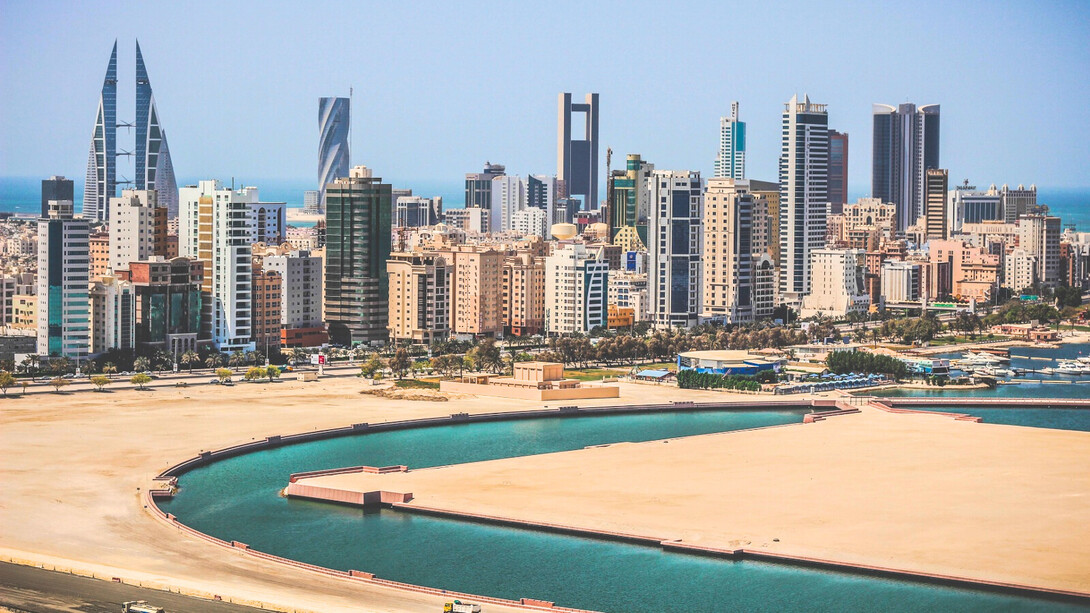
Legend has it that Bahrain, known in ancient times as Dilmun, was the site of the biblical Garden of Eden. Bahrain is an island country in the Persian Gulf, made up of 50 natural islands and 33 artificial islands. Its total land area slightly exceeds that of Singapore. It is situated between Qatar and the northeastern coast of Saudi Arabia. Its name derives from the Arabic word Bahr, meaning “the sea.”
Bahrain was one of the earliest areas to be influenced by Islam during Muhammad’s lifetime, in 628. The state religion is Islam and most Bahrainis are Muslim. The majority of the population is Middle Eastern, though a sizable number of Southeast Asians live in the country, especially from India. Arabic is the official language of the country, though English is widely used and is a compulsory second language at all schools.
Formerly a protectorate of the United Kingdom, Bahrain declared its independence in 1971. It was declared a semi-constitutional monarchy in 2002. King Shaikh Hamad bin Isa Al Khalifa heads the country.
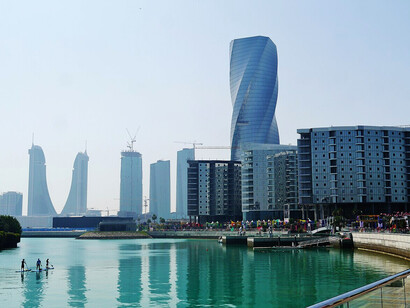
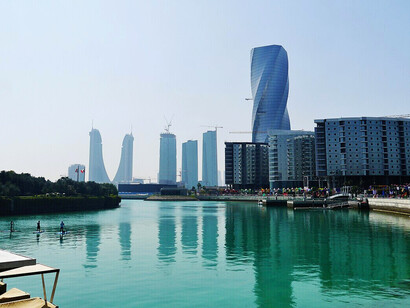
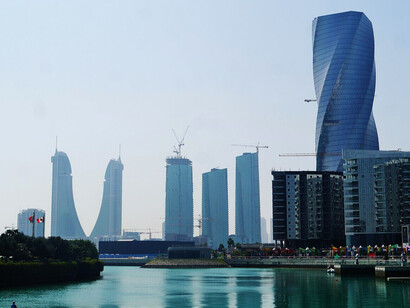
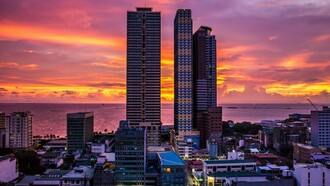
Bahrain is known as one of the first post-oil economies in the region, which is the result of decades of investing in aluminum production, as well as in the tourism and banking sectors. Many of the world's largest financial institutions have a presence in Bahrain’s capital, Manama. It remains economically dependent on nearby Saudi Arabia, however, to which it is linked by the 24-kilometer/15-mile-long King Fahad Causeway across the Arabian Gulf.
Day trips from Manama to Saudi Arabia are popular pursuits, with visas available upon entry. Such tours take visitors along Saudi Arabia’s east coast, including the Khobar City Corniche, as well as Dammam, and other cultural and heritage sites. Heritage Village in Dammam offers a glimpse into traditional Saudi life, with reconstructed buildings, artifacts and demonstrations.
The King Abdulaziz Center for World Culture, in Dhahran, is stunning in its architecture, with its shape inspired by oil-bearing rock formations. The Knowledge Tower contains the Ithra Library, one of the most beautiful libraries I have ever seen. The Center is an initiative from the Saudi Aramco Oil Company to promote cultural development, knowledge and diversity in the Kingdom.
Bahrain is a fast-growing, high-income economy. As late as the 19th century, it was famed for its pearl fisheries and is still known in some circles as the Pearl Capital of the Middle East. Pearl diving by tourists is available today, and the Pearling Path, which tells the story of Bahrain’s pearling tradition, is a UNESCO World Heritage Site. The Pearling Path includes 17 buildings in Muharraq, three pearl beds and part of the Bu Maher Fort and coastline, from where the pearl diving ships once set sail. The pearl-farming industry is still booming in Bahrain, and is an excellent place for viewing the oyster beds full of pearls is on the Amwaj islands.
The archipelago enjoys mild winters but very hot, humid summers. More than 90 percent of Bahrain is desert. Drought and dust storms present the main natural hazards for Bahrainis. It is generally flat and arid. The highest point is the Mountain of Smoke, 124 meters or 440 feet high.
Though its human rights record has been criticized, Bahrain is the only Muslim Gulf country in which gay couples have been at least nominally legal since 1976. Many homosexuals have been arrested, however, for allegedly violating broad laws against public immorality and indecency. Censorship targets political, human rights and religious material and content deemed obscene. Bahrain’s conservatism is enshrined in the country’s constitution, which declares that “the family is the cornerstone of society, the strength of which lies in religion, ethics, and patriotism.”
Rules regarding female attire are generally relaxed compared to those of its regional neighbors. Western clothing is common in Bahrain, though some men still wear the traditional thawb (full-length tunic) and kaffiyeh (white head cloth), bound in place by a camel-hair cord known as an iqal. In conservative communities, women wear the hijab (veil) and a traditional long cloak known as an abaya. Beautifully adorned abayas are sold in the local souqs.
The kingdom draws visitors due to its modern Arab culture and archaeological legacy of five thousand years of civilization. Among its most famous sites is the Al Fateh Grand Mosque in Manama, the largest place of worship in the country, and one of the largest mosques in the world, accommodating up to 7,000 people. The dome that covers the main prayer hall is the biggest fiberglass dome in the world. Free tours are offered in multiple languages. Abayas for women are available to borrow when visiting the Grand Mosque.
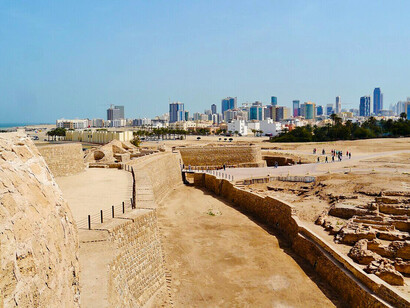
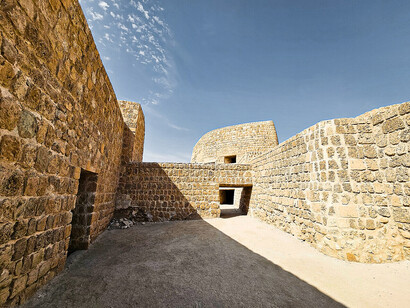
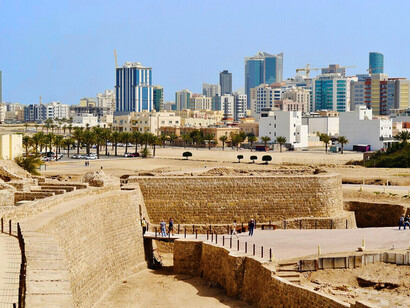
Other visit-worthy sites include the Bahrain Fort (Qal’at al-Bahrain), a UNESCO World Heritage Site that is more than 2,000 years old, and the Bahrain National Museum, which showcases artifacts from the ancient Dilmun civilization and covers Islamic history up to the modern era. The Tree of Life, a 400-year-old tree that thrives in the desert with no nearby water, also draws visitors.
This small Arab country may no longer resemble the Garden of Eden, but its relaxed, cosmopolitan and relative safety lure travelers from the region and beyond.