English
 Español
 Français
 Deutsch
 Italiano
 Português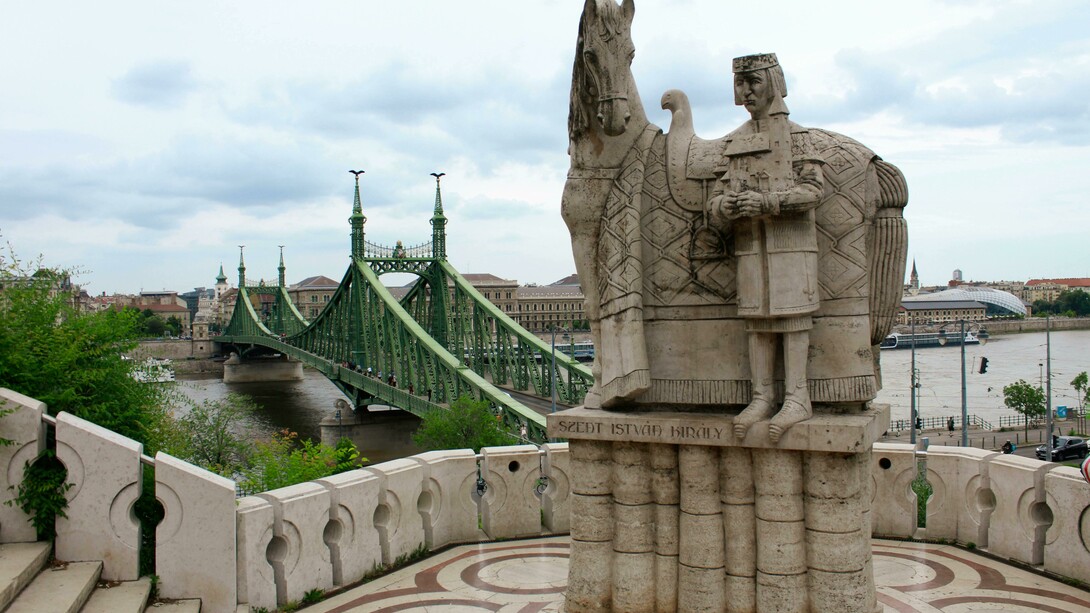
Some things are carried, not buried.
There are rivers you cross, and there are rivers that cross you. The Danube belongs to the second kind. In Budapest, it does more than divide a city. It holds what history could not bury, carrying it forward in silence.
I find myself on its banks in Budapest again, as if returning to a familiar thought rather than a place. The river begins in Germany’s Black Forest and travels more than 2,800 kilometers before reaching the Black Sea. Along the way, it crosses or touches ten countries—Germany, Austria, Slovakia, Hungary, Croatia, Serbia, Romania, Bulgaria, Moldova, and Ukraine—each one adding its own layer of language, memory, and fracture into the same moving body of water.
It is less a river than a continental sentence, written across borders without ever asking permission.
But nowhere does it feel more like a witness than here.
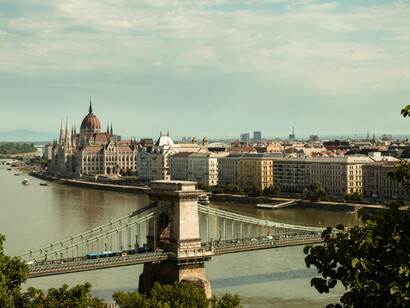
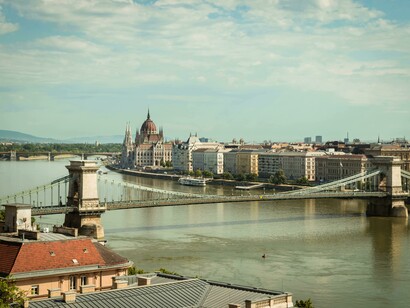
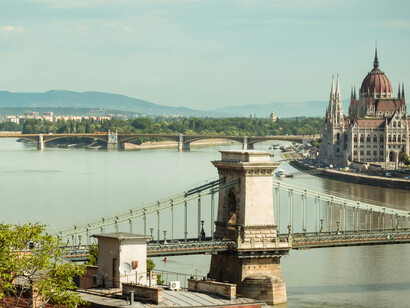
Budapest is divided and unified by the Danube at once. Buda on one side, Pest on the other, like me, Patricia Renata, and the river in between, like a long breath held across centuries. Bridges here are not just structures. They are gestures against separation. Continuity made visible. Every crossing feels like a negotiation between distance and belonging, as if the city itself refuses to choose between fracture and unity.
Standing by the water, I notice how the river never rushes in the same way twice. It shifts with weather, with light, with memory projected onto it by those who look too long. In the morning, it can feel like a sheet of glass. At night, it becomes a moving darkness that swallows and returns fragments of the city in reflections that never fully settle.
Yet the beauty of the river cannot be separated from its darkest memory.
During the Second World War, the Danube became a silent execution ground. In the winter of 1944 to 1945, members of the Arrow Cross militia carried out mass shootings along its banks. The river carried what followed. The current erased the evidence, but not the absence. What happened here remains embedded not in objects but in atmosphere, in the way silence feels heavier along certain stretches of water.
And still, perhaps because of this, life returned.
After the war, Budapest was rebuilt stone by stone, bridge by bridge, memory by memory. The Danube, once a witness to devastation, became a line of reconstruction. The bridges that had been destroyed were carefully restored, including the Chain Bridge, rejoining the two halves of the city like a long-delayed reconciliation. Reconstruction here was never only physical; it was also an attempt to restore continuity where history had forced rupture.
In the decades that followed, the riverbanks slowly transformed. What was once marked by ruin and rupture became shared civic space again, with promenades, cafés, and cultural life returning to the edges of the water. People began to inhabit the river differently, not as a boundary of fear or loss, but as a place of encounter. The city continues to evolve, shaped by its past and its place within a changing Europe, where borders soften and reappear in new forms.
There is something about Budapest that makes time feel layered rather than linear. The past is not behind; it is beneath, like sediment the river passes over without ever fully covering. Every generation adds something new to the surface, yet the depth remains unchanged.
Even the river itself changed. Environmental efforts began to restore water quality and protect the ecosystems along its course. Fish returned in greater numbers. Birds that had once disappeared began to reappear along quieter stretches. What had once been treated as a boundary of danger or loss became understood as a living system: fragile, resilient, still in motion.
And so the Danube holds two truths at once in Budapest. It remembers what was destroyed, and it carries what was rebuilt.
Today, people leave small gestures of permanence against the flow of the river. Cyclists pass along the embankments. Boats glide through the night like moving lanterns. The Parliament building reflects itself in the water, as if the river insists on doubling reality just to see if we are still paying attention. Tourists stop briefly, then move on, unaware that the water beneath them is also a kind of archive, written in currents rather than ink.
Sometimes I think rivers are the only historians that never argue with themselves. They record everything, but they explain nothing. They allow contradictions to exist side by side without resolution.
So I stay a little longer on its banks, not just observing but listening, letting the river carry grief and renewal in the same breath. There is something almost merciful in its refusal to fix meaning, in its insistence that nothing is ever only one thing.
The Danube does not end the story. It keeps it moving.