English
 Español
 Français
 Deutsch
 Italiano
 Português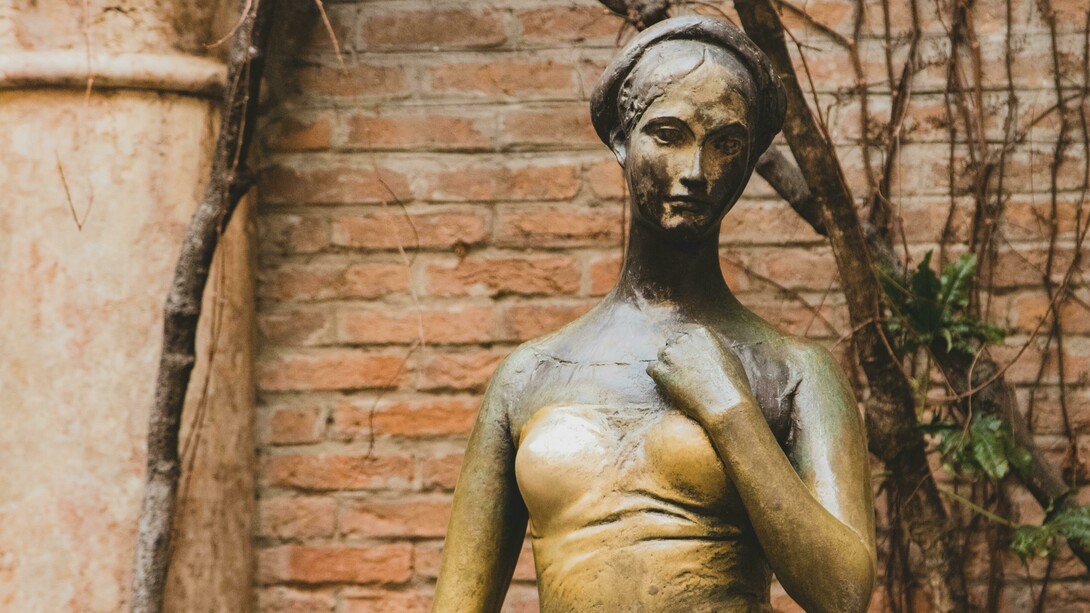
Sandwiched between Venice and Milan, Verona was never part of my original plan. It was a spontaneous addition—a last-minute decision driven by curiosity and the romantic pull of Shakespeare’s legend. Yet, as soon as I stepped into the city, I realized that Verona didn’t need to be planned. It was the kind of place that welcomed wanderers and rewarded those who came with an open heart.
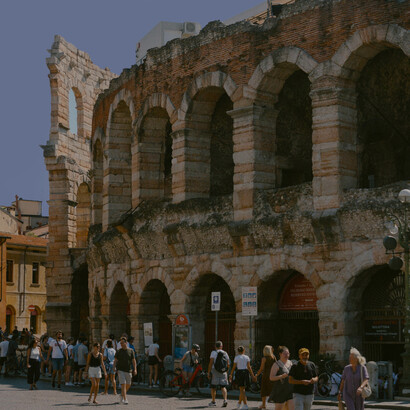
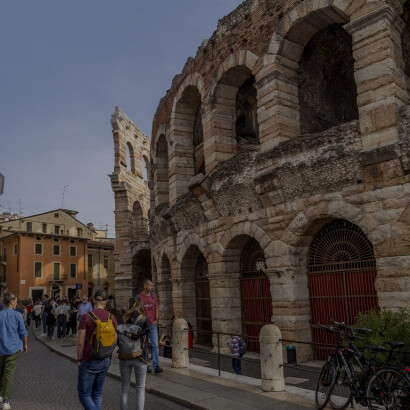
The train from Venice Santa Lucia arrived at Porta Nuova Station under a soft mid-morning sun. I hopped on a local bus that wound through elegant avenues before stopping at Piazza Bra, Verona’s grand and bustling heart. The moment I stepped off, the scene before me took my breath away: the Arena di Verona, majestic and timeless, standing proudly at the center of the square.
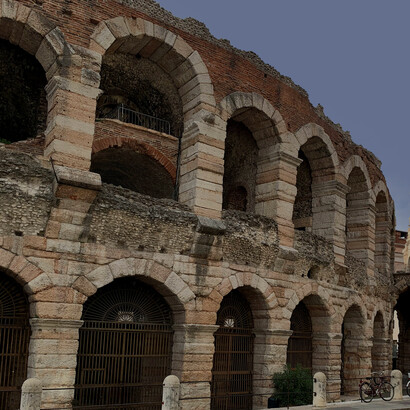
Built in the first century AD, the Roman amphitheater is one of the best-preserved in the world. Its massive stone arches have seen everything—from gladiatorial battles to modern-day opera performances. Having to skip Rome on this trip, I had been quietly nursing a bit of regret. But standing before the arena, I felt that regret dissolve. This was Verona’s own “mini-Colosseum,” and it was magnificent. I spent several minutes simply staring, tracing the weathered stones with my eyes, imagining the roar of ancient crowds echoing across centuries.
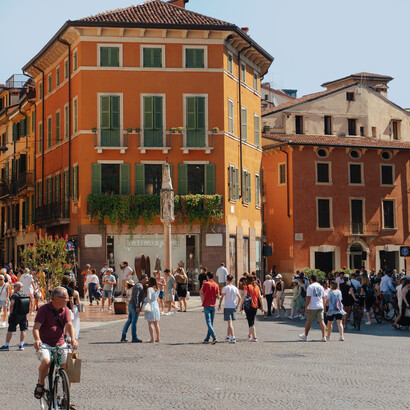
Leaving the arena behind, I began a leisurely stroll down Via Giuseppe Mazzini, the city’s elegant shopping street that connects Piazza Bra to the historic old town. The air buzzed with energy: locals chatting animatedly, tourists snapping photos, and the faint aroma of espresso drifting from nearby cafés. The street itself was a visual delight—lined with polished boutiques, tiny gelaterias, and family-owned leather shops. It was busy, certainly, but not chaotic. There was a rhythm to it all, an infectious pulse that seemed to capture the very spirit of Verona—sophisticated yet unpretentious, historic yet alive.
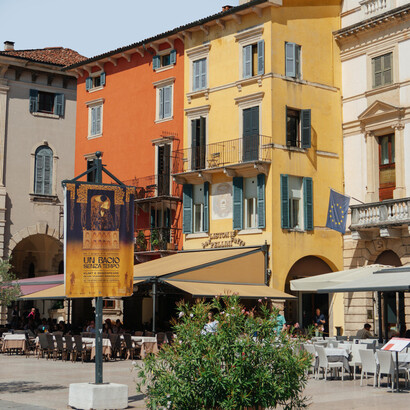
Eventually, the street opened up into Piazza delle Erbe, and I stopped dead in my tracks. The square unfolded like a Renaissance painting—vivid, layered, and full of life. Colorful market stalls sold everything from fresh fruit to handmade trinkets, while locals sipped wine under striped awnings. The Torre dei Lamberti rose high above, casting long shadows across frescoed façades that had stood for centuries. It was the kind of place where history wasn’t locked in museums—it lived and breathed all around you.
Of course, no trip to Verona would be complete without paying homage to its most famous residents: Romeo and Juliet. So, like every visitor before me, I made my way to the Casa di Giulietta, tucked in a small courtyard just off Via Cappello. The place was buzzing with tourists, everyone craning their necks for a glimpse of the legendary balcony. Down below, a crowd had formed around Juliet’s bronze statue. Tradition holds that touching her right breast brings good luck in love—a superstition both amusing and slightly absurd, but I couldn’t help but laugh at the sheer enthusiasm of it all.
The courtyard walls were plastered with handwritten notes, love messages, and initials scribbled in marker—proof that Verona still inspires hearts from all over the world. It was chaotic, yes, but endearingly so. As I watched couples pose for photos and friends giggle over the statue, I realized that Verona’s connection to romance wasn’t just about Shakespeare. It was about the city itself—its beauty, its warmth, and its enduring charm that seemed to bring out the sentimental side of everyone who visited.
After escaping the crowds, I wandered deeper into the old town, where the streets grew quieter and narrower. Stone archways framed hidden courtyards, and ivy crept along faded walls. I soon stumbled upon Porta Borsari, an ancient Roman gate that still guards the entrance to the city center. Standing before it, I felt small—humbled by the sheer weight of history in every stone. Verona isn’t just romantic; it’s ancient, resilient, and layered with stories far older than Shakespeare’s.
As the afternoon sun began to soften, I felt the irresistible call of Italy’s most sacred ritual: gelato time. I found a small artisan gelateria tucked between two pastel buildings, its flavors handwritten on a chalkboard. I ordered a simple yet perfect combination—strawberry and stracciatella. The first spoonful was pure joy, cool and creamy against the lingering heat of the day. I sat on a nearby bench and watched the world go by, realizing how easy it was to fall in love with Verona—not for its fame, but for its soul.
Later, I followed the flow of people toward the Castelvecchio Bridge (Ponte di Castel Vecchio), a striking red-brick fortress spanning the Adige River. Built in the 14th century, its crenellated towers and sturdy arches spoke of Verona’s medieval might. From the center of the bridge, I watched as the sun dipped behind the city, painting the sky in soft hues of gold and coral. The reflection on the river shimmered like liquid glass. It was a simple, quiet moment—one of those rare pauses when time feels suspended.
As twilight settled, I decided to end the day with an aperitivo, Italy’s golden-hour ritual. I ducked into a tiny bar on a side street where locals were chatting over drinks. I ordered an Aperol Spritz, expecting the usual price I’d grown accustomed to in the UK. To my astonishment, the bartender handed me the drink—with a bowl of crisps on the side—for just €4. In that moment, I felt I had truly found paradise. The spritz was perfectly balanced—sweet, citrusy, and effervescent—and the atmosphere warm and unpretentious.
Feeling adventurous, I followed it up with a Campari Spritz. The bartender grinned knowingly as he poured it—stronger, bolder, unapologetically bitter. I took a sip and felt the familiar warmth of Italian hospitality. Around me, conversations flowed effortlessly, and laughter spilled into the night.
Walking back to the station under the soft glow of streetlamps, I thought about how Shakespeare didn’t just choose Verona at random. This city, with its ancient stones and sun-drenched piazzas, its mix of grandeur and intimacy, was the perfect stage for love and tragedy alike. Every cobblestone seemed to whisper of stories past—of passion, heartbreak, and beauty enduring through time.
Verona may forever be remembered as the city of Romeo and Juliet, but for me, it was something more. It was a city of living history, of small delights and serendipitous moments—a place that reminded me that love isn’t just found in grand gestures or famous balconies. Sometimes, it’s in the taste of a €4 spritz at sunset, the laughter of strangers, or the simple joy of walking through streets that make you feel endlessly alive.