English
 Español
 Français
 Deutsch
 Italiano
 Português
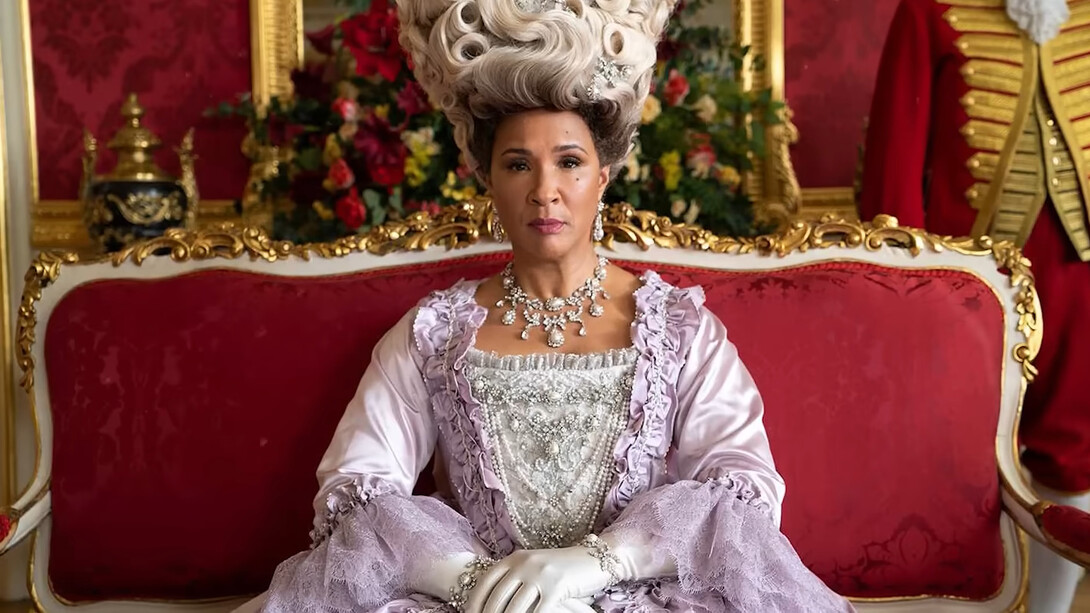
I am very late to the “Bridgerton” party. I had seen the images, the dresses, the corsets, the flowers, the impossible hair, and the jewels. I knew people were obsessed with it. And somehow, I never found the time to watch it. Until now.
Maybe arriving late has actually made the experience more interesting for me, because I am watching Bridgerton after having already watched its aesthetic influence quietly spread through fashion. And as a fashion designer, I can't unsee it.
The lace. The bows. The ribbons. The corset references. The florals. The embroidery. The sheer fabrics. The satin. The embellishments. The volume.
Suddenly, after years of fashion telling us that less is more, it feels as if we are being given permission to say: Actually, more can be more!
Fashion has always absorbed the mood around it
When I studied fashion design, one of my favorite subjects was the history of costume. What fascinated me wasn't simply learning what people wore in different centuries. It was understood that clothing never exists in isolation. Politics, economics, wars, technology, social structures, women's rights, music, art, all of them eventually find their way into our wardrobes.
I remember learning about the relationship between periods of conflict and military influences in fashion: structured silhouettes, uniform references, utilitarian details, and khaki and olive tones. In other periods, fashion has swung toward romance and decoration.
History is obviously far more complicated than a simple formula of war equals military and peace equals lace. But the lesson stayed with me: fashion absorbs the emotional atmosphere around it.
And sometimes, popular culture helps accelerate that change. Which brings me back to “Bridgerton”.
Regency, but make it fantasy
“Bridgerton” isn't really historical fashion. And I mean that as a compliment.
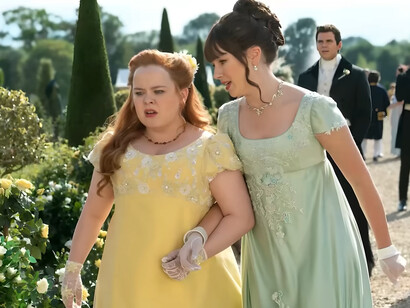
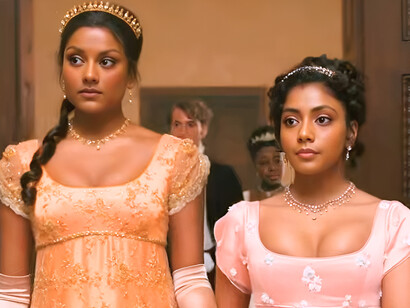
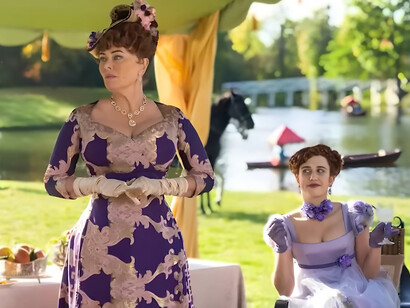
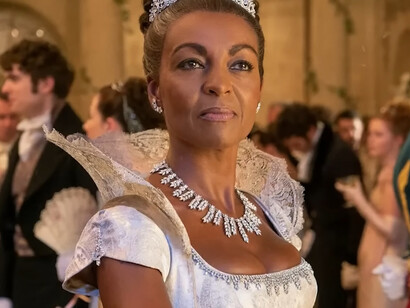
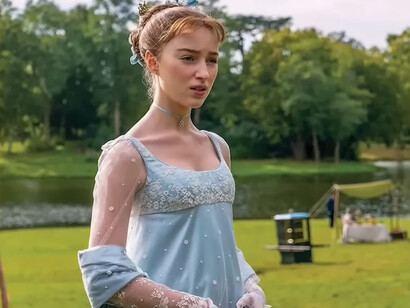
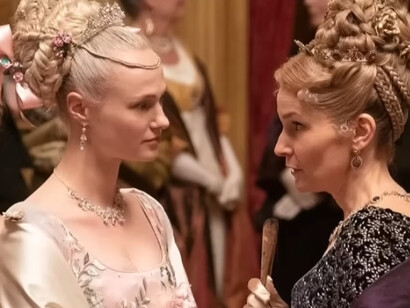
The series is inspired by Regency-era England, but its costumes aren't trying to recreate a museum exhibition. They take historical silhouettes and turn the volume all the way up. More color. More embroidery. More sparkle. More flowers. More (much more) cleavage. More jewels. More everything. That fantasy is precisely what makes it so visually powerful.
The empire waistlines and Regency silhouettes may provide the foundation, but the colors, embellishments and styling speak much more directly to a modern audience. And the audience responded.
After the series arrived, fashion media even began using the term “Regencycore” to describe the renewed appetite for corsets, empire-waist dresses, puff sleeves, pearls, gloves and romantic detailing. But I think its influence has gone much further than people walking around dressed like Daphne Bridgerton. Most cultural influences don't enter our wardrobes as costumes. They arrive in pieces.
First came the little details
This is what I started noticing as a designer. At first, the romanticism appeared almost quietly. A little lace trim around a neckline. A crochet insert. A delicate, handmade-looking edge. Broderie anglaise. A ribbon. A puff sleeve. A floral print.
Then the details became bigger. Lace stopped being a trim and became the garment. Ruffles multiplied. Bows became enormous. Sheer fabrics became layered rather than hidden. Satin ribbons appeared everywhere. Corset-inspired construction moved from lingerie into tops and dresses. Embellishment returned. Suddenly clothes weren't afraid to be pretty. And perhaps even more importantly, they weren't afraid to be feminine.
After “less is more,” I was ready for more
For years, fashion seemed obsessed with restraint. Minimalism. Clean lines. Neutral colors. Perfect basics.
There is beauty in that aesthetic, of course. As a designer, I appreciate simplicity enormously because creating something truly beautiful with very few elements can actually be incredibly difficult. But I think we reached a point where simplicity became almost a rule. And rules eventually become boring. So perhaps it isn't surprising that we're craving decoration again.
There is something joyful about clothing that doesn't apologize for being decorative. As a designer, this is an incredibly fun period to work in. There are simply more toys to play with.
Femininity doesn't have to mean fragility
There is another reason “Bridgerton” fascinates me. Its women take up space. These are women navigating a society in which their choices and legal and social freedoms were far more restricted than those of women today. Marriage, reputation and family position could determine enormous parts of their lives. Yet the women we see are ambitious, complicated, sexual, intelligent, strategic, funny and sometimes incredibly stubborn. And their femininity doesn't diminish their strength. I love that.
For a long time, I think modern culture sometimes presented femininity and female strength as opposites. If a woman wanted to be taken seriously, she had to strip away some of the things traditionally associated with femininity. Less pink. Less decoration. Less softness. Less emotion. Dress more like the boys and perhaps you will be invited into the room.
But why? Why can't strength wear lace? Why can't ambition wear flowers? Why can't a powerful woman love ribbons, pearls, satin and sparkle? Maybe that is one of the things I enjoy most about this return to romantic fashion. Femininity doesn't have to whisper in order to be intelligent. It can take up space too.
And the accessories came with it
Of course, when fashion becomes more decorative, clothing doesn't get to have all the fun. Accessories become characters again. Statement earrings. Pearls. Hair bows. Brooches. Decorative shoes. Gloves. Crystals. Ribbons woven into hairstyles. Instead of one focal point, suddenly there can be several. And somehow, it works. That's the essence of “more is more.” It isn't necessarily about piling random things onto the body. Good maximalism still requires balance. It's about giving ourselves permission to enjoy beauty without constantly editing it down. Sometimes a beautiful dress deserves the beautiful earrings too.
Fashion is escapism, and we need that
Maybe the success of “Bridgerton” fashion also says something about what we want from clothing right now. The world can feel incredibly serious.
We open our phones and receive war, politics, economic uncertainty, climate anxiety and bad news before we've even finished our morning coffee. Perhaps there is something comforting about opening the closet and choosing a blouse with an absurd bow.
Fashion doesn't solve serious problems. It isn't supposed to. Sometimes its job is simply to bring pleasure. A beautiful fabric can do that. A print can do that. A dress that moves beautifully when you walk can do that. A little sparkle can do that. And I don't think we should underestimate the value of joy.
I'm late to Bridgerton but apparently fashion wasn't
So yes, I'm finally watching “Bridgerton” years after everyone told me I should. Fashion, apparently, watched it before I did. Now when I look at the clothes around me, I can see little traces of that world everywhere – not literal Regency costumes, but echoes of its romantic excess. The lace. The florals. The bows. The embroidery. The shine. The volume. The unapologetic femininity.
Maybe “Bridgerton” didn't create all of these trends by itself. Fashion never has one single source. Designers, runways, street style, social media, economics and culture constantly influence one another. But the series certainly helped give romantic dressing a spectacular stage. And I'm glad it did.
Because after years of editing, simplifying and minimising, fashion feels like it's having fun again. As a designer, I am too.
Because sometimes less is more. But sometimes, more is absolutely fabulous.