English
 Español
 Français
 Deutsch
 Italiano
 Português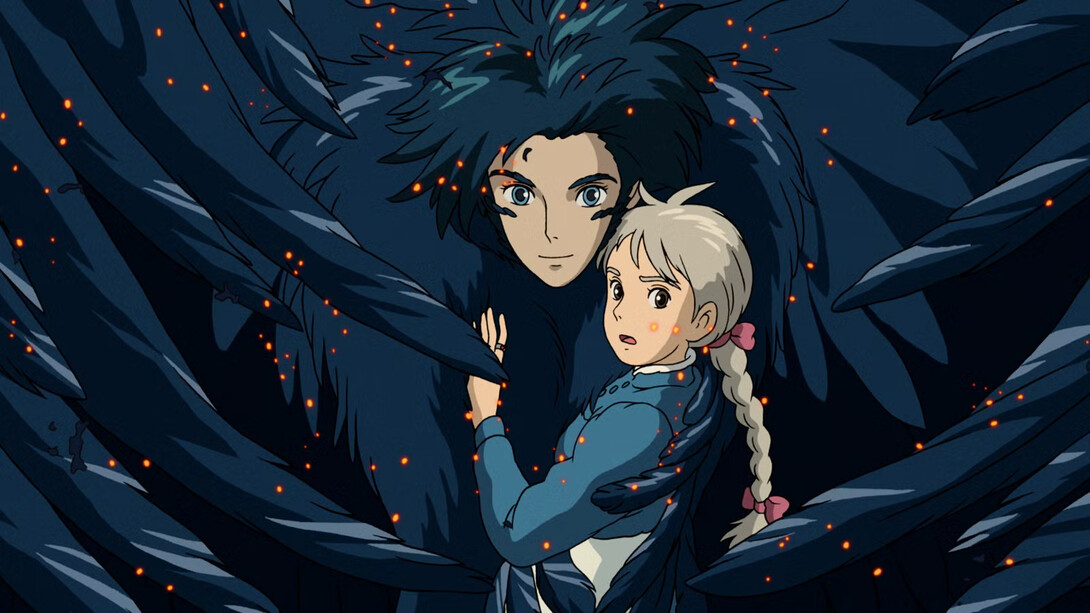
The influence of Studio Ghibli goes far beyond cinema. The Japanese studio, founded by Hayao Miyazaki and Isao Takahata, is celebrated for its poetic storytelling, stunning visuals, and ability to merge fantasy with the deeply human. In recent years, however, Ghibli’s universe has also become a powerful force in the fashion world. More than just commercial collaborations, the meeting between Ghibli and fashion reveals a profound exchange between art, craftsmanship, and cultural identity.
Fashion’s fascination with Ghibli begins with the studio’s unique visual language. Its films are filled with texture, color, and atmosphere that evoke deep emotional responses: the soft mist over Totoro’s countryside, the way fabric moves in Howl’s Moving Castle, or the ethereal glow of the spirits in Spirited Away. This combination of the ordinary and the magical creates an aesthetic vocabulary that speaks directly to fashion. The “Ghibli style,” if one can call it that, embodies comfort, gentleness, and a touch of dreamlike wonder. It’s a fashion that values the natural, the handmade, and the heartfelt — and perhaps that’s why it has resonated so powerfully in today’s world.
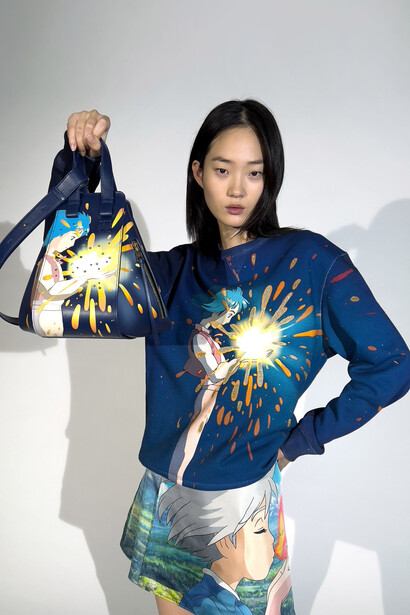
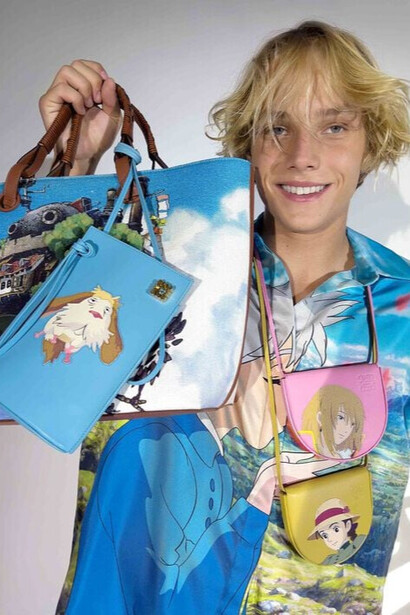
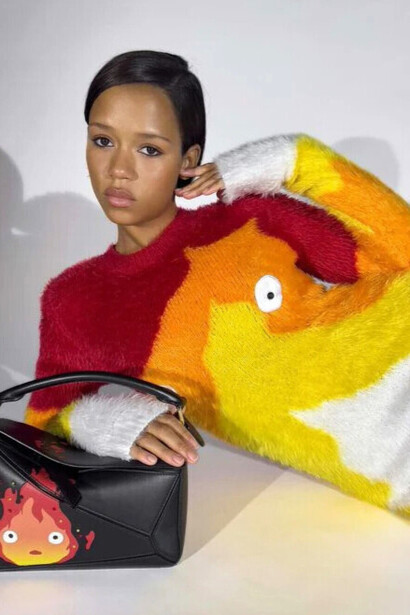
Among the most iconic partnerships, none has had a greater impact than the trilogy of collaborations between Loewe and Studio Ghibli. The Spanish house, under creative director Jonathan Anderson, found in Ghibli a perfect partner to unite luxury and storytelling. The first collection, launched in 2021, was inspired by My Neighbor Totoro and featured pieces in leather and natural fabrics, detailed embroidery, and shapes echoing the natural world. In 2022 came Spirited Away, a collection celebrating craft through patchwork, marquetry, and the Japanese “boro” technique — a form of visible mending that honors imperfection. The trilogy concluded in 2023 with Howl’s Moving Castle, translating the film’s magic into flowing garments and luminous accessories. The collaboration was more than aesthetic: both Loewe and Ghibli share a reverence for the handmade, the beautifully imperfect, and the imaginative.
Ghibli’s influence, however, extends well beyond luxury. Its collaborations with UNIQLO demonstrated how the studio’s visual language could connect with everyday wear. The Japanese retail giant has launched several collections inspired by films like Kiki’s Delivery Service, Totoro, Spirited Away, and The Boy and the Heron. The pieces — simple yet charming — feature small embroidered characters, subtle quotes, and understated illustrations that capture the spirit of the films without overwhelming them. UNIQLO’s goal was to democratize the Ghibli aesthetic, making it wearable and accessible to everyone — from lifelong fans to casual admirers.
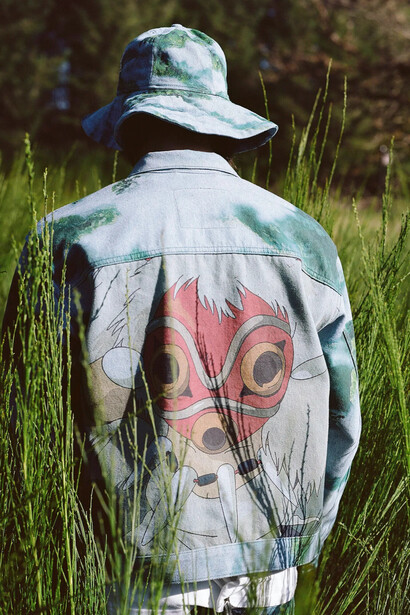
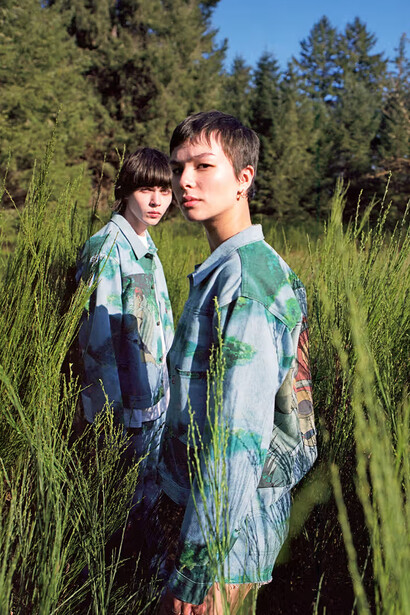
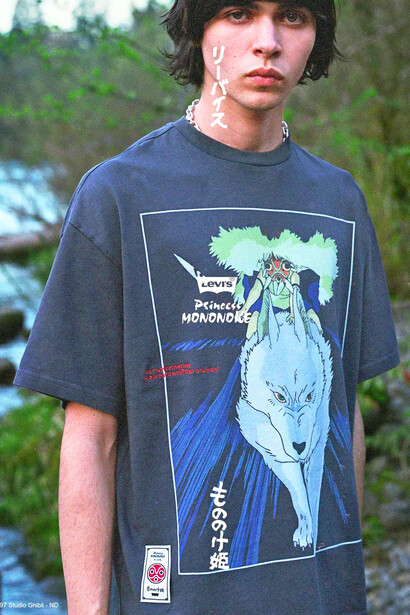
Another notable collaboration came from Levi’s, which joined forces with Ghibli in 2023 for a Princess Mononoke collection. The line captured the film’s wild, ecological spirit through denim jackets, jeans, and shirts printed with forest scenes, kodama spirits, and the fierce heroine San. The natural imagery and use of denim emphasized environmental awareness, mirroring Mononoke’s themes of harmony between humans and nature. Levi’s managed to turn Ghibli’s ecological vision into a visual manifesto — one that merged streetwear with a deeper message of respect for the planet.
These partnerships do more than pay homage to Ghibli’s artistry — they show how fashion itself can tell stories. To wear something inspired by Ghibli is to carry a fragment of narrative. It’s to express a belief that everyday life can be magical, that simplicity can be beautiful, and that attention to detail transforms the ordinary into the extraordinary. The clothes become an extension of the Ghibli universe: they speak not only of aesthetics but of values — respect for nature, appreciation for craft, creative freedom, and emotional sensitivity.
Beyond official collaborations, Ghibli’s influence has also taken root in personal style. Across social media, the “Ghibli-core” aesthetic has spread, characterized by cozy silhouettes, natural fabrics, and color palettes that evoke forests, meadows, and sunsets. The looks recall the quiet elegance of Ghibli’s characters — long skirts, flowing dresses, soft cardigans, scarves, and sturdy boots that could easily belong to Sophie or Kiki. It’s a fashion movement that rejects excess and spectacle in favor of serenity and sincerity — clothing designed more for feeling than for showing.
The essence of this aesthetic is unmistakable: earthy tones, greens, blues, creams, tactile fabrics, loose layers, and a sense of tranquility. Ghibli-inspired fashion is often described as “slow living” style — an antidote to the noise and haste of modern life. Natural materials and traditional techniques reinforce that philosophy. Embroidery, knitting, patchwork, and upcycled fabrics recall the beauty of time and the value of things made by hand — ideas deeply woven into Ghibli’s storytelling and creative philosophy.
The cultural impact of these collaborations runs deep. They prove that fashion can be more than a cycle of trends; it can be a vessel for emotion, memory, and meaning. Wearing something inspired by Ghibli is not just about appearance — it’s about identity and belief. For brands, the studio offers a visual and emotional language that is instantly recognizable yet universally resonant. Both luxury and streetwear have gravitated toward Ghibli because they crave authenticity and emotional depth — qualities the studio embodies effortlessly.
The success of these projects also reflects a larger shift in how people consume fashion. In an era of overproduction and superficiality, consumers are drawn to products with stories, with soul. Ghibli, with its reverence for imperfection and transience, fits perfectly into this new mindset. When filtered through fashion, that sensibility transforms garments into experiences — items that carry emotion, nostalgia, and imagination.
Incorporating a touch of Ghibli into daily style doesn’t require designer collections or themed clothing. It’s about embracing comfort, natural fabrics, soft colors, and thoughtful details — a hand-stitched hem, a visible seam, a small embroidered motif. Mixing simplicity with craft, valuing care over speed, and finding beauty in the imperfect brings a bit of Ghibli magic into any wardrobe. More than a style, it’s a way of seeing the world — with gentleness, curiosity, and wonder.
Ultimately, Ghibli-inspired fashion is an intersection of dream and reality. It celebrates imagination but stays rooted in everyday life. It honors the luxury of time, the value of craftsmanship, and the poetry of simplicity. To dress like a Ghibli character is not to costume oneself — it’s to embody a philosophy: that beauty can be quiet, joy can be subtle, and that even the smallest gestures carry meaning. In that sense, fashion becomes what Ghibli has always been — a reminder that there’s magic hidden in the ordinary, waiting for those who choose to see it.